

North Carolina offers a wide range of boating, from the busy coves of Lake Norman to the open inlets of the Outer Banks, and each setting carries its own risks. A pontoon tied to a Cornelius dock faces different exposures than a center console moored near Morehead City. A personal watercraft weaving through weekend wakes on Lake Wylie presents yet another profile. A homeowners policy rarely addresses these exposures adequately, which is why vessel owners in the greater Charlotte area benefit from understanding how marine coverage is structured before the season begins.
Protecting Your North Carolina Boat and Watercraft
North Carolina boat insurance is essential protection for vessel owners because it pays for liability when an operator injures someone or damages property, and it covers physical damage to the boat itself. Lake Norman pontoons, Lake Wylie personal watercraft, and coastal cruisers each require coverage designed around their specific use, value, and storage location.
North Carolina does not require recreational boat owners to carry insurance as a condition of operating on public waters. That absence of a mandate frequently leads owners to assume that coverage is optional in a practical sense, an assumption that becomes costly after a collision, a sinking, or a storm. Marinas, lenders, and storage facilities commonly impose their own insurance requirements, and a financed vessel will almost always carry a lender's demand for physical damage coverage.
Registration is a separate obligation. As of October 2026, North Carolina registration fees for boats under 26 feet are $30 for one year or $90 for three years, and a registered vessel is not an insured one. Registration establishes legal operation, while a policy establishes financial protection.
A properly designed boat policy generally addresses the following categories:
- Liability: Bodily injury and property damage claims made against the owner or a permitted operator.
- Physical damage: Collision, fire, theft, vandalism, sinking, and weather-related losses to the hull, motor, and equipment.
- Medical payments: Treatment costs for passengers injured aboard, regardless of fault.
- Uninsured boater coverage: Protection when another operator causes injury and lacks adequate insurance.
- Specialized endorsements: Trailer coverage, towing and assistance, fishing equipment, and hurricane haul-out reimbursement.
The broader market is substantial: the global marine insurance sector is projected to reach $40.89 billion by 2026, with North America accounting for 40 percent of that share.
Understanding Liability on the Water
Liability coverage protects a boat owner from lawsuits and claims when the owner or a permitted operator causes bodily injury or property damage. On heavily trafficked North Carolina lakes such as Lake Norman and Lake Wylie, collisions, wake damage, and passenger injuries make adequate liability limits the most important component of any boat policy.
Lake Norman features over 520 miles of shoreline and experiences the highest volume of recreational traffic in the state, resulting in higher-than-average collision claims. On a summer Saturday near the Interstate 77 corridor, pontoons, wake boats, sailboats, and personal watercraft share the same water, often operated by people with widely varying experience. Lake Wylie, straddling the Charlotte area's western edge, presents similar congestion around popular coves and marinas.
The claims that arise from this traffic are rarely limited to a dented hull. A typical serious claim may involve a passenger thrown overboard, a swimmer struck near a sandbar, or a wake that slams a neighboring boat into its own dock. Medical bills, lost wages, and pain and suffering demands can escalate quickly, and North Carolina courts permit injured parties to pursue the owner and the operator when negligence is alleged.
Because the state imposes no minimum liability requirement for privately owned recreational boats, the appropriate limit depends on the owner's assets and exposure. Commercial operators face firmer standards: businesses renting personal watercraft must carry a minimum of $300,000 in liability coverage per occurrence. That figure offers a useful reference point, since private owners on the same water face comparable injury potential.
One common mistake involves lending a boat to a friend or adult child without confirming that the policy extends to permissive operators. Most marine policies do, but exclusions for unlisted or inexperienced operators exist, and the language deserves review before the keys change hands. Owners with significant assets often pair boat liability with a personal umbrella policy, after confirming that the umbrella schedules the vessel by length and horsepower.
Agreed Value vs Actual Cash Value Policies
Agreed Value policies pay a predetermined amount, set when the policy is written, if the boat is declared a total loss. Actual Cash Value policies subtract depreciation at the time of the claim. For newer pontoons and high-end coastal boats, Agreed Value is often preferred because it prevents a significant reduction in the settlement.
Consider a pontoon purchased new with a premium outboard and upgraded electronics. Two seasons later, a fire at a covered dock slip destroys the vessel. Under an Actual Cash Value policy, the adjuster determines market value on the date of loss, and depreciation on recreational boats can be steep in the early years. The resulting settlement may fall well short of the loan balance or the cost of a comparable replacement.
An Agreed Value policy resolves that uncertainty in advance. The owner and the carrier settle on a value, typically supported by a purchase invoice, survey, or appraisal, and that figure governs a total loss payment. Premiums are generally somewhat higher, which reflects the carrier assuming the depreciation risk.
Valuation discipline is tightening across the marine market. Insurers are increasingly using AI-driven underwriting and advanced predictive analytics to assess climate risk, and that scrutiny frequently extends to stated values. Owners of older or heavily modified vessels may be asked for a current marine survey before a carrier agrees to a figure.
Partial losses deserve separate attention. Some Agreed Value policies still apply depreciation to certain components, such as canvas, upholstery, batteries, and outboard motors, during partial claims. That nuance appears in policy language rather than marketing materials, and it surprises many owners after a lightning strike or a submerged motor.
Comparing Boat Valuation Methods
| Feature | Agreed Value | Actual Cash Value |
|---|---|---|
| Total loss payout | Predetermined amount | Market value minus depreciation |
| Premium | Generally higher | Generally lower |
| Suits | Newer, financed, or high-value boats | Older boats with modest value |
| Documentation | Survey or invoice often required | Determined at claim time |
| Settlement surprise | Minimal on total loss | Possible gap versus loan balance |
| Partial loss depreciation | May apply to some components | Typically applies |
Coverage for Personal Watercraft and Pontoons
Pontoons and personal watercraft on Lake Norman face distinct risks, including dock damage, wake-related collisions, and operator inexperience. A well-structured policy addresses physical damage at the slip and on the water, while North Carolina Wildlife Resources Commission boater education rules shape who may legally operate these vessels and how carriers view operator risk.
Pontoon claims around Cornelius, Huntersville, and Mooresville frequently originate at the dock rather than in open water. Common examples include a boat lift failure, a hull striking a piling during a gusty approach, and storm damage when a vessel remains tied to a private dock during a severe thunderstorm. Damage to the dock itself may fall under the homeowners policy or the boat policy depending on how the loss occurred, and coordinating the two policies prevents gaps.
Personal watercraft present a different pattern. Their speed, maneuverability, and appeal to younger riders contribute to a higher frequency of collision and injury claims, and some carriers apply operator age restrictions or surcharges. Owners who allow guests to ride should confirm how the policy treats occasional operators.
The North Carolina Wildlife Resources Commission enforces a boater education requirement that generally applies to anyone born on or after January 1, 1988, who operates a vessel powered by a motor of 10 horsepower or more on public waters, including personal watercraft, subject to limited exceptions. Those operators must complete an approved boating safety course and carry proof while on the water. Beyond the legal obligation, completion of an approved course may qualify for a premium credit with certain carriers, and it demonstrably reduces the risk of the collisions that drive claims on crowded lakes.
Practical considerations for lake owners include:
- Listing every regular operator, including teenagers, by name and age on the application.
- Confirming lift and dock coverage and how losses split between policies.
- Insuring accessories such as tubes, wakeboards, and towing gear, which basic policies may limit.
- Reviewing layup periods if the boat remains in the water through winter.
Coastal Boat Insurance and Hurricane Haul-Out Provisions
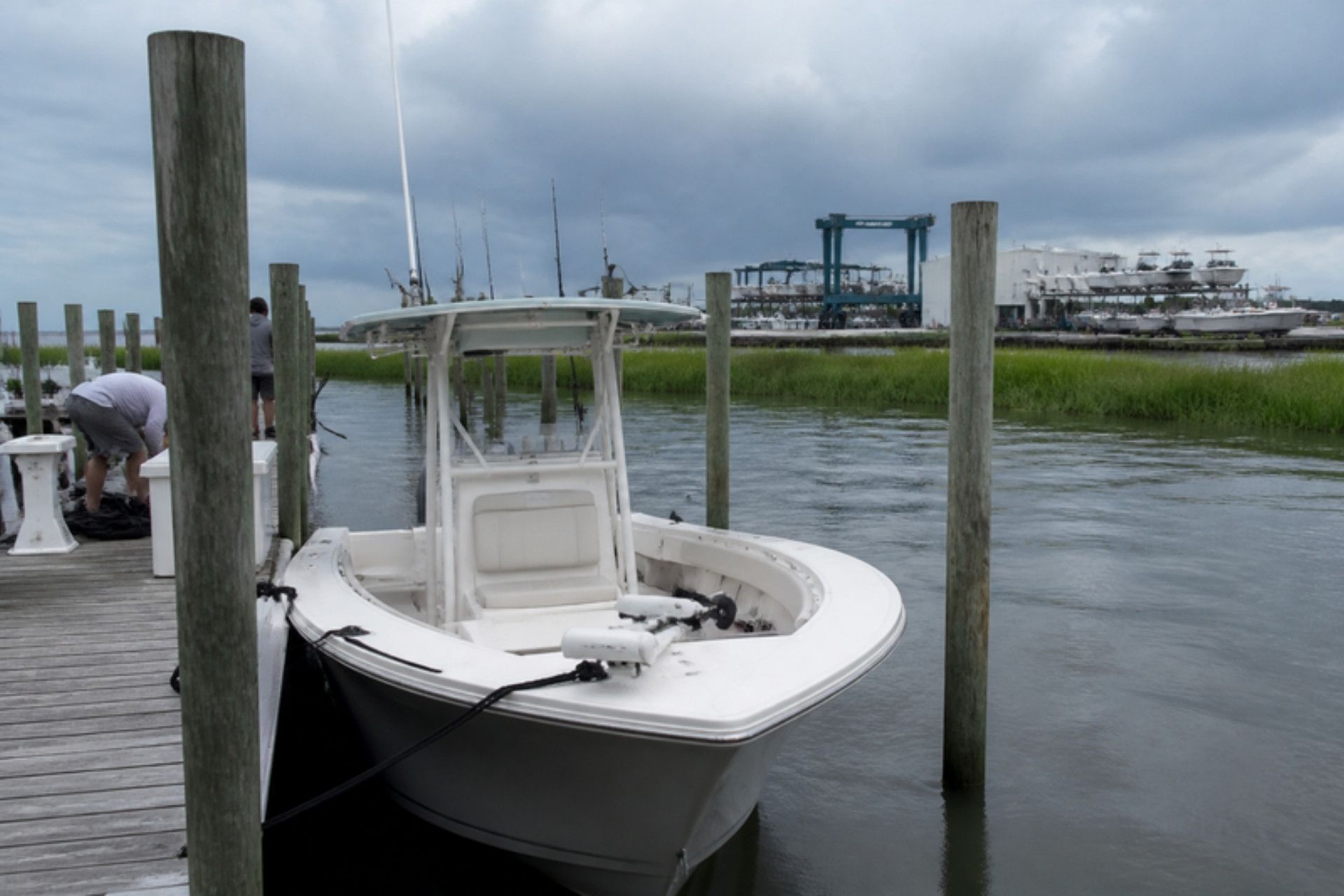
Coastal vessels require coverage that addresses saltwater exposure, navigational limits, and named storm risk. Hurricane haul-out provisions, offered by many marine carriers, help pay to move a boat to safety, whether by hauling, trailering, or relocating to a protected marina, before a named storm reaches the North Carolina coast.
Many Charlotte-area residents keep a second vessel near Wilmington, Southport, Morehead City, or the Outer Banks. Policies for these boats typically specify a navigational territory, and operating beyond those limits, such as running offshore past a stated distance, can jeopardize a claim. Owners who plan longer trips should request a territory extension before departing rather than after a loss.
Named storm exposure dominates coastal underwriting. North Carolina insurance professionals observe that catastrophe-exposed lines like coastal property still face severe underwriting challenges, and marine carriers often respond with separate named storm deductibles, frequently expressed as a percentage of the insured value. Some policies require a written hurricane plan at application.
Haul-out provisions reimburse a portion of the expense of protecting a vessel when the National Hurricane Center issues a watch or warning. Coverage details vary by carrier, but owners should examine:
- Reimbursement limits: Many provisions cap the payment, often as a dollar amount or percentage of qualifying expense.
- Triggering events: Some carriers require an official watch or warning before costs qualify.
- Qualifying actions: Hauling, trailering, and relocation may each be treated differently.
- Deductible incentives: Certain carriers reduce the named storm deductible when the owner follows the approved plan.
A frequent mistake involves waiting until a storm is a day away, when travel lifts are fully booked. Arranging a standing haul-out agreement with the marina early in the season makes the provision far more useful.
Trailer Coverage and Roadside Assistance
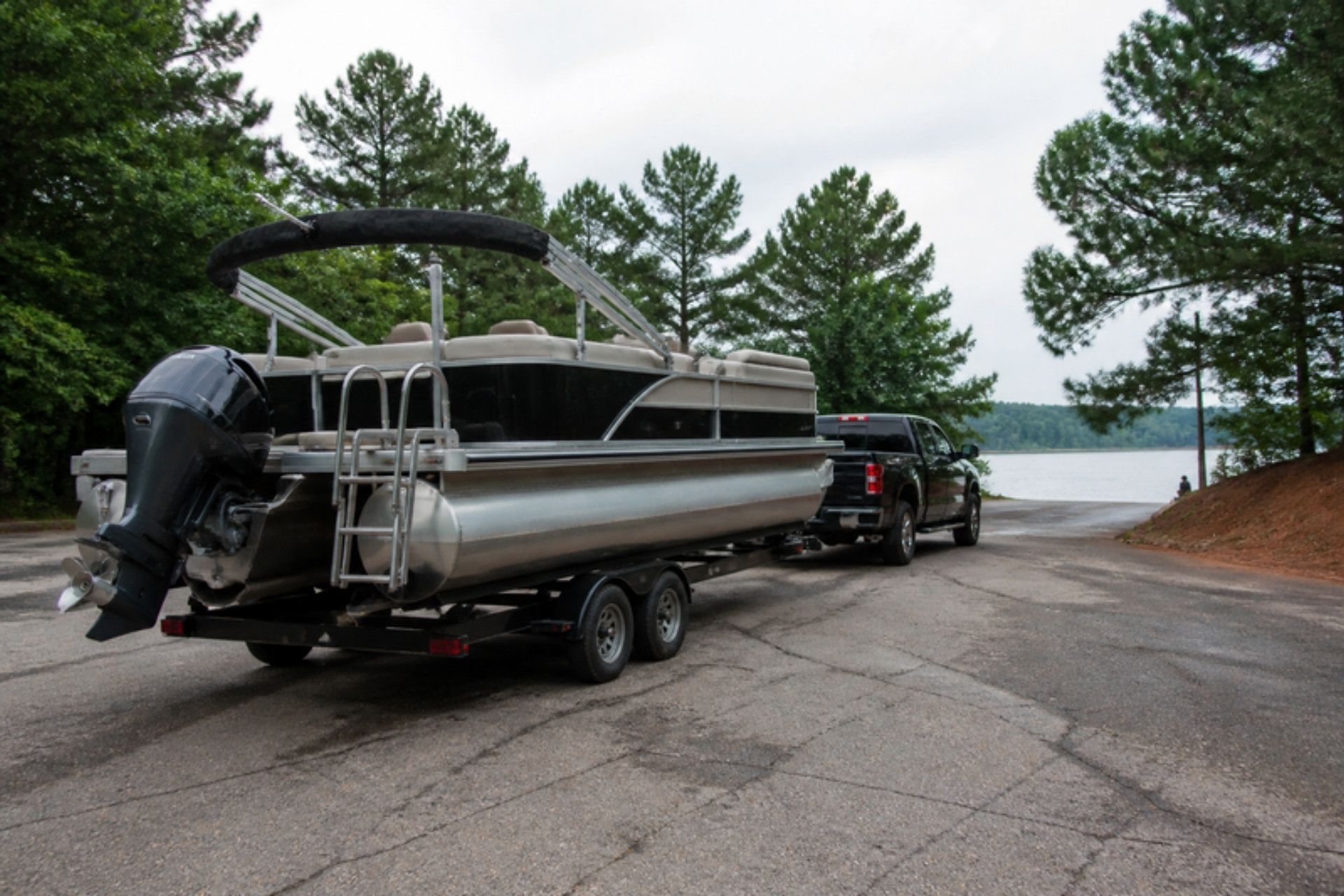
Boat trailers require specific coverage for physical damage, because a boat policy does not automatically insure the trailer and an auto policy typically extends only liability while towing. Towing assistance on the water, which rescues a disabled boat, is entirely separate from roadside assistance for a trailer on North Carolina highways.
Most auto policies extend liability to a trailer attached to an insured vehicle, so an accident on Interstate 485 en route to Lake Norman is usually handled through the auto carrier for injuries and property damage to others. A 2025 increase in North Carolina auto liability minimums to $50,000/$100,000/$50,000, effective July 1, 2025, has raised the expected floor for that towing liability. Many families benefit from carrying limits well above that minimum, given the weight and stopping distance of a loaded trailer.
Physical damage to the trailer itself is another matter. Theft from a driveway in Concord, a blown tire that sends the trailer into a guardrail on NC-49, or a fallen tree in a storage lot all require trailer physical damage coverage, typically added to the boat policy with its own listed value.
The two forms of assistance differ in practical ways:
| Service | Covers | Typical Scenario |
|---|---|---|
| On-water towing | Disabled boat, fuel delivery, jump starts, ungrounding | Dead battery in a Lake Wylie cove |
| Trailer roadside assistance | Flat tires, bearing failure, roadside breakdown | Blown tire on Interstate 77 |
Owners often purchase one and assume they have both. Reviewing both endorsements before the season prevents an expensive surprise on the shoulder of a highway.
Why Work With an Independent Agent for Boat Insurance
Many boat owners search for a particular carrier they recognize, yet an independent agent can shop several North Carolina licensed carriers simultaneously. For high net worth clients with valuable or collectible vessels, carriers such as Cincinnati and Hagerty may offer specialized private client options worth comparing alongside standard marine markets.
People typically search for a specific carrier name because of advertising, a friend's recommendation, or an existing auto or home relationship. Going directly to one company limits the comparison to that company's forms, underwriting appetite, and pricing. An independent agent represents multiple carriers and can evaluate how each treats Agreed Value, haul-out reimbursement, operator restrictions, and trailer coverage for the same vessel.
Marine underwriting differs significantly between carriers. One may decline an older coastal sportfisher while another accepts it with a current survey, and one may offer stronger named storm terms for a boat stored in Carteret County. Comparing those differences requires access to more than one market.
For clients with substantial assets, private client carriers can coordinate boat, home, auto, collections, and umbrella coverage within a unified program. Cincinnati and Hagerty are two such carriers, and features vary by policy and underwriting approval. O'Connor Insurance Associates works as an independent agency rather than as a carrier, which allows it to present multiple options and explain the tradeoffs. The agency has been recognized by the Independent Insurance Agents & Brokers of America (IIABA) as a Best Practices Agency since 2010.
Obtaining a quote generally requires the hull identification number, year, make, model, length, motor horsepower, purchase price, storage location, and the names and ages of regular operators.
Frequently Asked Questions About North Carolina Boating Coverage
Boat owners in the Charlotte area frequently raise the same questions about state requirements, policy structure, and specialized coverage. The answers below address the most common concerns in plain terms, offering a starting point before a full policy review with a licensed North Carolina agent.
Does North Carolina require boat insurance?
No state law requires insurance for privately owned recreational boats. Lenders, marinas, and storage facilities often require it, and businesses renting personal watercraft must carry at least $300,000 in liability per occurrence.
Will my homeowners policy cover my boat?
Homeowners policies usually provide very limited coverage for small boats and often exclude vessels above certain horsepower or length thresholds. Pontoons and personal watercraft generally need a separate boat policy.
Who needs a boater education card in North Carolina?
The North Carolina Wildlife Resources Commission generally requires anyone born on or after January 1, 1988, who operates a vessel with a motor of 10 horsepower or more on public waters to complete an approved boating safety course, subject to limited exceptions.
Is Agreed Value worth the extra premium?
For a newer, financed, or high-value boat, Agreed Value often prevents a significant settlement gap after a total loss. Older boats with modest value may not justify the added cost.
Does my auto policy cover my boat trailer?
Auto policies typically extend liability while towing but not physical damage to the trailer. Trailer damage and theft usually require coverage added to the boat policy.
What happens to my coastal boat during a hurricane?
Many marine policies include haul-out provisions that reimburse part of the cost to move the boat to safety before a named storm, and a separate named storm deductible may apply to any resulting damage.
Making the Right Choice for Your Vessel
Selecting the right boat policy depends on where the vessel operates, how it is stored, who operates it, and how much it is worth. Lake Norman pontoon owners, Lake Wylie personal watercraft riders, and coastal boaters each face different risks, and the policy should reflect those differences.
The most effective approach to North Carolina boat insurance begins with liability limits that match the owner's assets, continues with a valuation method suited to the boat's age, and closes the common gaps involving trailers, dock damage, and hurricane preparation. A policy review before each season ensures that operators, values, and storage locations remain accurate.
O'Connor Insurance Associates is a licensed North Carolina insurance agency (license #7014004), located in Charlotte since 2000 and led by Michelle O'Connor. The agency's educational approach focuses on asking questions and comparing carriers so that each boat owner understands the coverage before purchasing it. To review a pontoon, personal watercraft, or coastal vessel policy, contact the office at 1973 JN Pease Place, Suite 203, Charlotte, North Carolina 28262, or call 704-510-8884.
Coverage descriptions are general. Policy terms, exclusions, limits and underwriting determine coverage.
Last updated:
On this page
O’Connor Insurance Associates is fully licensed to provide personal and commercial insurance solutions for individuals, families and businesses across North Carolina.
We proudly serve families and business owners from our office in Charlotte, North Carolina. As an independent, family-owned agency since 2000, our team works with more than one insurance company to make sure homeowners, drivers, contractors, landscapers, small businesses and other personal and commercial clients receive coverage that fits their real risks.

About the Author
President & Founder
I’m Terry O’Connor, President and Founder of O’Connor Insurance Associates. I grew up in Pennsylvania, earned my bachelor’s degree at Edinboro University and my master’s at Gannon University, and in 1998 I traded snow for sunshine and moved to Charlotte. In January 2000, I started this agency on my own because I wanted to help people protect what matters most to them. More than two decades later, we’ve grown into an independent agency serving families and businesses across North Carolina, and we’ve been recognized as an IIABA Best Practices Agency every year since 2010, a distinction held by fewer than 1% of agencies nationwide.
I’ve seen firsthand how the right protection can change a family’s or a business owner’s life, and that’s why I lead with empathy, education and honest advice. As an independent agent, I work for you, not for one insurance company. I take the time to explain your options in plain language, and when you call our office, you reach a real person who knows your account.
Outside the office, you’ll usually find me outdoors hunting or fishing, or on the mat coaching wrestling as an assistant varsity coach at Mallard Creek High School. I’m also a proud supporter of the arts, usually in the front row cheering on my daughter in local theater productions. I’d be glad to review your coverage with you. Call me at 704-510-8884 or email terry@oianc.com.
Relationships are the real measure
What our North Carolina clients say.
5.0 / 5
185 reviews on Google
Personal insurance
For the life you’re making.
Your home, your car, your time away. Let’s look at the whole picture.
Business insurance
For the business you’re building.
From established local companies to growing teams, we help make the coverage conversation clearer.
Your work deserves a closer look
Different businesses.
Different conversations.
We take time to understand what happens in your business every day.

Landscaping

Manufacturers

Technology Companies

HVAC Insurance

Electricians Insurance

Food Manufacturers
A little clarity goes a long way
Good questions.
Straight answers.
Have something else on your mind?
What does an independent insurance agency do?
An independent agency helps you compare options from more than one insurance company. We start with your needs, explain the differences and help you make an informed decision.
What can O’Connor help me insure?
Our team works with personal and business insurance, life and disability coverage, and Medicare options. Tell us what you need, and we’ll connect you with the right person.
Where does your agency serve clients?
We are based in Charlotte and serve clients across North Carolina. If your business operates in more than one state, call us to discuss your locations and coverage needs.
How do I get an insurance quote?
Start with the contact form or call 704-510-8884. We’ll ask about your situation and any current coverage, then review available options. Submitting a request does not bind coverage.
Can you help with an existing policy or claim?
Yes. Our Client Center page connects you with policy service, billing and claims options. You can also call during office hours for help finding the right next step.
What should I know before switching insurance?
Compare coverage, limits, exclusions and effective dates, not just the price. Speak with your agent before canceling an existing policy so you can coordinate the transition.
From our desk to yours
A little knowledge goes a long way.



Get a Quote
Let’s protect what you’re building.
Tell us a little about yourself. We’ll help you take the next step with a clearer picture of your options.
1973 J.N. Pease Place, Suite 203
Charlotte, NC 28262
Monday–Thursday · 9 AM–5 PM
Friday · 9 AM–3 PM
