

North Carolina food manufacturing insurance is a coordinated set of policies that protects food and beverage producers against contamination events, product recalls, spoiled inventory, machinery failures, and injury or illness claims. For processors, bakeries, co-packers, and beverage makers throughout the Charlotte region, the right program supports regulatory compliance and preserves the financial stability required to keep production lines running.
The stakes in this sector are considerable. North Carolina's food, fiber, and forestry sector generates an annual economic impact of $117 billion and supports one out of every five jobs in the state. Behind that figure are thousands of operations, from family-owned sauce makers in Concord to commercial bakeries near Huntersville, each exposed to risks that a standard business owner's policy was never designed to address. A single undeclared allergen, a failed compressor during a July heat wave, or one customer's hospitalization can generate losses that exceed a year of profit.
Essential North Carolina Food Manufacturing Insurance for Local Producers
North Carolina food manufacturing insurance is a specialized bundle that addresses risks unique to producing consumable goods, including product recall, spoilage, equipment breakdown, and liability. It helps North Carolina producers meet state and federal regulatory expectations, satisfy retailer and distributor contract requirements, and protect the balance sheet when an unplanned event interrupts operations or harms a consumer.
A typical program is not one policy but several coordinated coverages, each responding to a different type of loss. The core components generally include:
- Commercial general liability: Covers bodily injury and property damage arising from premises and operations.
- Products-completed operations liability: Responds to claims that a product caused illness or injury after it left the facility.
- Product contamination and recall: Addresses the costs of withdrawing, destroying, and replacing affected goods.
- Spoilage coverage: Protects perishable inventory from temperature-related losses.
- Equipment breakdown: Covers mechanical and electrical failures of production machinery.
- Commercial property and business income: Protects buildings, contents, and lost revenue following covered physical damage.
Many producers also require workers' compensation, commercial auto for delivery vehicles, and umbrella liability to complete the program. Grocery chains and national distributors frequently require specific liability limits and additional insured endorsements before accepting a vendor, which makes contract review an essential part of the coverage design process. A frequent mistake among growing producers is purchasing a generic business owner's policy at startup and never revisiting it as wholesale accounts, new product lines, and larger facilities introduce exposures the original policy does not contemplate.
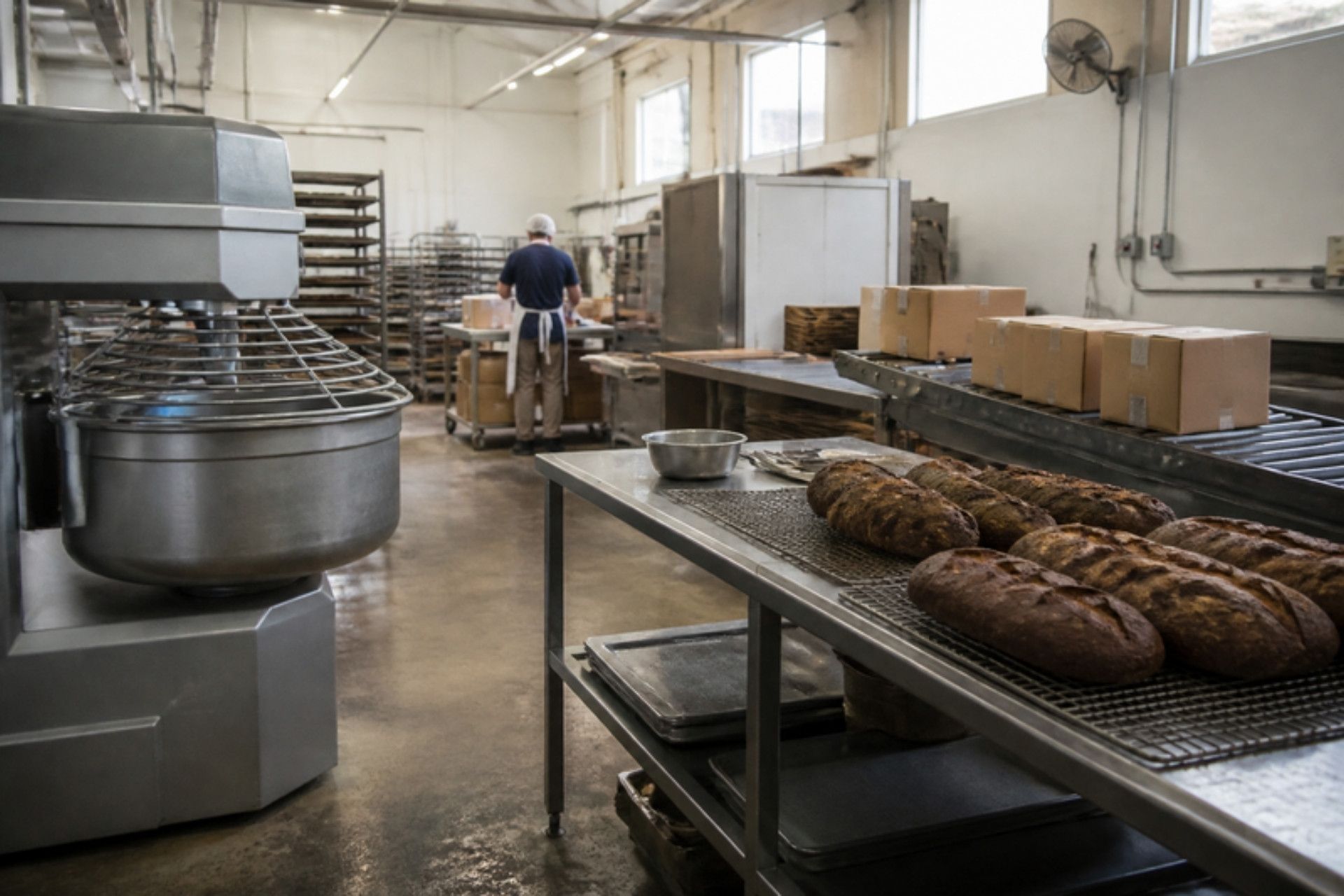
Managing Product Contamination and Recall Risks
Product contamination and recall coverage pays for the costs of removing tainted or mislabeled goods from distribution, notifying consumers and retailers, and destroying affected inventory. For North Carolina producers subject to FDA Food Safety Modernization Act (FSMA) rules and NCDA&CS inspection, this coverage addresses an exposure that general liability policies commonly exclude.
The FDA Food Safety Modernization Act, signed into law in 2011, shifted federal food safety policy from responding to contamination toward preventing it. Most food facilities registered with the FDA must maintain written food safety plans, hazard analyses, and risk-based preventive controls, and the FDA holds authority to order mandatory recalls when a company declines to act voluntarily. At the state level, the North Carolina Department of Agriculture and Consumer Services (NCDA&CS), through its Food and Drug Protection Division, conducts inspections of manufacturers, processors, and warehouses to verify sanitation and labeling compliance.
State law defines the legal threshold for a problem with considerable breadth. Under N.C.G.S. § 106-129, food is legally considered adulterated if it contains poisonous substances or decomposed matter, or if it was held under insanitary conditions where it may have become contaminated. That final clause is significant, because a product can be deemed adulterated without proof that contamination actually occurred.
Labeling errors present an equally serious exposure. In June 2026, Reser's Fine Foods, Inc. in Halifax, North Carolina, recalled approximately 5,300 pounds of ready-to-eat pasta salad due to misbranding and undeclared allergens. No pathogen was involved, yet the products still had to be pulled. Policies vary on whether they respond to government-ordered recalls only, voluntary recalls, or both, and whether mislabeling triggers coverage, so the policy wording deserves close review.
The Financial Impact of a Product Withdrawal
The direct costs of a recall extend well beyond the value of the discarded product. A withdrawal commonly generates the following expenses:
- Retrieval and transportation of products from retail shelves, warehouses, and distribution centers
- Destruction and disposal of contaminated or mislabeled goods
- Public notification, including press releases and consumer communications
- Retailer reimbursement and chargebacks for pulled inventory
- Laboratory testing, sanitation, and outside consultants
- Replacement production and overtime labor
- Lost gross profit during the interruption and rehabilitation period
Some recall policies also include crisis management expenses, which fund public relations professionals who help preserve brand reputation with retailers and consumers. Recall coverage typically does not pay for bodily injury claims, which fall under products liability, so the two coverages must be coordinated rather than treated as substitutes.
Protecting Inventory with Spoilage Coverage
Spoilage coverage reimburses North Carolina food businesses for perishable stock ruined by temperature changes, power outages, or refrigeration failures. Because raw ingredients and finished goods can lose all value within hours, this coverage protects producers of dairy, meat, produce, beverages, and prepared foods from losses that standard property forms frequently limit or exclude.
Standard commercial property policies tend to treat spoilage narrowly. Coverage may apply only when the temperature change results from direct physical damage to the building, and food spoilage coverage often depends on the specific cause of the outage and the endorsements attached to the policy. A spoilage endorsement, sometimes called refrigeration breakdown or perishable stock coverage, broadens protection to include mechanical failure of cooling equipment, contamination by refrigerant, and loss of power.
The source of the power failure matters a great deal. Many policies cover outages originating on the insured premises but exclude outages caused by a utility failure miles away, unless an off-premises power failure endorsement has been added. Winter Storm Fern in January 2026 affected over 1 million customers, and producers without that endorsement may have discovered the gap only after their walk-in coolers warmed. Hurricane season introduces a related complication, since named storm deductibles or exclusions can interact with spoilage coverage, and disputes over spoilage during hurricane-related outages are not uncommon.
Producers can strengthen both their coverage position and their loss prevention by documenting temperature logs, maintaining backup generators, and installing remote monitoring alarms. Some carriers may consider these controls favorably during underwriting, and the records substantially support a claim when a loss occurs. Business owners can also review general guidance on power outage financial preparedness when building a continuity plan.
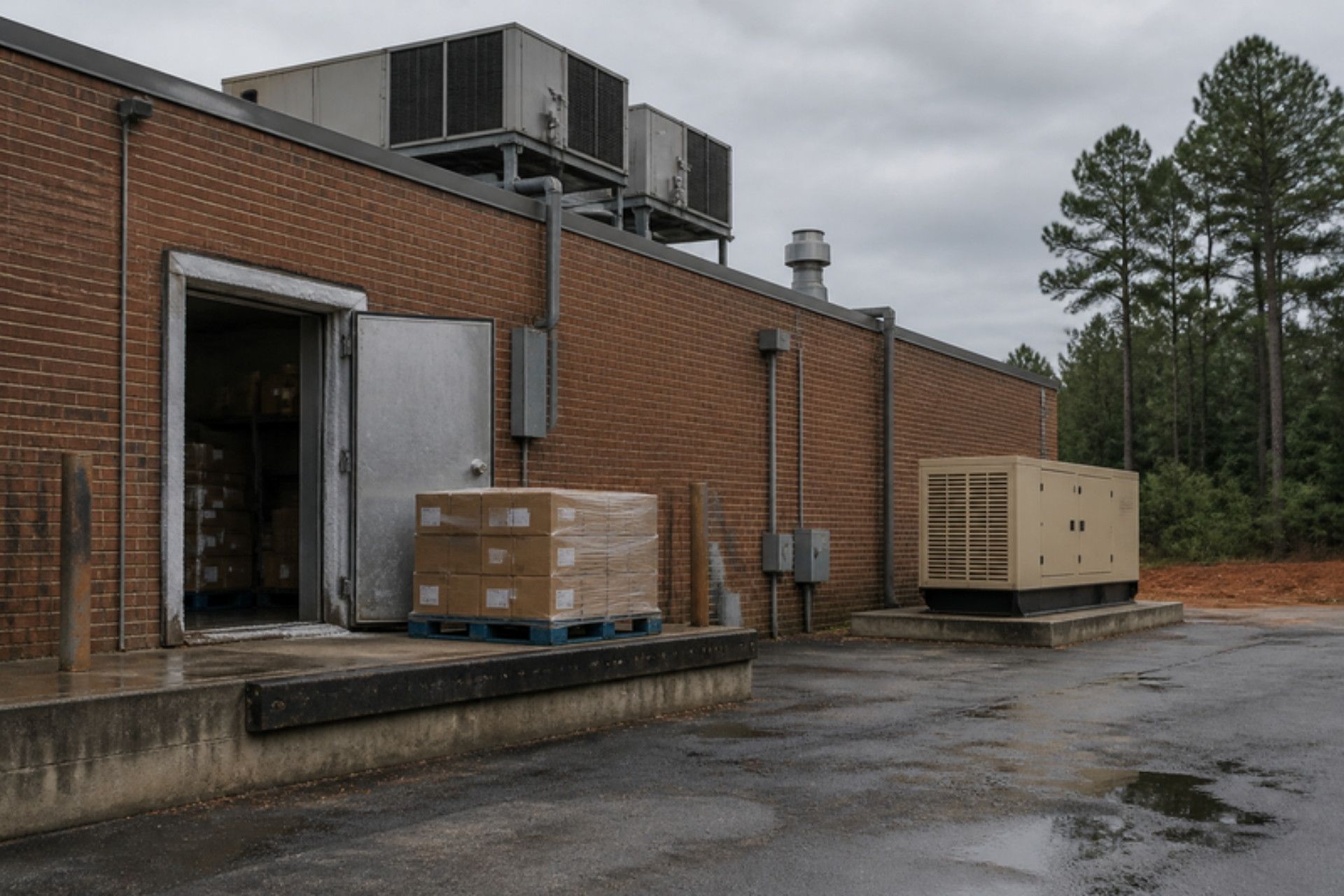
Equipment Breakdown Insurance for Production Lines
Equipment breakdown insurance covers sudden mechanical or electrical failures of production machinery, such as motor burnout, power surges, and boiler malfunctions. Unlike standard property insurance, which responds to external perils like fire or wind, this coverage addresses internal failures that commonly halt food processing lines and generate substantial repair and downtime costs.
Food production depends on specialized equipment: industrial mixers, ovens, fillers, cappers, pasteurizers, retorts, ammonia refrigeration systems, conveyor networks, and programmable logic controllers. These machines run long shifts under heat, moisture, and frequent washdowns, which accelerates wear on electrical components. The food and beverage processing equipment market continues to grow as manufacturers automate, and greater automation means more electronic components that can fail.
The distinction from property insurance is the most commonly misunderstood element of a food manufacturing program. Commercial property policies typically exclude mechanical breakdown, electrical arcing, and wear-related failure, while equipment breakdown insurance is specifically designed to cover internal malfunctions such as mechanical failure or power surges that property forms leave out. If a lightning strike starts a fire, the property policy responds; if a power surge silently destroys the control board on a bottling line, the equipment breakdown policy is generally the coverage that applies.
Downtime is where the real cost accumulates. Unplanned downtime in 2026 costs food and beverage facilities between $4,000 and $30,000 per hour, more than double the figures reported in 2019. Approximately 82% of food manufacturers reported at least one unplanned downtime event in 2026, with an average resolution time of 81 minutes. Well-designed equipment breakdown policies may include business income, extra expense, expediting expenses for rush parts shipping, and spoilage resulting from the breakdown, although sublimits vary considerably between carriers and should be compared carefully.
General and Product Liability for Food and Beverage Businesses
General liability covers injuries and property damage occurring on business premises or during operations, while product liability covers harm caused by a product after it leaves the facility. For North Carolina food producers, product liability is the coverage that typically responds to foodborne illness claims, allergic reactions, and injuries from foreign objects.
General liability addresses the everyday exposures of running a facility. A sales representative who slips on a wet production floor, a delivery driver injured on a loading dock, or damage to a client's property during an on-site demonstration would generally fall under this coverage. It may also include personal and advertising injury, which can respond to certain claims involving packaging or marketing materials.
Product liability, often written as products-completed operations coverage within the general liability policy, responds to the more serious exposure for most producers. A consumer in Cornelius who contracts salmonellosis from a packaged dip, a child who suffers an anaphylactic reaction to an unlabeled tree nut ingredient, or a customer who breaks a tooth on a metal fragment in a granola bar would each present a products claim. These claims can involve medical expenses, lost wages, pain and suffering, and legal defense costs, and outbreaks affecting multiple consumers can quickly exhaust low limits.
Cost is a frequent concern for smaller operations. Small North Carolina food manufacturers with under $500,000 in revenue typically pay between $265 and $1,260 per month for general liability insurance as of October 2026, with the range driven by product type, distribution reach, claims history, and food safety controls.
Comparison: General Liability vs. Product Liability
| Feature | General Liability | Product Liability |
|---|---|---|
| Primary focus | Premises and operations | Products after they leave the facility |
| Common claim | Visitor slip-and-fall | Foodborne illness |
| Allergen reactions | Generally not | Generally yes |
| Foreign objects in food | Generally not | Generally yes |
| Retailer requirement | Frequently required | Frequently required with high limits |
| Recall costs | No | No (requires recall coverage) |
Why North Carolina Producers Choose an Independent Agent
Many business owners search for a specific carrier's local agent because they recognize the brand name or already hold a personal policy with that company. An independent agent offers a broader approach, comparing multiple carriers to match a food manufacturer's specific products, processes, and contractual obligations with the most suitable coverage.
The reasons people look for a particular carrier's agent are understandable. A familiar name suggests stability, a neighbor or industry peer may have recommended that company, or a retailer's vendor packet may have referenced one. Captive agents, however, represent a single carrier and can only offer that company's forms, appetite, and pricing. If that carrier does not write recall coverage, excludes certain food categories, or caps spoilage at a low sublimit, the producer has few alternatives within that one office.
Food manufacturing is a specialized class, and carrier appetite varies considerably. Some carriers may prefer bakeries and dry goods while declining meat processors, and others may offer strong equipment breakdown forms but limited recall options. An independent agency can present several options side by side, explain the differences in exclusions and sublimits, and assemble a program that may combine more than one carrier when necessary.
Obtaining a quote through an independent agent generally follows a straightforward process:
- Gather product lists, ingredient sourcing details, and annual sales figures
- Provide copies of food safety plans, HACCP documentation, and recent NCDA&CS inspection results
- Share retailer and distributor contracts that specify insurance requirements
- List major equipment, refrigeration systems, and current replacement values
- Review the proposals with the agent, focusing on exclusions and limits rather than premium alone
O'Connor Insurance Associates, an independent agency serving Charlotte since 2000, emphasizes asking detailed questions and educating clients so that business owners understand what each policy does and does not cover before they commit.
Frequently Asked Questions About Food Insurance in North Carolina
Do I need insurance for a small commercial kitchen in North Carolina?
State law does not mandate general liability for most food businesses, but workers' compensation is required once a business has three or more employees. Commercial kitchens, landlords, and retail buyers almost always require proof of liability coverage before granting access or accepting product.
Does general liability cover a product recall?
No, standard general liability policies typically exclude the cost of recalling, withdrawing, and destroying products. A separate product contamination and recall policy is generally needed for those expenses.
Is spoilage covered if the power goes out during a storm?
It depends on the policy wording and endorsements. Outages originating away from the premises often require an off-premises power failure endorsement, and hurricane deductibles may also apply.
What happens if a customer gets sick from my product?
Products liability coverage generally responds to defend the claim and pay damages if the business is found responsible. Maintaining batch records and traceability documents helps support the defense.
Will my property policy pay if my mixer motor burns out?
Usually not, because most property policies exclude mechanical and electrical breakdown. Equipment breakdown coverage is designed for that type of failure.
How can I keep premiums manageable?
Documented food safety programs, sanitation logs, supplier verification, and temperature monitoring can improve how carriers view a risk. Comparing several carriers through an independent agent also helps identify appropriate pricing.
Making the Right Choice for Your Manufacturing Facility
Selecting coverage for a food manufacturing facility requires matching each policy to a specific, foreseeable loss: recall for contamination and labeling errors, spoilage for temperature failures, equipment breakdown for machinery malfunctions, and liability for consumer harm. Gaps between these coverages are where the costliest surprises occur.
Industry observers note that operators are approaching 2026 with optimism but also real financial pressure from rising food costs, which makes disciplined risk management more important than ever. An annual review that accounts for new products, new retail accounts, added equipment, and updated regulatory obligations helps keep a program aligned with the business as it grows. Insurance remains the safety net for the disaster no one planned for, and in food production that disaster can arrive as a single mislabeled case or one failed compressor.
O'Connor Insurance Associates, recognized as an IIABA Best Practices Agency since 2010, designs customized programs for food and beverage producers throughout Charlotte, Huntersville, Concord, Cornelius, and Harrisburg. O'Connor Insurance Associates is a licensed North Carolina insurance agency (license #7014004) located at 1973 JN Pease Place, Suite 203, Charlotte, North Carolina 28262. To review a current program or request a comparison of North Carolina food manufacturing insurance options, contact the agency at 704-510-8884.
Coverage descriptions are general. Policy terms, exclusions, limits and underwriting determine coverage.
Last updated:
On this page
O’Connor Insurance Associates is fully licensed to provide personal and commercial insurance solutions for individuals, families and businesses across North Carolina.
We proudly serve families and business owners from our office in Charlotte, North Carolina. As an independent, family-owned agency since 2000, our team works with more than one insurance company to make sure homeowners, drivers, contractors, landscapers, small businesses and other personal and commercial clients receive coverage that fits their real risks.

About the Author
President & Founder
I’m Terry O’Connor, President and Founder of O’Connor Insurance Associates. I grew up in Pennsylvania, earned my bachelor’s degree at Edinboro University and my master’s at Gannon University, and in 1998 I traded snow for sunshine and moved to Charlotte. In January 2000, I started this agency on my own because I wanted to help people protect what matters most to them. More than two decades later, we’ve grown into an independent agency serving families and businesses across North Carolina, and we’ve been recognized as an IIABA Best Practices Agency every year since 2010, a distinction held by fewer than 1% of agencies nationwide.
I’ve seen firsthand how the right protection can change a family’s or a business owner’s life, and that’s why I lead with empathy, education and honest advice. As an independent agent, I work for you, not for one insurance company. I take the time to explain your options in plain language, and when you call our office, you reach a real person who knows your account.
Outside the office, you’ll usually find me outdoors hunting or fishing, or on the mat coaching wrestling as an assistant varsity coach at Mallard Creek High School. I’m also a proud supporter of the arts, usually in the front row cheering on my daughter in local theater productions. I’d be glad to review your coverage with you. Call me at 704-510-8884 or email terry@oianc.com.
Relationships are the real measure
What our North Carolina clients say.
5.0 / 5
185 reviews on Google
Personal insurance
For the life you’re making.
Your home, your car, your time away. Let’s look at the whole picture.
Business insurance
For the business you’re building.
From established local companies to growing teams, we help make the coverage conversation clearer.
Your work deserves a closer look
Different businesses.
Different conversations.
We take time to understand what happens in your business every day.

Landscaping

Manufacturers

Technology Companies

HVAC Insurance

Electricians Insurance

Food Manufacturers
A little clarity goes a long way
Good questions.
Straight answers.
Have something else on your mind?
What does an independent insurance agency do?
An independent agency helps you compare options from more than one insurance company. We start with your needs, explain the differences and help you make an informed decision.
What can O’Connor help me insure?
Our team works with personal and business insurance, life and disability coverage, and Medicare options. Tell us what you need, and we’ll connect you with the right person.
Where does your agency serve clients?
We are based in Charlotte and serve clients across North Carolina. If your business operates in more than one state, call us to discuss your locations and coverage needs.
How do I get an insurance quote?
Start with the contact form or call 704-510-8884. We’ll ask about your situation and any current coverage, then review available options. Submitting a request does not bind coverage.
Can you help with an existing policy or claim?
Yes. Our Client Center page connects you with policy service, billing and claims options. You can also call during office hours for help finding the right next step.
What should I know before switching insurance?
Compare coverage, limits, exclusions and effective dates, not just the price. Speak with your agent before canceling an existing policy so you can coordinate the transition.
From our desk to yours
A little knowledge goes a long way.



Get a Quote
Let’s protect what you’re building.
Tell us a little about yourself. We’ll help you take the next step with a clearer picture of your options.
1973 J.N. Pease Place, Suite 203
Charlotte, NC 28262
Monday–Thursday · 9 AM–5 PM
Friday · 9 AM–3 PM
