

North Carolina mills operate in an environment where a single spark in a carding room, a cracked bearing on a spinning frame, or a container delayed at sea can stop production for weeks. These events are not theoretical: they appear regularly in claim files, local news reports, and state workforce filings. Insurance for textile manufacturers must therefore be built around the specific ways fiber, machinery, and global freight interact on the mill floor.
The stakes in 2026 are considerable. North Carolina remains the second-largest textile workforce in the United States, with over 640 mills producing output valued at approximately $3.2 billion. That same year has brought contraction, including the permanent closure of Parkdale Mills in Walnut Cove and major layoffs at Firestone Fibers and Textiles in Gastonia and Kings Mountain. For the producers who remain, a well-designed insurance program is often the difference between a temporary setback and a permanent shutdown.
Essential North Carolina Textile Manufacturer Insurance for Modern Mills
North Carolina textile manufacturer insurance combines property, general liability, workers compensation, equipment breakdown, and business income coverage into a program built for fiber processing hazards. Gaston County's textile heritage, rooted in generations of spinning and weaving, illustrates the long-standing exposures to fire, machinery failure, and worker injury that continue to define the industry's risk profile today.
Many facilities in Gastonia, Belmont, and the surrounding region occupy older brick mill buildings with wood flooring, heavy timber framing, and electrical systems that have been modified repeatedly over decades. Underwriters review these structures closely, and the construction class, sprinkler status, and age of wiring directly influence both eligibility and premium. A modern operation housed in a historic building carries a different risk profile than a newer tilt-up facility in Concord or Harrisburg.
Small-to-mid-sized North Carolina manufacturing businesses in 2026 typically spend between $9,000 and $28,000 in total annual insurance costs, although textile operations with high fire loads or large payrolls may fall outside that range. The core of most programs includes the following elements:
- Commercial property: buildings, machinery, raw fiber, and finished goods
- General liability: third-party injury and property damage claims
- Workers compensation: required for most North Carolina employers with three or more employees
- Commercial auto: delivery trucks and company vehicles
- Umbrella liability: additional limits above primary policies
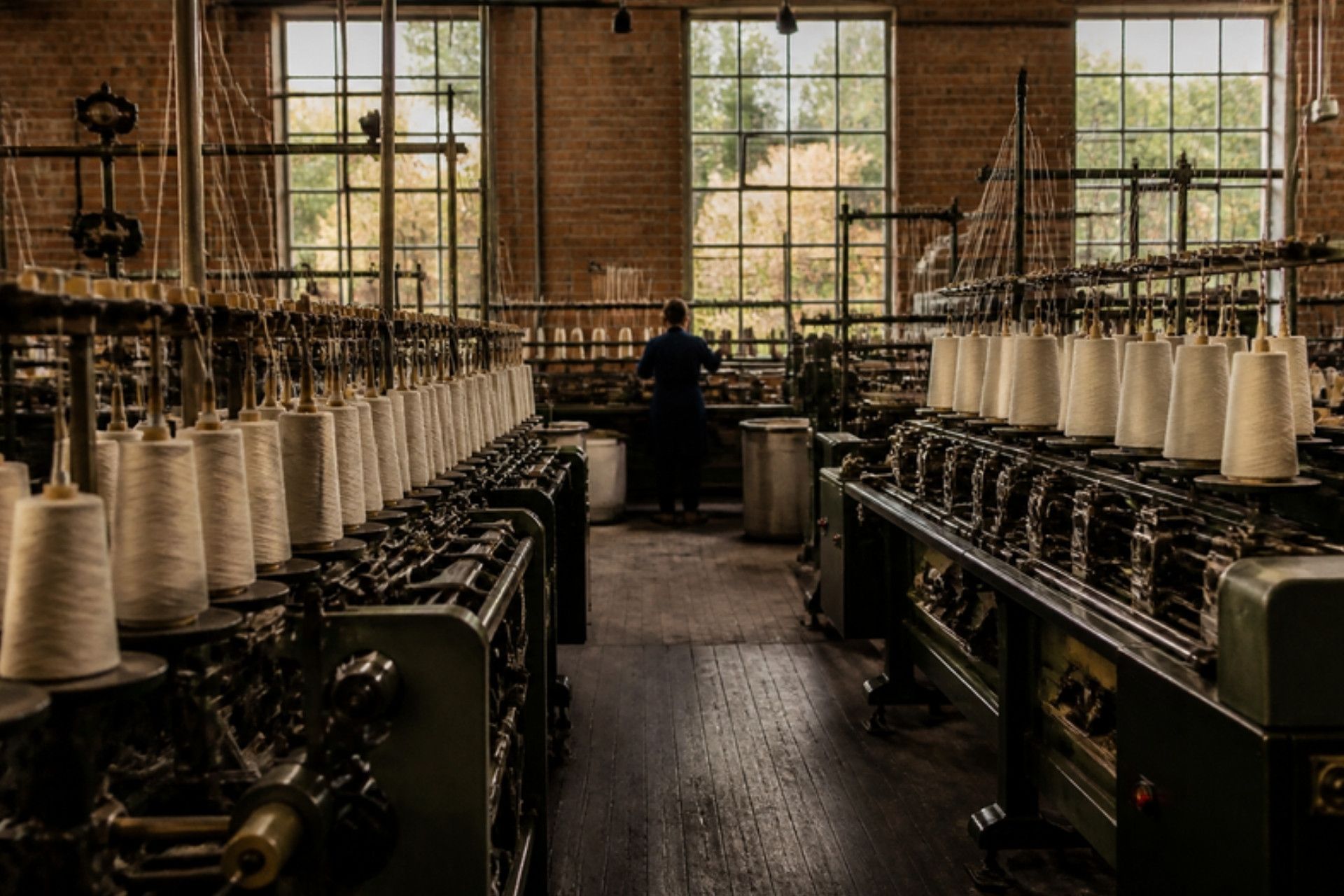
Managing Fire and Dust Explosion Risk in Textile Production
Cotton lint, synthetic fiber fly, and finishing residues accumulate on beams, ductwork, and motors, creating fuel that ignites easily and spreads fire rapidly. North Carolina mills require specialized property coverage, accurate valuation, and documented dust control programs, because standard business policies frequently restrict or exclude explosion-related losses in these environments.
Recent events demonstrate how quickly textile and coatings facilities can suffer severe damage. In March 2026, a major fire at Tex Tech Coatings Manufacturing in Kernersville required 64 firefighters to control and caused significant facility damage. In Graham, a suspicious October 2026 fire at the old Culp textile mill marked the third multi-alarm fire at that site since 2022, a reminder that vacant and partially occupied mill properties carry their own distinct exposures.
The regulatory framework has also changed. Effective December 2024, the NFPA 660 standard consolidated six separate combustible dust standards into one, and many North Carolina mills are completing Dust Hazard Analysis revalidations in 2026. Carriers increasingly request these documents during underwriting, and a mill that cannot produce a current analysis may face higher premiums or restrictive terms.
Risk Mitigation Steps Underwriters Review
Housekeeping schedules, dust collection system maintenance, hot work permits, and thermographic inspections of electrical panels all influence how a carrier views the account. One common mistake involves underinsuring raw materials during peak inventory months; a reporting form or peak season endorsement can address that seasonal gap.
Protecting Operations from Equipment Breakdown and Supply Chain Interruption
A failed loom motor, a seized spinning frame gearbox, or a shipment stuck at sea can stop output entirely. Equipment breakdown coverage pays to repair mechanical and electrical failures, while business income and contingent business income coverage replace lost earnings during the resulting interruption, which is essential for North Carolina producers.
Standard property policies generally exclude mechanical breakdown, electrical arcing, and boiler failure, which are precisely the losses that occur most often in a mill. Equipment breakdown coverage, sometimes called boiler and machinery insurance, typically responds to sudden internal failures of looms, spinning frames, air compressors, HVAC systems, and programmable logic controllers. Some carriers also offer spoilage coverage for temperature-sensitive dyes and chemicals when refrigeration or climate control fails.
Global logistics introduce a second category of disruption. The mid-2026 "Mould Crisis," driven by maritime detours around the Cape of Good Hope, produced catastrophic cargo degradation for textile shipments due to 50 to 80 percent longer transit times. A mill waiting on imported yarn or specialty machine parts may lose weeks of production without suffering any physical damage on its own premises.
That distinction matters because ordinary business income coverage requires direct physical loss at the insured location. Contingent business income coverage extends protection to losses at key suppliers or customers, although carriers vary considerably in how they define dependent properties and whether unnamed suppliers qualify. Ocean cargo or transit coverage addresses physical damage to goods in shipment.
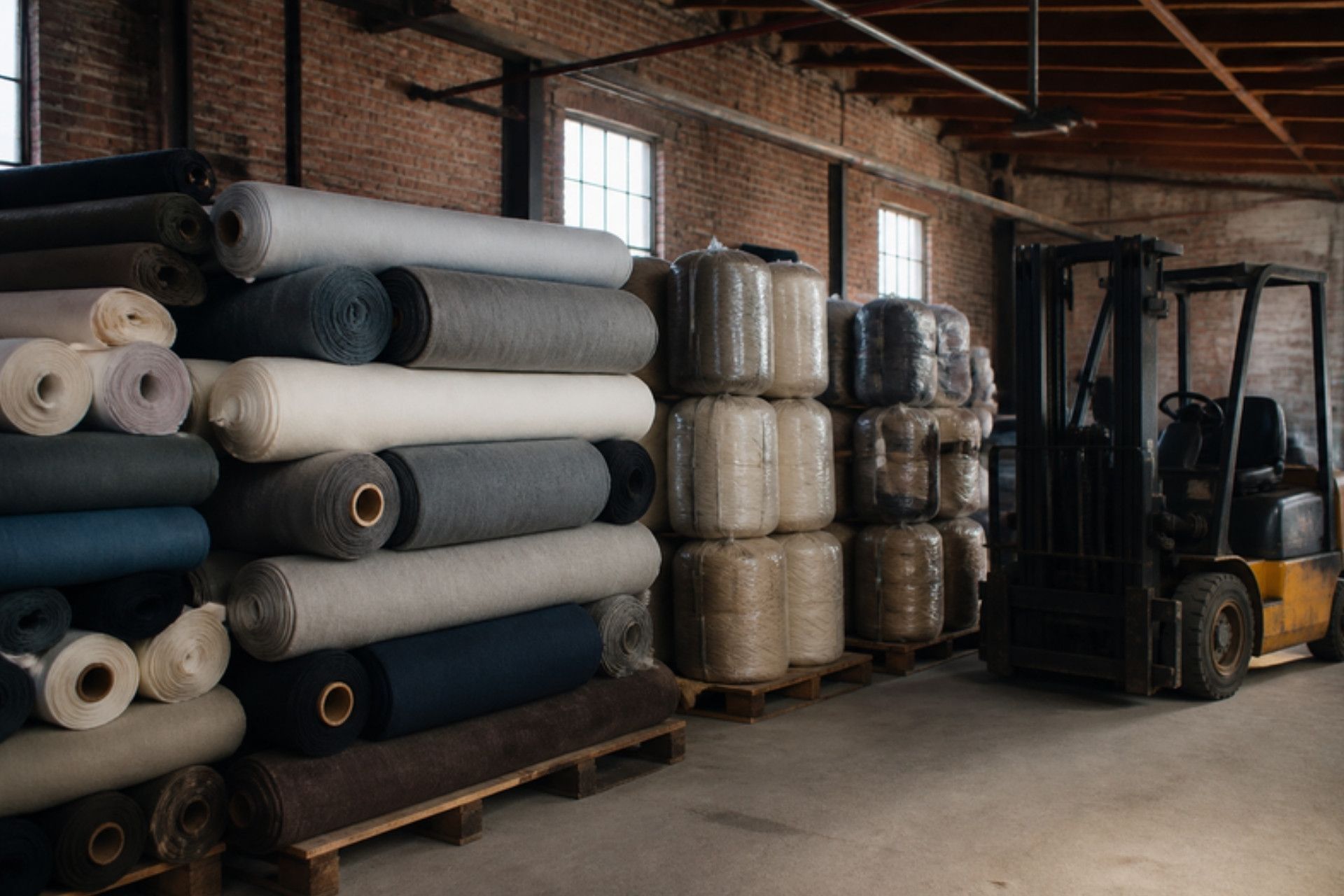
Comparing Core Coverage vs Specialized Textile Endorsements
A basic liability and property package addresses ordinary business risks, but textile operations usually require endorsements for dust explosions, machinery failure, and supplier disruptions. The comparison below illustrates where a basic program typically ends and where extended textile coverage may begin, subject to individual carrier terms.
| Exposure | Basic Liability Package | Extended Textile Coverage |
|---|---|---|
| Customer injury on site | Covered | Covered |
| Building fire | Covered | Covered, often higher limits |
| Dust explosion | Often limited or excluded | Specifically addressed |
| Loom or frame breakdown | Excluded | Covered with equipment breakdown |
| Lost income after a fire | Sometimes included | Included with longer restoration period |
| Supplier shutdown | Not covered | Contingent business income |
| Goods in transit | Minimal | Inland marine or cargo coverage |
| Spoiled dyes or chemicals | Not covered | Spoilage endorsement available |
The most frequent coverage gap appears in the period of restoration. Many policies default to 12 months of business income protection, yet replacing specialized textile machinery can take considerably longer when equipment must be sourced from overseas manufacturers. An extended period of indemnity endorsement allows income protection to continue while a mill rebuilds its customer base after reopening.
Why Work with a Local Independent Agent for Textile Insurance?
Mill owners often search for a specific carrier's agent page because they recognize a brand name or received a referral. An independent agent in Charlotte, however, can compare multiple carriers that underwrite textile risks, which frequently produces stronger terms than approaching a single company directly.
People look for carrier-specific agent pages for understandable reasons: familiarity, a prior policy, or a recommendation from another manufacturer. A captive agent can only offer that one carrier's products, and if the carrier declines a mill with older construction or recent fire losses, the search begins again. An independent agency presents the same account to several markets at once, comparing property forms, explosion language, and business income provisions side by side.
O'Connor Insurance Associates has served the Charlotte region as an independent agency since 2000 and has been recognized as an IIABA Best Practices Agency since 2010, a designation from the Independent Insurance Agents & Brokers of America (IIABA). The agency is not an insurance carrier; it works with carriers on behalf of clients. Its educational approach emphasizes asking detailed questions about operations, from carding and spinning to dyeing and finishing, so that coverage reflects the actual work performed rather than a generic manufacturing classification.
Common Questions About North Carolina Textile Insurance
Textile manufacturers frequently raise similar questions about requirements, exclusions, and costs. The answers below address the issues that arise most often for mills and fabric producers in the Charlotte region and across North Carolina.
What insurance do I need for a small fabric mill?
Most small mills need commercial property, general liability, workers compensation, and equipment breakdown coverage. Business income and commercial auto are also commonly recommended depending on operations.
Does standard property insurance cover dust explosions?
Not always. Many standard forms limit or exclude explosion losses from combustible dust, so the policy language should be reviewed carefully before a claim occurs.
Is workers compensation required for textile businesses in North Carolina?
Workers compensation is generally required for North Carolina employers with three or more employees. Textile operations face injury exposures from machinery, repetitive motion, and lifting.
Will my policy cover lost income if a supplier overseas shuts down?
Only if the program includes contingent business income coverage. Standard business income coverage usually requires physical damage at the insured location.
How does NFPA 660 affect my insurance?
Carriers may request a current Dust Hazard Analysis during underwriting or renewal. Documented compliance can support more favorable terms.
Can an older mill building still be insured?
Yes, although underwriters will evaluate wiring, sprinklers, roofing, and occupancy. Updates to electrical and fire protection systems often improve available options.
Making the Right Choice for Your Manufacturing Facility
Securing the right coverage begins with an accurate picture of property values, machinery, payroll, and supply dependencies. Mill owners should gather this information, document dust control practices, and request a coverage review from an independent agent who understands North Carolina textile operations and their specific exposures.
The industry is also evolving. North Carolina State University will lead FutureTEX, a $480 million initiative to modernize domestic textile manufacturing and strengthen the defense supply chain, which suggests that new equipment, digital systems, and defense contracts may reshape coverage needs for many producers. Programs designed several years ago may no longer reflect current values or contractual requirements.
A practical sequence for owners includes the following steps:
- Update valuations for buildings, machinery, and peak season inventory.
- Collect documentation, including the current Dust Hazard Analysis and maintenance records.
- Map suppliers and customers that could interrupt production if they fail.
- Review exclusions for explosion, breakdown, and transit losses.
- Request a multi-carrier comparison before renewal.
O'Connor Insurance Associates is a licensed North Carolina insurance agency (license #7014004) located at 1973 JN Pease Place, Suite 203, Charlotte, North Carolina 28262. Manufacturers seeking a tailored review of textile mill insurance may call 704-510-8884 to begin a conversation about protecting the facility, the workforce, and the income that depends on both.
Coverage descriptions are general. Policy terms, exclusions, limits and underwriting determine coverage.
Last updated:
On this page
O’Connor Insurance Associates is fully licensed to provide personal and commercial insurance solutions for individuals, families and businesses across North Carolina.
We proudly serve families and business owners from our office in Charlotte, North Carolina. As an independent, family-owned agency since 2000, our team works with more than one insurance company to make sure homeowners, drivers, contractors, landscapers, small businesses and other personal and commercial clients receive coverage that fits their real risks.

About the Author
President & Founder
I’m Terry O’Connor, President and Founder of O’Connor Insurance Associates. I grew up in Pennsylvania, earned my bachelor’s degree at Edinboro University and my master’s at Gannon University, and in 1998 I traded snow for sunshine and moved to Charlotte. In January 2000, I started this agency on my own because I wanted to help people protect what matters most to them. More than two decades later, we’ve grown into an independent agency serving families and businesses across North Carolina, and we’ve been recognized as an IIABA Best Practices Agency every year since 2010, a distinction held by fewer than 1% of agencies nationwide.
I’ve seen firsthand how the right protection can change a family’s or a business owner’s life, and that’s why I lead with empathy, education and honest advice. As an independent agent, I work for you, not for one insurance company. I take the time to explain your options in plain language, and when you call our office, you reach a real person who knows your account.
Outside the office, you’ll usually find me outdoors hunting or fishing, or on the mat coaching wrestling as an assistant varsity coach at Mallard Creek High School. I’m also a proud supporter of the arts, usually in the front row cheering on my daughter in local theater productions. I’d be glad to review your coverage with you. Call me at 704-510-8884 or email terry@oianc.com.
Relationships are the real measure
What our North Carolina clients say.
5.0 / 5
185 reviews on Google
Personal insurance
For the life you’re making.
Your home, your car, your time away. Let’s look at the whole picture.
Business insurance
For the business you’re building.
From established local companies to growing teams, we help make the coverage conversation clearer.
Your work deserves a closer look
Different businesses.
Different conversations.
We take time to understand what happens in your business every day.

Landscaping

Manufacturers

Technology Companies

HVAC Insurance

Electricians Insurance

Food Manufacturers
A little clarity goes a long way
Good questions.
Straight answers.
Have something else on your mind?
What does an independent insurance agency do?
An independent agency helps you compare options from more than one insurance company. We start with your needs, explain the differences and help you make an informed decision.
What can O’Connor help me insure?
Our team works with personal and business insurance, life and disability coverage, and Medicare options. Tell us what you need, and we’ll connect you with the right person.
Where does your agency serve clients?
We are based in Charlotte and serve clients across North Carolina. If your business operates in more than one state, call us to discuss your locations and coverage needs.
How do I get an insurance quote?
Start with the contact form or call 704-510-8884. We’ll ask about your situation and any current coverage, then review available options. Submitting a request does not bind coverage.
Can you help with an existing policy or claim?
Yes. Our Client Center page connects you with policy service, billing and claims options. You can also call during office hours for help finding the right next step.
What should I know before switching insurance?
Compare coverage, limits, exclusions and effective dates, not just the price. Speak with your agent before canceling an existing policy so you can coordinate the transition.
From our desk to yours
A little knowledge goes a long way.



Get a Quote
Let’s protect what you’re building.
Tell us a little about yourself. We’ll help you take the next step with a clearer picture of your options.
1973 J.N. Pease Place, Suite 203
Charlotte, NC 28262
Monday–Thursday · 9 AM–5 PM
Friday · 9 AM–3 PM
