

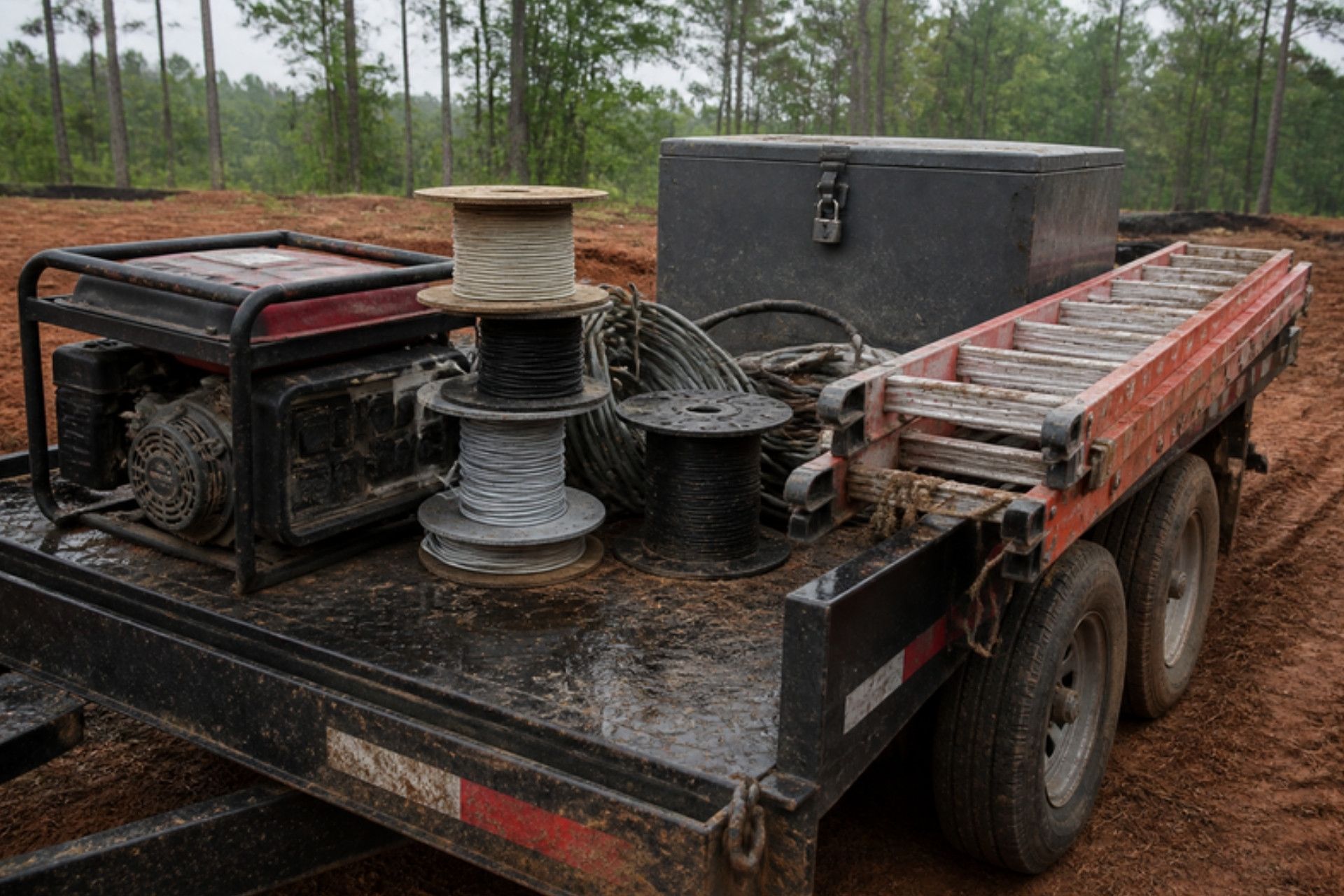
A Charlotte electrical contractor loads a trailer with a generator, wire spools, and a set of cordless tools on Monday morning, and by Wednesday the trailer is empty. North Carolina inland marine insurance is the coverage built for that kind of loss, protecting mobile equipment, tools, installation materials, and property in transit that a standard building policy was never designed to follow.
For contractors and trade businesses across Charlotte, Huntersville, Concord, Cornelius, and Harrisburg, the question is rarely whether equipment needs protection. The more useful question is which inland marine forms fit the way a particular business actually operates, moves materials, and stores tools from one week to the next.
Understanding North Carolina Inland Marine Insurance for Local Businesses
North Carolina inland marine insurance covers business property that is mobile, temporarily located away from a fixed premises, or in transit between locations. It fills the gaps left by standard commercial property policies, which generally limit or exclude coverage once equipment, tools, or materials leave the insured building described on the declarations page.
The name dates back to the early days of marine insurance, when coverage for goods shipped over water expanded to protect goods moving over land. North Carolina law still draws a line between the two, as state statute separates ocean marine from inland marine and keeps regulatory oversight over the inland marine side.
That regulatory structure matters to business owners for a practical reason. Inland marine policies not written to manual rates are generally exempt from standard rate filing requirements, although the Commissioner may still request supporting data. This flexibility allows carriers to shape forms around a specific operation, such as a landscaping company with mowers spread across three job sites or a plumbing contractor with a single service van.
Market conditions also favor buyers right now. Industry reports describe a two-speed market in which property-driven lines like inland marine are softening while liability-driven lines remain firm, which means a well-prepared submission often receives more competitive attention from carriers in 2026.
Protecting Assets with Contractors Equipment and Tool Coverage
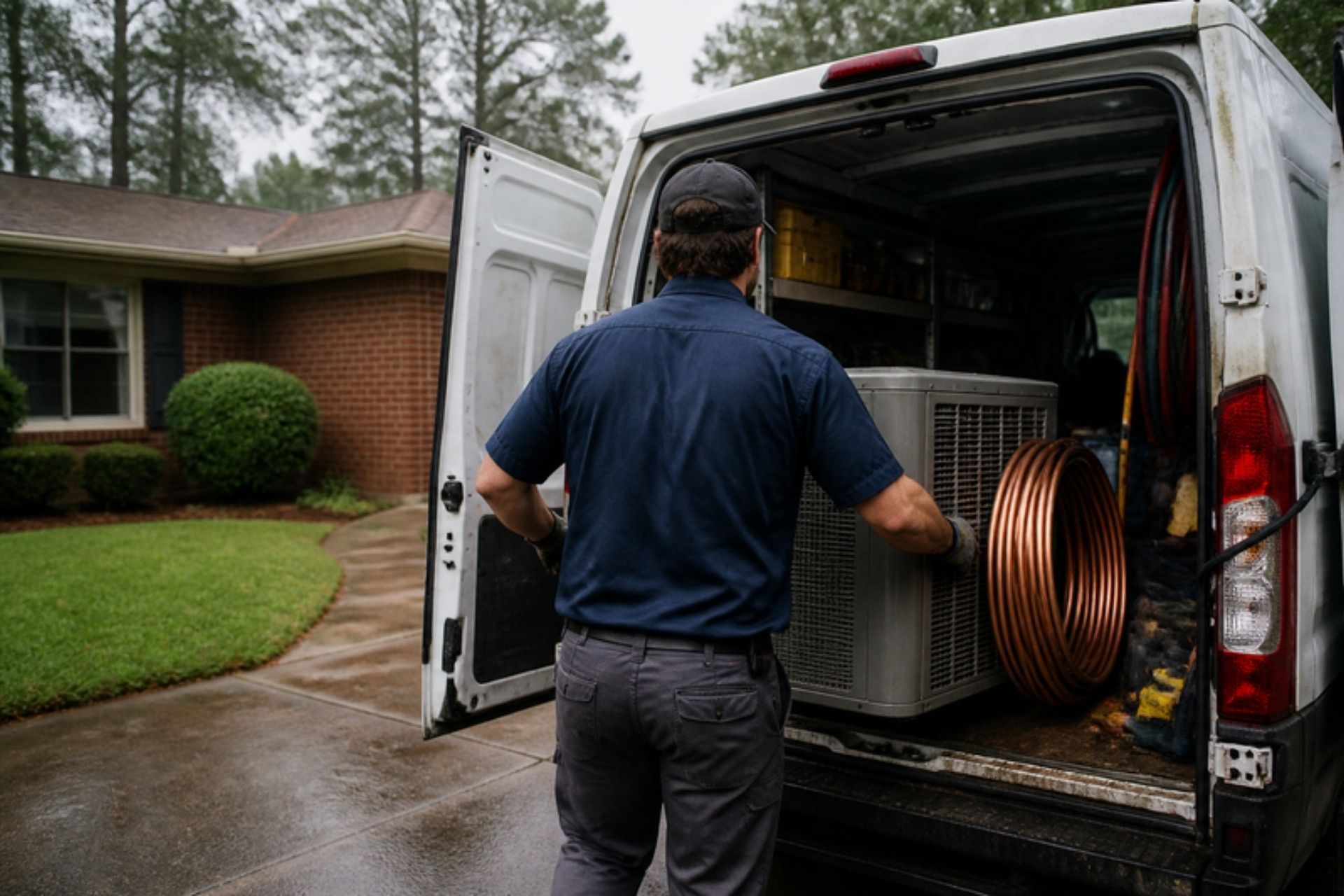
Contractors equipment coverage protects owned, leased, and rented machinery and tools against theft, vandalism, fire, and many forms of physical damage. Coverage generally follows the property whether it sits on a job site, rides in a locked trailer, or remains stored at the shop, subject to the specific policy terms and exclusions.
Theft represents the most frequent and frustrating claim among North Carolina contractors. Job sites in fast-growing areas such as the University City corridor, Concord, and the Lake Norman communities often remain lightly secured overnight, and skid steers, compact excavators, generators, and cordless tool kits are portable, valuable, and easy to resell.
A common client mistake involves assuming that the commercial auto policy covers tools stolen from a truck. In most cases, auto coverage protects the vehicle itself, not the contents, which leaves the contractor to absorb the loss unless a tool floater is in place. Another frequent gap appears with rented equipment, because many rental agreements make the contractor responsible for the full value of the machine.
Several policy details deserve careful review before purchase:
- Scheduled versus blanket coverage: Larger machinery is usually listed individually by serial number, while small tools are often covered under a blanket limit.
- Per-item limits: Many forms cap any single small tool at a set amount, which can affect specialty instruments.
- Valuation method: With equipment values rising, owners should compare Replacement Cost against Actual Cash Value, since depreciation can sharply reduce a settlement on older machines.
- Unattended vehicle conditions: Some forms require visible signs of forced entry for theft from a vehicle or trailer.
Installation Floaters and Property in Transit Explained
An installation floater protects materials and equipment a contractor will install, from the moment they leave the supplier until the work is completed and accepted by the owner. Property in transit coverage typically attaches when goods leave the point of shipment and continues until they arrive at their destination.
HVAC and electrical trades in North Carolina face a particular exposure here. A rooftop unit, condenser, switchgear panel, or standby generator may represent tens of thousands of dollars, and that equipment often sits on a job site for days or weeks before it is set, wired, and commissioned. During that window, the contractor usually bears responsibility for the materials, yet the building owner's property policy may not respond, and the contractor's own commercial property policy rarely extends to a customer's site.
Consider a common Charlotte scenario: copper line sets and a new heat pump are delivered to a residential project in Highland Creek on Friday afternoon, and the condenser is stolen over the weekend. Without an installation floater, the HVAC contractor typically pays to replace the equipment while still owing the homeowner a completed installation. Electrical contractors face similar losses with wire spools, which remain a frequent theft target because of their scrap value.
Transit exposure deserves attention as well. North Carolina raised minimum auto liability limits to $50,000/$100,000/$50,000 effective July 1, 2025, yet those limits address injury and damage to others, not the cargo being hauled.
Comparison of Inland Marine vs. Standard Property Insurance
| Feature | Standard Commercial Property | Inland Marine |
|---|---|---|
| Location covered | Named premises | Job sites, vehicles, transit, storage |
| Tools in a truck | Usually excluded | Commonly covered |
| Materials awaiting install | Limited or none | Covered until acceptance |
| Rented equipment | Rarely included | Available by endorsement |
| Policy flexibility | More standardized forms | Often tailored to the operation |
Common Questions About North Carolina Inland Marine Policies
Most questions about inland marine coverage involve what is covered, how much protection a business needs, and where to buy it. The answers below address the issues that North Carolina contractors and trade businesses raise most often during coverage reviews.
Does a general liability policy cover stolen tools?
No. General liability responds to injury or damage the business causes to others, while an inland marine floater covers the business's own tools and equipment.
Is inland marine insurance required in North Carolina?
State law does not require it, but many general contractors, lenders, and equipment rental companies require proof of coverage in their contracts.
What is the difference between an independent agent and going direct to a carrier?
A direct carrier can only offer its own products, while an independent agent compares coverage forms and pricing from multiple carriers. That comparison often reveals differences in theft conditions, per-item limits, and valuation that a single-carrier quote would not show.
How are equipment values determined for a policy?
Owners usually provide a schedule listing each major item with its serial number and value. Choosing Replacement Cost rather than Actual Cash Value generally increases the premium but produces a larger settlement after a loss.
Can one policy cover both tools and installation materials?
Many carriers allow contractors equipment, tool floaters, and installation floaters to be combined under one inland marine policy or a broader package, depending on the business.
How to Secure Your North Carolina Business Assets
Securing contractor equipment and materials begins with an accurate inventory, followed by a coverage review that matches each exposure to the correct inland marine form. A licensed independent agent can compare carriers, identify gaps, and design a program that reflects how the business actually operates.
A practical review typically follows these steps:
- Build an equipment schedule with serial numbers, purchase dates, and current values.
- Identify which items are owned, leased, or rented, and review rental agreement obligations.
- Estimate the largest value of materials stored on any single job site at one time.
- Confirm how tools are stored overnight in vehicles and trailers.
- Request quotes comparing valuation methods, deductibles, and theft conditions.
With the North Carolina property and casualty market having generated $28.3 billion in direct written premium in 2025, carrier appetite for contractor accounts remains strong, and a complete submission generally produces more competitive options.
O'Connor Insurance Associates has served Charlotte businesses as an independent agency since 2000 and has been recognized as an IIABA Best Practices Agency in Charlotte since 2010. The agency follows an educational approach, asking detailed questions about job sites, storage practices, and installation workflows before recommending coverage from the carriers it represents. Each carrier's coverage features vary, and policy terms govern every claim.
Equipment, tools, and installation materials keep a contracting business running, and a single theft can halt a project and strain cash flow. A carefully designed inland marine program serves as the safety net for the disaster no contractor plans for. O'Connor Insurance Associates is a licensed North Carolina insurance agency (license #7014004), located at 1973 JN Pease Place, Suite 203, Charlotte, North Carolina 28262. To schedule a coverage review for contractors equipment, tool floaters, installation floaters, or property in transit, contact the agency at 704-510-8884.
Coverage descriptions are general. Policy terms, exclusions, limits and underwriting determine coverage.
Last updated:
On this page
O’Connor Insurance Associates is fully licensed to provide personal and commercial insurance solutions for individuals, families and businesses across North Carolina.
We proudly serve families and business owners from our office in Charlotte, North Carolina. As an independent, family-owned agency since 2000, our team works with more than one insurance company to make sure homeowners, drivers, contractors, landscapers, small businesses and other personal and commercial clients receive coverage that fits their real risks.

About the Author
President & Founder
I’m Terry O’Connor, President and Founder of O’Connor Insurance Associates. I grew up in Pennsylvania, earned my bachelor’s degree at Edinboro University and my master’s at Gannon University, and in 1998 I traded snow for sunshine and moved to Charlotte. In January 2000, I started this agency on my own because I wanted to help people protect what matters most to them. More than two decades later, we’ve grown into an independent agency serving families and businesses across North Carolina, and we’ve been recognized as an IIABA Best Practices Agency every year since 2010, a distinction held by fewer than 1% of agencies nationwide.
I’ve seen firsthand how the right protection can change a family’s or a business owner’s life, and that’s why I lead with empathy, education and honest advice. As an independent agent, I work for you, not for one insurance company. I take the time to explain your options in plain language, and when you call our office, you reach a real person who knows your account.
Outside the office, you’ll usually find me outdoors hunting or fishing, or on the mat coaching wrestling as an assistant varsity coach at Mallard Creek High School. I’m also a proud supporter of the arts, usually in the front row cheering on my daughter in local theater productions. I’d be glad to review your coverage with you. Call me at 704-510-8884 or email terry@oianc.com.
Relationships are the real measure
What our North Carolina clients say.
5.0 / 5
185 reviews on Google
Personal insurance
For the life you’re making.
Your home, your car, your time away. Let’s look at the whole picture.
Business insurance
For the business you’re building.
From established local companies to growing teams, we help make the coverage conversation clearer.
Your work deserves a closer look
Different businesses.
Different conversations.
We take time to understand what happens in your business every day.

Landscaping

Manufacturers

Technology Companies

HVAC Insurance

Electricians Insurance

Food Manufacturers
A little clarity goes a long way
Good questions.
Straight answers.
Have something else on your mind?
What does an independent insurance agency do?
An independent agency helps you compare options from more than one insurance company. We start with your needs, explain the differences and help you make an informed decision.
What can O’Connor help me insure?
Our team works with personal and business insurance, life and disability coverage, and Medicare options. Tell us what you need, and we’ll connect you with the right person.
Where does your agency serve clients?
We are based in Charlotte and serve clients across North Carolina. If your business operates in more than one state, call us to discuss your locations and coverage needs.
How do I get an insurance quote?
Start with the contact form or call 704-510-8884. We’ll ask about your situation and any current coverage, then review available options. Submitting a request does not bind coverage.
Can you help with an existing policy or claim?
Yes. Our Client Center page connects you with policy service, billing and claims options. You can also call during office hours for help finding the right next step.
What should I know before switching insurance?
Compare coverage, limits, exclusions and effective dates, not just the price. Speak with your agent before canceling an existing policy so you can coordinate the transition.
From our desk to yours
A little knowledge goes a long way.



Get a Quote
Let’s protect what you’re building.
Tell us a little about yourself. We’ll help you take the next step with a clearer picture of your options.
1973 J.N. Pease Place, Suite 203
Charlotte, NC 28262
Monday–Thursday · 9 AM–5 PM
Friday · 9 AM–3 PM
