

Flood damage is excluded from nearly every standard homeowners policy in North Carolina, so protection against rising water requires a separate policy. Property owners generally choose between the National Flood Insurance Program (NFIP) and private flood programs such as Neptune Flood, and each option carries distinct limits, waiting periods, and pricing structures.
For families in Highland Creek, Cornelius, Huntersville, Concord, and Harrisburg, flooding was long viewed as a coastal concern. Hurricane Helene changed that perception in September 2024, when catastrophic rainfall struck the mountains and foothills of Western North Carolina and destroyed homes far from any beach. Many of those homeowners discovered after the water receded that their homeowners policies offered no flood protection at all.
The decisions made before the next storm determine whether a household can rebuild. Policy type, coverage limits, effective dates, and the accuracy of flood zone assumptions all shape the outcome. The sections below explain each factor in practical terms so that Charlotte-area residents can evaluate their exposure with clarity.
Understanding North Carolina Flood Insurance Options
Standard homeowners insurance in North Carolina does not cover flood damage caused by rising water, overflowing rivers, or storm surge. Coverage must be purchased as a separate policy, either through the federally backed National Flood Insurance Program or through a private flood program such as Neptune Flood, depending on property value and needs.
The distinction between water damage and flood damage is a frequent source of confusion at claim time. A homeowners policy typically responds to a burst pipe inside the walls, but water entering from outside the home through ground-level saturation or surface runoff falls under the flood exclusion. A finished basement in Huntersville that takes on water during a heavy summer storm is a common example of a loss that surprises policyholders.
The North Carolina Department of Insurance outlines flood coverage options for residents, and the two main paths include:
- NFIP policies: Government-backed coverage with standardized forms and statutory limits, sold through licensed agents.
- Private flood policies: Coverage written by private carriers, which may offer higher limits, additional living expense options, and different waiting periods.
Neither option is automatically superior. The appropriate choice depends on the home's replacement cost, mortgage requirements, and the owner's tolerance for gaps.

NFIP vs Private Flood Programs Like Neptune
The NFIP provides standardized, government-backed coverage with fixed statutory limits, while private flood programs like Neptune Flood may offer higher building limits, replacement cost options, and shorter waiting periods. For North Carolina homeowners whose property values exceed federal caps, private flood coverage often fills gaps that an NFIP policy alone cannot address.
The private market has grown substantially. Private flood insurancemarket share rose from 13% in 2016 to 27% in 2024. Part of that growth reflects concern over the federal program itself, which operates under a series of short-term congressional reauthorizations, so many agents and property owners now compare private options alongside the NFIP as a matter of course.
Comparison of Coverage Limits and Features
The NFIP caps residential building coverage at $250,000 and contents at $100,000, while Neptune Flood has expanded building coverage limits to $15 million to accommodate rising property values. Features vary by policy form and underwriting, so the table below reflects general distinctions.
| Feature | NFIP | Private Flood (e.g., Neptune) |
|---|---|---|
| Building limit | $250,000 maximum | Up to $15 million, subject to underwriting |
| Contents limit | $100,000 maximum | Varies by carrier and policy |
| Standard waiting period | 30 days | Often shorter, varies by carrier |
| Backing | Federal government | Private carrier |
| Program authorization | Through December 11, 2026 | Not dependent on Congress |
| Fit for high-value homes | Limited by statutory caps | Greater flexibility |
A lakefront home in Cornelius with a replacement cost of $900,000 illustrates the issue clearly: an NFIP policy alone would leave $650,000 of structural exposure uninsured. Some owners pair an NFIP policy with excess flood coverage, while others choose a single private policy instead.
The Critical 30-Day Waiting Period
The NFIP generally requires a 30-day waiting period before a new voluntary policy takes effect. A policy can be purchased at any time, but one bought after a hurricane or tropical system is already tracking toward North Carolina will usually not be in force before the storm arrives, and no policy covers a flood that is already underway. Homeowners who wait until a storm appears in the forecast will likely face that storm without flood protection in place.
The rule exists to prevent last-minute purchasing during active storm threats. North Carolina Insurance Commissioner Mike Causey reinforced this point on the Helene anniversary, stating that "it takes 30 days for a flood policy to take effect" and urging residents not to wait until a named storm is in motion.
The NFIP does recognize limited exceptions to the waiting period:
- Mortgage loan closings: Coverage purchased in connection with making, increasing, extending, or renewing a loan may take effect immediately (0-day wait).
- Recent FEMA map revisions: When a flood map change places a property into a high-risk area, a 1-day wait may apply.
Private carriers frequently offer shorter waiting periods, though terms differ by company and policy. A common mistake involves letting an existing flood policy lapse during a home sale or refinance, which can restart the waiting clock at precisely the wrong moment.
Flood Zones Beyond the Coast: Lessons from Hurricane Helene
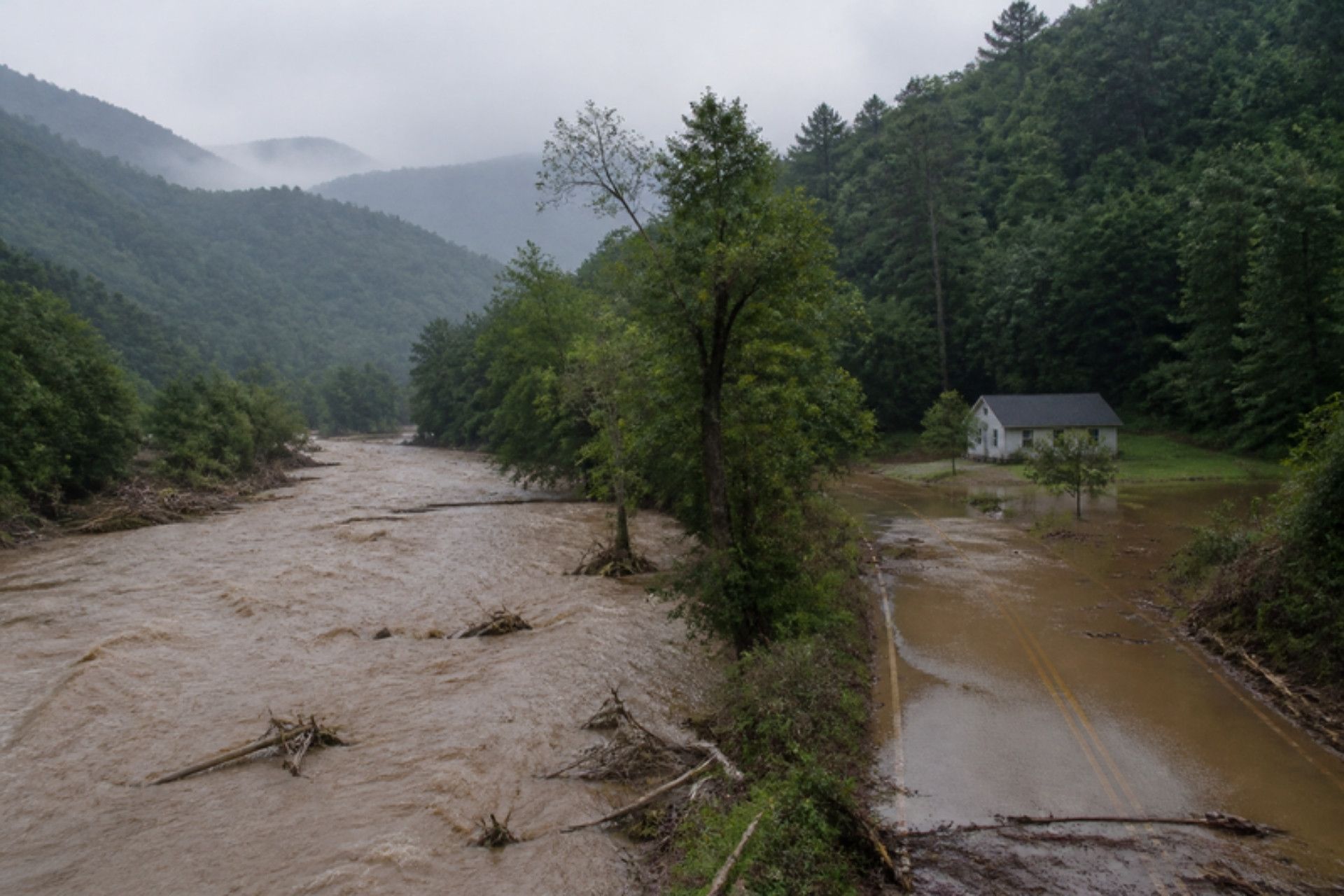
Hurricane Helene demonstrated in September 2024 that inland flooding represents a severe risk across Western North Carolina. Mountain communities far from the coast experienced catastrophic river and flash flooding, and many affected homeowners outside designated high-risk zones suffered total losses with no flood insurance to fund rebuilding.
Before Helene, flood protection in the mountains was often regarded as unnecessary because lenders did not require it and FEMA maps did not show significant risk. Extreme rainfall over steep terrain proved otherwise, sending water through river valleys at speeds and heights that overwhelmed entire neighborhoods. Federal disaster assistance, where available, is generally limited and was never designed to replace a full home.
Why Inland North Carolina Needs Coverage
Much of the Helene destruction struck properties not traditionally considered high-risk, which is why many in the industry emphasize that every property in North Carolina sits in some flood zone. Zones labeled moderate or low risk describe probability, not immunity, and premiums in those areas are frequently modest.
The Charlotte region shares relevant characteristics with the areas Helene struck. Creeks such as McAlpine, Mallard, and Rocky River can rise quickly during intense rainfall, and expanding development increases runoff across the metro area. Homeowners in Concord or Harrisburg who assume a non-mandatory zone means no exposure are making the same assumption that left many mountain families unprotected.
Another lesson from Helene involves contents and additional living expenses. An NFIP policy does not include coverage for temporary housing, which matters greatly when displacement lasts months, and some private policies may offer that option.
Why Work With an Independent Agent for Neptune Flood?
O'Connor Insurance Associates is appointed with Neptune Flood, which allows the agency to compare private flood rates against NFIP options for a specific North Carolina property. Because the agency is independent rather than a carrier, recommendations center on fit, coverage limits, and waiting periods rather than a single company's product.
Homeowners often search for Neptune Flood after hearing about its higher limits or digital quoting. Purchasing directly may seem convenient, but a direct purchase offers no side-by-side analysis with the NFIP, no review of whether excess coverage would be more efficient, and no coordination with existing homeowners coverage. Neptune Flood is a managing general agent rather than the insurance carrier itself; the policy names the insurer that carries the risk, and the agency serves as the advisor and point of contact.
A typical quoting process with O'Connor Insurance Associates includes several steps:
- Property review: Confirming flood zone, elevation details, foundation type, and replacement cost.
- Market comparison: Pricing NFIP coverage alongside private options such as Neptune Flood.
- Gap analysis: Identifying uncovered exposures, including contents and basement limitations.
- Timing guidance: Planning effective dates around closings, renewals, and hurricane season.
Founded in 2000 and based in Charlotte, the agency emphasizes education so that clients understand what each policy will and will not pay before a loss occurs.
Common Questions About North Carolina Flood Insurance
Residents throughout the Charlotte area raise similar questions about flood coverage, particularly after Helene. The answers below address the most frequent concerns in plain terms, covering homeowners exclusions, costs, waiting periods, and whether coverage makes sense outside mapped high-risk zones across North Carolina.
Does my homeowners insurance cover flooding?
No. Standard homeowners policies exclude flood damage from rising or surface water, so a separate flood policy is required.
How much does flood insurance cost in North Carolina?
As of 2026, the median NFIP policy in North Carolina costs about $1,025, while coastal V zones average roughly $1,346. Inland properties in lower-risk zones often pay less, though pricing depends on the specific home.
Do I need flood insurance if I am not in a high-risk zone?
Lenders may not require it, but Helene showed that serious flooding can strike properties outside high-risk zones. Coverage in moderate-risk and low-risk areas is frequently affordable.
Can I buy flood insurance right before a hurricane?
Not effectively through the NFIP, because new voluntary policies carry a 30-day waiting period. Some private carriers offer shorter waits, but coverage should be in place well before storm season.
Is private flood insurance accepted by mortgage lenders?
Many lenders accept private flood policies that meet federal requirements, but confirming acceptance with the lender before binding coverage is a prudent step.
Making the Right Choice for Your Property
Selecting flood coverage requires matching policy limits to replacement cost, accounting for the 30-day NFIP waiting period, and recognizing that inland properties carry genuine risk. Comparing the NFIP with private flood programs like Neptune Flood before a storm forms is the most reliable way to avoid an uninsured loss.
The lessons from Helene apply directly to the Charlotte region. Flood maps describe probability rather than certainty, statutory NFIP caps may leave higher-value homes underinsured, and the waiting period means coverage bought once a forecast turns threatening will usually not take effect in time. North Carolina flood insurance decisions made in calm weather consistently produce better outcomes than those attempted under pressure.
O'Connor Insurance Associates is a licensed North Carolina insurance agency (license #7014004) and has served Charlotte-area families and businesses since 2000. The agency can review a property, compare NFIP and Neptune Flood options, and recommend coverage designed around the home's actual value and exposure.
To request a flood insurance review, contact O'Connor Insurance Associates at 704-510-8884 or visit the office at 1973 JN Pease Place, Suite 203, Charlotte, North Carolina 28262. The next storm will not wait 30 days, and neither should the decision to secure coverage.
Coverage descriptions are general. Policy terms, exclusions, limits and underwriting determine coverage.
Last updated:
On this page
O’Connor Insurance Associates is fully licensed to provide personal and commercial insurance solutions for individuals, families and businesses across North Carolina.
We proudly serve families and business owners from our office in Charlotte, North Carolina. As an independent, family-owned agency since 2000, our team works with more than one insurance company to make sure homeowners, drivers, contractors, landscapers, small businesses and other personal and commercial clients receive coverage that fits their real risks.

About the Author
President & Founder
I’m Terry O’Connor, President and Founder of O’Connor Insurance Associates. I grew up in Pennsylvania, earned my bachelor’s degree at Edinboro University and my master’s at Gannon University, and in 1998 I traded snow for sunshine and moved to Charlotte. In January 2000, I started this agency on my own because I wanted to help people protect what matters most to them. More than two decades later, we’ve grown into an independent agency serving families and businesses across North Carolina, and we’ve been recognized as an IIABA Best Practices Agency every year since 2010, a distinction held by fewer than 1% of agencies nationwide.
I’ve seen firsthand how the right protection can change a family’s or a business owner’s life, and that’s why I lead with empathy, education and honest advice. As an independent agent, I work for you, not for one insurance company. I take the time to explain your options in plain language, and when you call our office, you reach a real person who knows your account.
Outside the office, you’ll usually find me outdoors hunting or fishing, or on the mat coaching wrestling as an assistant varsity coach at Mallard Creek High School. I’m also a proud supporter of the arts, usually in the front row cheering on my daughter in local theater productions. I’d be glad to review your coverage with you. Call me at 704-510-8884 or email terry@oianc.com.
Relationships are the real measure
What our North Carolina clients say.
5.0 / 5
185 reviews on Google
Personal insurance
For the life you’re making.
Your home, your car, your time away. Let’s look at the whole picture.
Business insurance
For the business you’re building.
From established local companies to growing teams, we help make the coverage conversation clearer.
Your work deserves a closer look
Different businesses.
Different conversations.
We take time to understand what happens in your business every day.

Landscaping

Manufacturers

Technology Companies

HVAC Insurance

Electricians Insurance

Food Manufacturers
A little clarity goes a long way
Good questions.
Straight answers.
Have something else on your mind?
What does an independent insurance agency do?
An independent agency helps you compare options from more than one insurance company. We start with your needs, explain the differences and help you make an informed decision.
What can O’Connor help me insure?
Our team works with personal and business insurance, life and disability coverage, and Medicare options. Tell us what you need, and we’ll connect you with the right person.
Where does your agency serve clients?
We are based in Charlotte and serve clients across North Carolina. If your business operates in more than one state, call us to discuss your locations and coverage needs.
How do I get an insurance quote?
Start with the contact form or call 704-510-8884. We’ll ask about your situation and any current coverage, then review available options. Submitting a request does not bind coverage.
Can you help with an existing policy or claim?
Yes. Our Client Center page connects you with policy service, billing and claims options. You can also call during office hours for help finding the right next step.
What should I know before switching insurance?
Compare coverage, limits, exclusions and effective dates, not just the price. Speak with your agent before canceling an existing policy so you can coordinate the transition.
From our desk to yours
A little knowledge goes a long way.



Get a Quote
Let’s protect what you’re building.
Tell us a little about yourself. We’ll help you take the next step with a clearer picture of your options.
1973 J.N. Pease Place, Suite 203
Charlotte, NC 28262
Monday–Thursday · 9 AM–5 PM
Friday · 9 AM–3 PM
