

Commercial property coverage in North Carolina helps protect covered buildings, inventory, and equipment against covered causes of loss such as fire, wind, or theft. Business income and mechanical or electrical breakdown protection depend on the selected coverages and endorsements. The policy terms that matter most are how property is valued, how wind and hail deductibles apply, how lost income is replaced, and whether equipment failure is included.
Many claim disputes do not begin on the day of the loss. They begin months or years earlier, when a building was insured at an outdated value, a coastal deductible went unread, or a business income limit was set without considering how long rebuilding might take. For business owners in Charlotte, Concord, Huntersville, and across the state, those details decide whether a policy restores the operation or leaves a significant gap.
Protecting Your Assets with North Carolina Commercial Property Insurance
North Carolina commercial property insurance is coverage for a business's physical assets, including buildings, equipment, furniture, inventory, and improvements, against covered causes of loss such as fire, theft, vandalism, windstorm, and hail. Policies vary considerably by carrier, form, and endorsement.
A typical commercial property policy addresses two broad categories. The first is the building, which includes the structure, permanently installed fixtures, and often outdoor signs or fencing. The second is business personal property, which covers contents such as computers, desks, stock, raw materials, and tenant improvements made by a business that leases its space.
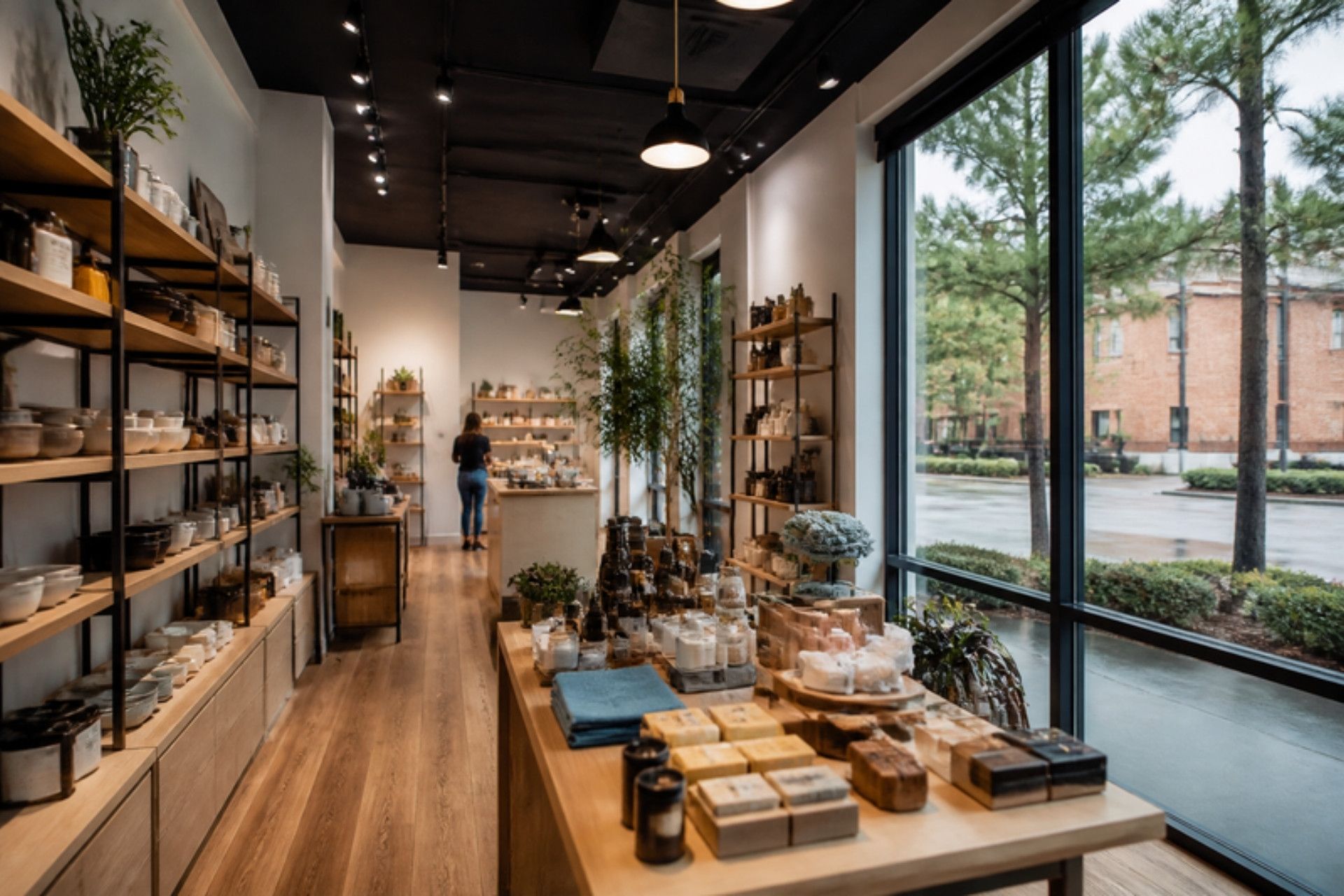
Tenants frequently assume the landlord's policy protects their contents and buildout, which is rarely the case. A retail tenant in a Cornelius shopping center, for example, may have invested substantial sums in flooring, lighting, and shelving that the lease assigns to the tenant to insure.
O'Connor Insurance Associates has worked with business owners from its Charlotte office since 2000, designing property programs around the actual assets, leases, and locations of each operation rather than a standardized template.
Building and Contents Valuation: Avoiding Coinsurance Penalties
A coinsurance clause requires a business to insure property to a stated percentage of its value, commonly 80, 90, or 100 percent. When a building is undervalued, the carrier pays only a proportion of the claim, and the business absorbs the shortfall even on a partial loss.
The calculation is straightforward, which is why the penalty surprises so many owners. Consider a building with a replacement cost of $1,000,000, an 80 percent coinsurance clause, and a limit of only $600,000. The policy required $800,000 in coverage, so the carrier pays 75 percent of any loss. On a $200,000 fire claim, the business would recover $150,000 before the deductible and absorb the remaining $50,000 itself.
Undervaluation often happens gradually, because limits set years ago do not track rising construction costs. The Producer Price Index for construction materials reached an all-time high of 354.9 in March 2026, representing a 6.0 percent year-over-year increase. A building insured at its 2021 value may now fall well short of the coinsurance requirement.
Several practices reduce this exposure:
- Replacement cost valuation: Insuring at the cost to rebuild with like kind and quality, rather than market or purchase price.
- Agreed value endorsement: Where available, this suspends the coinsurance clause for the policy term once a signed statement of values is accepted.
- Inflation guard: Automatically increases limits by a set percentage each year.
- Roof settlement review: Carriers are increasingly applying actual cash value settlements to roofs older than 15 to 20 years, particularly in storm-prone areas such as Wilmington, which reduces recovery for depreciation.
Coastal Wind and Hail Deductibles in North Carolina
Properties in North Carolina coastal counties often carry a separate wind and hail deductible calculated as a percentage of the building's insured value, typically higher than the standard all-other-perils deductible. A percentage deductible can produce an out-of-pocket cost many times larger than a flat dollar amount.
A flat dollar deductible is fixed: a $5,000 deductible means the business pays the first $5,000 of a covered loss, regardless of the building's value. A percentage deductible is tied to the insured value of the property rather than the size of the claim. On a building insured for $1,500,000 with a 5 percent wind deductible, the business would pay the first $75,000 of hurricane damage.
That distinction matters most for companies with locations in Wilmington, the Outer Banks, or other coastal communities, and for Charlotte-area owners who hold coastal rental or warehouse property. Some policies apply the percentage only to named storms, while others apply it to any wind or hail event, which affects how a spring hailstorm in Harrisburg would be handled compared with a hurricane.
Coastal businesses unable to obtain coverage in the standard market may turn to the North Carolina Insurance Underwriting Association, commonly called the Coastal Pool. The Coastal Pool maintains a maximum commercial combined limit of $2.5 million, with an aggregate cap of $6 million depending on fire wall divisions, so larger properties may require additional layered coverage.
Business Income Coverage and Lessons from Hurricane Helene
Business income coverage replaces lost net income and pays continuing operating expenses, such as payroll, rent, and loan payments, while a business is closed or slowed by a covered physical loss. It is triggered by damage from a covered peril, which makes the underlying property terms essential.
Hurricane Helene, which struck western North Carolina in September 2024, demonstrated why the coverage matters and why its conditions matter just as much. Businesses in Asheville and surrounding communities faced closures caused not only by direct damage but also by washed-out roads, extended utility outages, and disrupted supply chains. Many owners discovered during the claims process that their business income coverage applied only when the closure resulted from a covered peril at their own premises.
Because standard commercial property forms exclude flood, a business that lost income due to floodwater generally could not recover under its business income coverage unless separate flood coverage or a specific endorsement applied. Related gaps appeared in several areas:
- Utility services: Off-premises power or water interruption often requires a specific endorsement.
- Civil authority: Coverage when authorities restrict access is typically limited in duration and conditions.
- Dependent property: Losses caused by damage at a key supplier or customer usually require additional coverage.
Restoration timelines also deserve attention. Many North Carolina business policies in 2026 offer extended period of indemnity options ranging from 60 to 730 days to account for rebuilding delays. For properties insured through the Coastal Pool, the maximum Business Income limit is capped at $500,000 per location as of January 2026.
Equipment Breakdown: Beyond Basic Property Damage
Standard commercial property policies generally exclude mechanical breakdown, electrical arcing, and pressure system failure. Equipment breakdown coverage, usually added by endorsement, responds to sudden internal failures of HVAC systems, computers, refrigeration units, boilers, and specialized production machinery.
The exclusion is easy to overlook because the property policy does cover a fire that destroys an air conditioning unit. What it typically does not cover is a compressor that burns out on its own or a power surge that damages a server or control panel. A restaurant in Concord that loses its walk-in cooler to a motor failure may face both the repair cost and thousands of dollars in spoiled food.
Equipment breakdown endorsements commonly address several related costs, depending on the carrier and policy terms:
- Repair or replacement of the damaged equipment
- Spoilage of perishable inventory caused by the breakdown
- Expediting expenses for faster repairs or temporary equipment
- Business income lost during the repair period
- Data restoration following damage to computer equipment
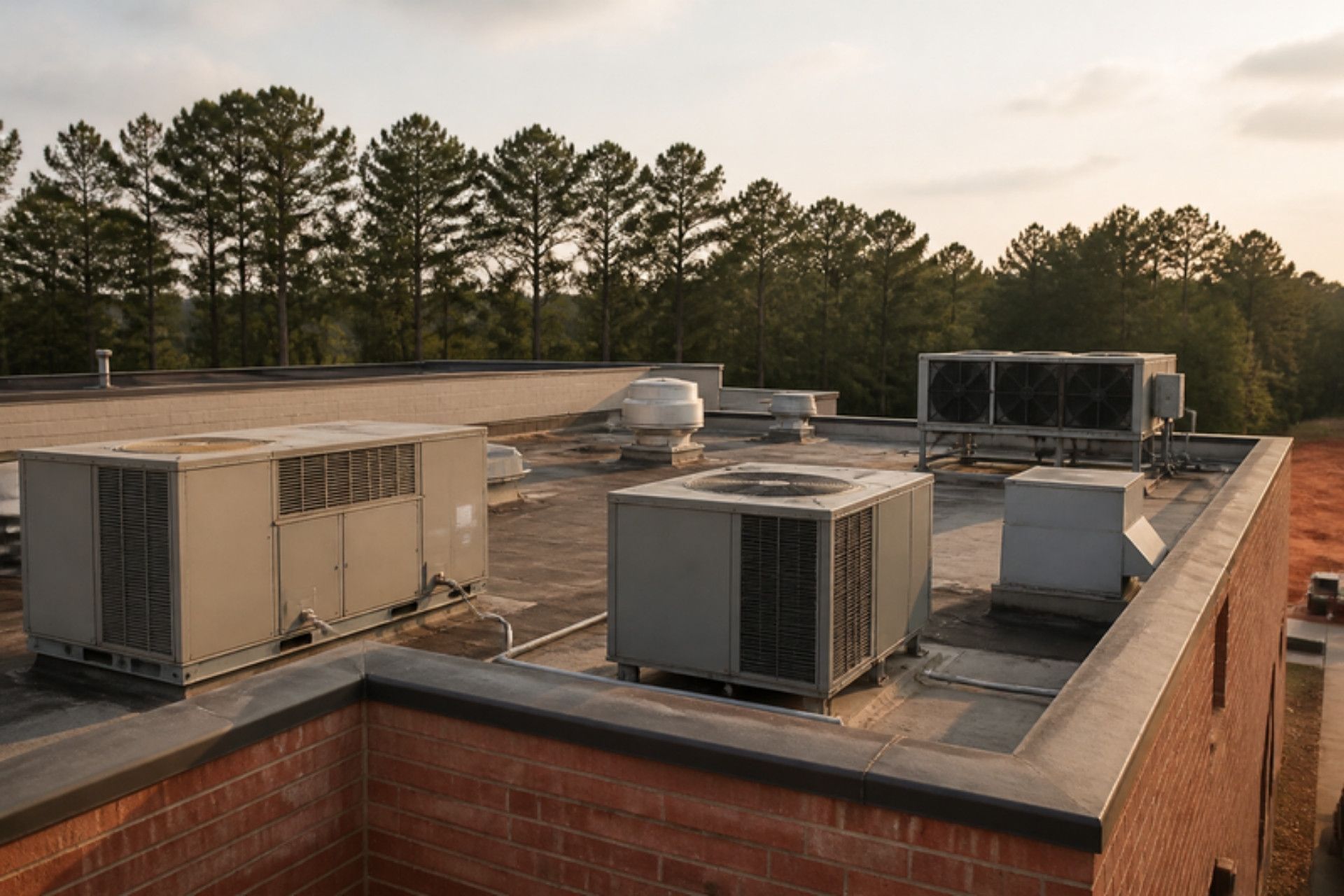
Manufacturers, medical offices, breweries, and businesses with substantial rooftop HVAC systems tend to carry the highest exposure, although most operations with electrical or mechanical systems benefit from reviewing this coverage.
Commercial Property Coverage Comparison Chart
Commercial property policies are written on one of three cause of loss forms: Basic, Broad, or Special. Each form defines which perils are covered, and the differences become most visible in water damage, theft, and collapse claims.
| Peril or Feature | Basic Form | Broad Form | Special Form |
|---|---|---|---|
| Fire, lightning, explosion | Covered | Covered | Covered |
| Windstorm and hail | Covered | Covered | Covered |
| Vandalism | Covered | Covered | Covered |
| Falling objects, weight of snow or ice | Not covered | Covered | Covered |
| Water damage from burst pipes or leaks | Not covered | Limited | Covered, subject to exclusions |
| Theft | Not covered | Not covered | Covered, often with sublimits |
| Collapse | Not covered | Limited additional coverage | Limited additional coverage |
| Approach to coverage | Named perils only | Expanded named perils | All risks unless excluded |
| Flood and earthquake | Excluded | Excluded | Excluded |
The Special form shifts the burden: rather than the business proving a loss falls within a named peril, the carrier must show that an exclusion applies. For most operating businesses, that difference in theft and water damage coverage justifies the modest additional premium.
Common Questions About North Carolina Business Insurance
The questions below reflect concerns business owners in the Charlotte region raise most often about property coverage, from coastal deductibles and flooding to inventory values and premium changes in the 2026 market.
What is a wind deductible?
A wind deductible is a separate deductible that applies only to windstorm or hail damage. In coastal North Carolina, it is frequently a percentage of the building's insured value rather than a flat dollar amount.
Does my commercial property policy cover flood damage?
No, standard commercial property policies exclude flood. Separate flood coverage, through the National Flood Insurance Program or a private flood policy, is required.
How should I value my business inventory?
Inventory is typically valued at replacement cost or the cost to restock, and seasonal businesses should consider a peak season endorsement. Owners should update values whenever stock levels change significantly.
Why did my property premium go up?
Rising construction costs, higher building valuations, and storm losses all affect pricing. Statewide, North Carolina property and casualty premium growth slowed to 4.3 percent as of October 2026, and some larger accounts have seen their first premium declines since 2017.
Does commercial property coverage include my business vehicles?
No, vehicles are insured under a commercial auto policy. Contractors' tools and mobile equipment usually require inland marine coverage.
Why Use an Independent Agent Instead of Going Direct
An independent agent represents multiple insurance carriers and can compare coverage forms, deductibles, and pricing across them, while a captive or direct channel offers products from a single company. That choice becomes valuable when one carrier restricts coastal wind or older roofs.
Business owners often search for a specific carrier's agent page because they recognize the name, hold other policies with that company, or received a referral. Those are reasonable starting points. The limitation is that a single carrier may decline a risk, apply an actual cash value roof settlement, or impose a higher wind deductible, leaving the owner without alternatives.
An independent agency can place coverage with a carrier whose underwriting fits the property, and it remains the business owner's advocate if a claim becomes contested. O'Connor Insurance Associates follows an educational approach, asking detailed questions about operations, leases, and equipment before recommending coverage. The agency is not the insurance carrier; it works with multiple carriers to design programs suited to each business.
Local experience adds another layer of value. An agency familiar with North Carolina coastal underwriting, Coastal Pool limits, and the lessons of Hurricane Helene can identify gaps that a call center reading from a script may overlook.
Making the Right Choice for Your North Carolina Business
Sound property coverage depends on accurate replacement cost valuation, a clear understanding of wind and hail deductibles, business income limits sized for realistic rebuilding timelines, and endorsements for equipment breakdown, utility interruption, and flood where needed.
Each of these decisions should be revisited annually, particularly as construction costs continue to rise and carriers adjust roof and coastal underwriting. A professional review of building values and statements of values is the most reliable defense against coinsurance penalties and unexpected deductibles.
O'Connor Insurance Associates is a licensed North Carolina insurance agency (license #7014004) serving businesses throughout Charlotte, Highland Creek, Cornelius, Huntersville, Concord, and Harrisburg. To schedule a commercial property review, contact the Charlotte office at 1973 JN Pease Place, Suite 203, Charlotte, North Carolina 28262, or call 704-510-8884. A policy is only as strong as the values and endorsements behind it, and the right time to confirm them is before the next storm arrives.
Coverage descriptions are general. Policy terms, exclusions, limits and underwriting determine coverage.
Last updated:
On this page
O’Connor Insurance Associates is fully licensed to provide personal and commercial insurance solutions for individuals, families and businesses across North Carolina.
We proudly serve families and business owners from our office in Charlotte, North Carolina. As an independent, family-owned agency since 2000, our team works with more than one insurance company to make sure homeowners, drivers, contractors, landscapers, small businesses and other personal and commercial clients receive coverage that fits their real risks.

About the Author
President & Founder
I’m Terry O’Connor, President and Founder of O’Connor Insurance Associates. I grew up in Pennsylvania, earned my bachelor’s degree at Edinboro University and my master’s at Gannon University, and in 1998 I traded snow for sunshine and moved to Charlotte. In January 2000, I started this agency on my own because I wanted to help people protect what matters most to them. More than two decades later, we’ve grown into an independent agency serving families and businesses across North Carolina, and we’ve been recognized as an IIABA Best Practices Agency every year since 2010, a distinction held by fewer than 1% of agencies nationwide.
I’ve seen firsthand how the right protection can change a family’s or a business owner’s life, and that’s why I lead with empathy, education and honest advice. As an independent agent, I work for you, not for one insurance company. I take the time to explain your options in plain language, and when you call our office, you reach a real person who knows your account.
Outside the office, you’ll usually find me outdoors hunting or fishing, or on the mat coaching wrestling as an assistant varsity coach at Mallard Creek High School. I’m also a proud supporter of the arts, usually in the front row cheering on my daughter in local theater productions. I’d be glad to review your coverage with you. Call me at 704-510-8884 or email terry@oianc.com.
Relationships are the real measure
What our North Carolina clients say.
5.0 / 5
185 reviews on Google
Personal insurance
For the life you’re making.
Your home, your car, your time away. Let’s look at the whole picture.
Business insurance
For the business you’re building.
From established local companies to growing teams, we help make the coverage conversation clearer.
Your work deserves a closer look
Different businesses.
Different conversations.
We take time to understand what happens in your business every day.

Landscaping

Manufacturers

Technology Companies

HVAC Insurance

Electricians Insurance

Food Manufacturers
A little clarity goes a long way
Good questions.
Straight answers.
Have something else on your mind?
What does an independent insurance agency do?
An independent agency helps you compare options from more than one insurance company. We start with your needs, explain the differences and help you make an informed decision.
What can O’Connor help me insure?
Our team works with personal and business insurance, life and disability coverage, and Medicare options. Tell us what you need, and we’ll connect you with the right person.
Where does your agency serve clients?
We are based in Charlotte and serve clients across North Carolina. If your business operates in more than one state, call us to discuss your locations and coverage needs.
How do I get an insurance quote?
Start with the contact form or call 704-510-8884. We’ll ask about your situation and any current coverage, then review available options. Submitting a request does not bind coverage.
Can you help with an existing policy or claim?
Yes. Our Client Center page connects you with policy service, billing and claims options. You can also call during office hours for help finding the right next step.
What should I know before switching insurance?
Compare coverage, limits, exclusions and effective dates, not just the price. Speak with your agent before canceling an existing policy so you can coordinate the transition.
From our desk to yours
A little knowledge goes a long way.



Get a Quote
Let’s protect what you’re building.
Tell us a little about yourself. We’ll help you take the next step with a clearer picture of your options.
1973 J.N. Pease Place, Suite 203
Charlotte, NC 28262
Monday–Thursday · 9 AM–5 PM
Friday · 9 AM–3 PM
