

Medical device companies in North Carolina face liability exposures that most other manufacturers never encounter, because their products are regulated by the FDA, used inside or on patients, and frequently sold across international borders. A specialized insurance program for North Carolina medical device manufacturers combines products liability, clinical trial liability, recall coverage, and worldwide territory protection.
A single allegation that an infusion pump delivered an incorrect dose, or that an orthopedic implant failed prematurely, can produce litigation lasting several years and defense costs that exceed the annual revenue of a young company. The guidance that follows is intended for founders, risk managers, and chief financial officers who are building or reviewing a coverage program for a device business based anywhere from Durham to Charlotte.
The Landscape of North Carolina Medical Device Manufacturer Insurance
North Carolina has become one of the country's significant medtech hubs, concentrated in the Research Triangle and the Charlotte region. Medical device manufacturer insurance in North Carolina protects these companies from the costly legal, regulatory, and financial risks attached to FDA-regulated products that are designed, tested, and sold to the healthcare market.
The scale of the industry explains why carriers and brokers now treat North Carolina as a distinct market. The state currently hostsmore than 860 life sciences companies employing over 76,000 people, and its2.00% corporate income tax rate for tax years beginning in 2026ranks among the lowest in the nation, which continues to attract relocating device facilities. In October 2026, the Italian diagnostic imaging company Bracco announced a$230 million investment in its first U.S. manufacturing plant in Sanford, which strengthens the state's reputation as a destination for manufacturers.
Growth brings exposure. Companies in Research Triangle Park, Morrisville, and Durham tend to focus on diagnostics, digital health, and early-stage implantables, while firms around Charlotte, Concord, and Mooresville more commonly handle contract manufacturing, components, and distribution. Each business model produces a different risk profile, and a component supplier in Huntersville should not purchase the same policy as a company holding its own 510(k) clearance.
The broader liability environment matters as well. Premiums are under upward pressure from so-called nuclear jury verdicts exceeding $10 million, which nearly doubled between the 2013-2015 and 2022-2024 periods. Medical device cases, which involve sympathetic plaintiffs and complex engineering evidence, are particularly vulnerable to outsized awards, and that reality shapes how underwriters price and structure coverage for North Carolina device makers.
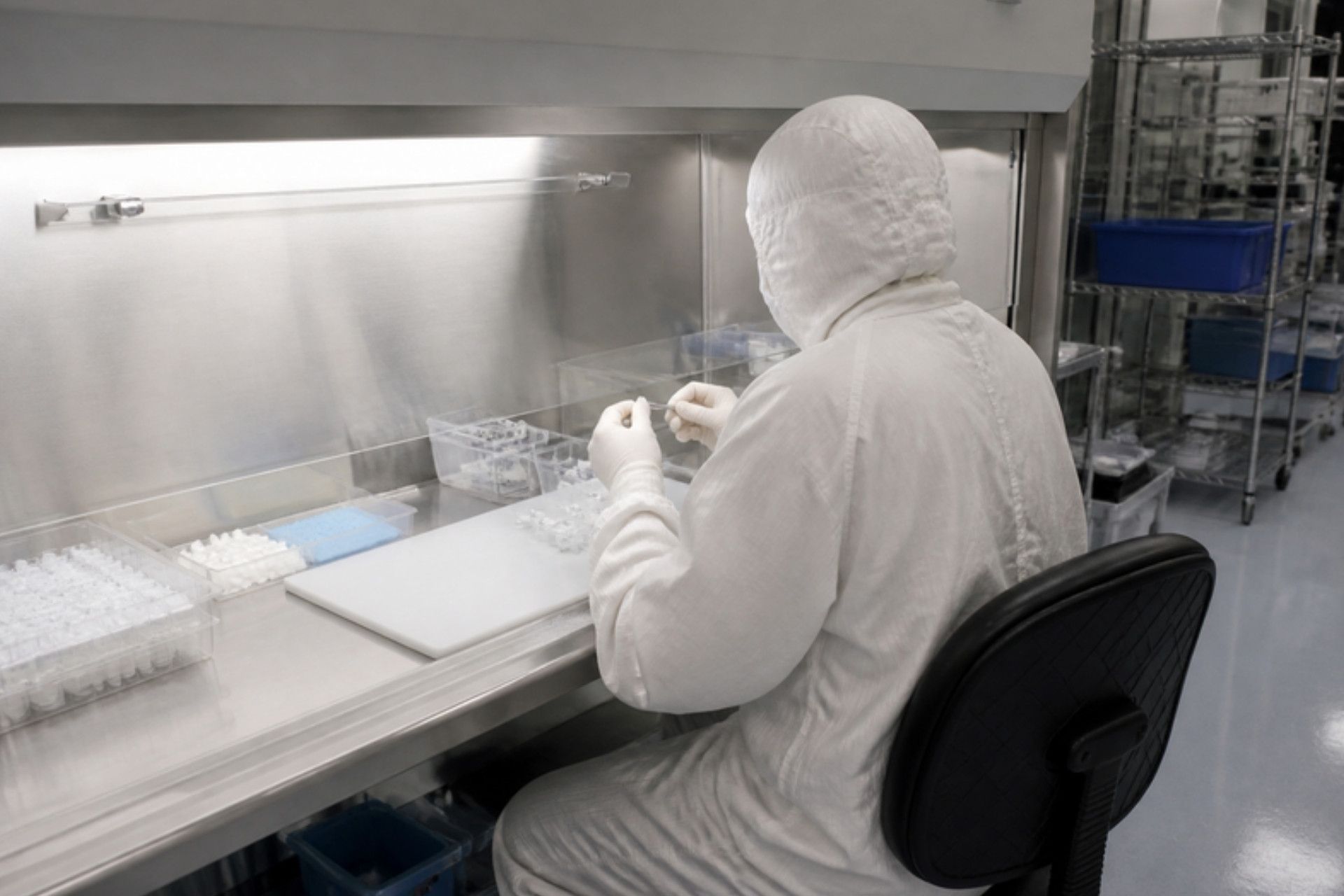
How Products Liability Protects North Carolina Device Makers
Products liability is the cornerstone of any device manufacturer's insurance program. It responds when a patient, a provider, or a hospital alleges that a design defect, a manufacturing flaw, or an inadequate warning caused bodily injury, and it pays for legal defense, settlements, and judgments up to the policy limits.
Claims typically fall into three categories, and each one appears regularly in device litigation:
- Design defect: The plaintiff alleges the device was inherently dangerous as engineered, such as a catheter material that degrades under normal use.
- Manufacturing defect: A specific lot or batch deviated from specifications, often traced to a supplier, a sterilization failure, or a calibration error.
- Failure to warn: Instructions for use, labeling, or training materials did not adequately disclose a known risk.
A common coverage gap arises when a company assumes that its commercial general liability policy will respond to these claims. Many general liability forms either exclude products-completed operations for medical products or carry sublimits far below what device litigation requires. A second frequent oversight involves contract requirements, since hospital systems and group purchasing organizations often demand specific limits, additional insured endorsements, and vendor endorsements before they will place an order.
Policy triggers also deserve close attention. Device products liability is commonly written on a claims-made basis, which means the policy in force when the claim is reported responds, rather than the policy in force when the device was sold. Retroactive dates, extended reporting periods, and continuity of coverage therefore become critical whenever a company changes carriers, is acquired, or discontinues a product line.
Coverage Limits and Policy Differences
The distinction between general liability and products liability confuses many first-time buyers. The following comparison summarizes typical differences, although actual terms vary by carrier and policy form.
| Feature | General Liability | Products Liability (Device-Specific) |
|---|---|---|
| Primary focus | Premises and operations | Injury caused by the device |
| Typical claims | Visitor slip-and-fall, property damage | Design defects, malfunctions, labeling |
| Medical product treatment | Often excluded or sublimited | Written specifically for devices |
| Policy trigger | Usually occurrence | Often claims-made |
| Territory | Often U.S. focused | Can be extended worldwide |
| Contract compliance | May not satisfy hospital demands | Designed to meet distributor and GPO terms |
| Underwriting factors | Square footage, payroll | FDA class, implant status, sales volume |
Appropriate limits depend on the FDA classification, the patient population, and contractual obligations. Class III implantables almost always require higher limits and excess layers than Class I disposables, and an agent should evaluate both the device and the customer agreements before recommending a structure.
Navigating the Risks of Clinical Trials
Clinical trial liability insurance protects sponsors that test new devices on human participants before full FDA approval or clearance. It covers bodily injury to trial subjects, legal defense, and in many policies, medical monitoring expenses, and it is frequently required by institutional review boards, research sites, and contract research organizations.
Products liability policies commonly exclude injuries arising from clinical trials, because the device has not yet been cleared for commercial sale. That exclusion leaves a significant gap for early-stage companies, particularly those running feasibility studies at academic medical centers in Durham, Chapel Hill, or Winston-Salem. A dedicated clinical trial policy fills that gap and is usually written on a per-study basis, with limits tied to the number of participants and the invasiveness of the device.
Contractual obligations are increasingly specific. Standard clinical trial agreements in North Carolina for 2026 typically require sites to carry Commercial General Liability and Professional or Medical Liability insurance, frequently maintained for several years after the study concludes. Sponsors, in turn, are expected to indemnify sites and to demonstrate that sufficient coverage stands behind that indemnity.
Key elements to confirm in a clinical trial policy include:
- Participant injury coverage for adverse events related to the investigational device.
- Medical monitoring costs when participants require ongoing evaluation after a reported risk.
- Tail or extended reporting periods that account for injuries discovered years after enrollment.
- Protocol and site schedules that list every study location accurately.
Patient-side coverage operates separately. Under N.C.G.S. § 58-3-255, health benefit plans must cover participation in Phase II, III, and IV clinical trials for life-threatening conditions. That statute governs routine patient care costs, however, and it does not relieve the sponsor of liability for injuries caused by the investigational device itself.
Managing the High Costs of a Product Recall
Product recall insurance reimburses the expenses a manufacturer incurs when it must remove a defective or potentially harmful device from the market. It typically covers notification, retrieval logistics, shipping, storage, destruction or disposal, and, depending on the policy, replacement costs and lost profits that liability policies do not address.
Recall activity rose sharply in 2026. In the first half of the year, 313.1 million medical device units were recalled in the United States, a 516.8% increase over the first half of 2025. The FDA also expanded its Communications Pilot to provide "Early Alerts" for all medical device categories, giving the public notice of corrective actions before official recall classification, which means reputational consequences can begin sooner than many companies expect.
For a company holding a 510(k) clearance, a recall often begins with a complaint trend, a supplier nonconformance, or a software issue identified during post-market surveillance. The direct costs accumulate quickly: customer notification letters, dedicated call centers, reverse logistics from hospitals across several states, quarantine warehousing, third-party testing, and documented destruction. Many companies discover too late that general liability policies frequently contain a "sistership" exclusion that removes recall expenses from coverage entirely.
Several policy nuances separate effective recall coverage from inadequate coverage:
- Trigger definition: Some policies respond only to government-mandated recalls, while others also cover voluntary recalls initiated by the manufacturer.
- Third-party recall: Component suppliers may face claims from the device company that incorporated their part.
- Crisis consultant expenses: Public relations and regulatory consulting support can be included.
- Supply chain considerations: A Section 232 federal investigation into medical device supply chain resilience reached its 270-day statutory review deadline in mid-2026, and potential tariffs could raise replacement component costs during a recall.

Global Coverage for North Carolina Exporters
North Carolina device makers that sell, distribute, or test products abroad need worldwide territory coverage. Standard domestic policies often limit protection to suits brought in the United States, which can leave a manufacturer without defense or indemnity when an injured patient files a claim in a foreign court.
International distribution creates exposure even for small companies. A Raleigh diagnostics startup that ships through a European distributor, or a Charlotte-area contract manufacturer supplying components to an overseas original equipment manufacturer, may be named as a defendant wherever an injury occurs. Some policies describe their territory as worldwide but require that suits be brought within the United States, its territories, or Canada, and that wording would not respond to a claim filed in Germany or Brazil.
A well-structured global program generally addresses three concerns. First, the territory language should allow suits to be brought anywhere in the world, subject to sanctions restrictions. Second, many countries require locally admitted policies, so a controlled master program that coordinates a U.S. policy with local policies may be necessary to satisfy regulators and distributors. Third, foreign clinical trials often demand country-specific insurance certificates written in the local language and issued by locally licensed insurers.
Exporters should also consider exposures that extend beyond products liability. Foreign voluntary workers compensation, international property and transit coverage, and kidnap and ransom protection for traveling sales staff all become relevant once a company establishes a presence overseas. Reviewing every distribution agreement, supply contract, and foreign site before renewal helps identify gaps before a claim exposes them.
Why Partner with an Independent North Carolina Insurance Agency?
An independent North Carolina insurance agency represents multiple carriers rather than a single company, which allows it to compare policy forms, limits, and pricing across several markets. That breadth matters for device manufacturers, because specialty products liability, recall, and clinical trial coverage are offered by a limited number of carriers with very different underwriting appetites.
Many business owners begin their search by looking up a specific carrier's agent page, often because a colleague or competitor uses that carrier or because the name is familiar from national advertising. Going direct, however, limits a company to one carrier's forms and one underwriting decision. If that carrier declines a Class III implantable or excludes certain international territories, the company must start over, often close to a contract deadline.
An independent agent can present several options side by side and explain the differences in exclusions, retroactive dates, and territory wording. Popular policies for device manufacturers commonly include products liability, clinical trial liability, product recall, worldwide general liability, property and equipment breakdown, cyber liability for connected devices, and directors and officers coverage for venture-backed firms. Obtaining a quote generally requires a completed application, a device list with FDA classifications, sales figures by territory, quality system documentation, and loss history.
O'Connor Insurance Associates has operated as an independent agency in Charlotte, North Carolina since 2000 and has been recognized as an IIABA Best Practices Agency since 2010. The agency does not issue policies itself; coverage is placed with insurance carriers, and specific features depend on each carrier's terms. Its approach emphasizes asking questions and educating clients so that owners understand what each policy does and does not cover.
Frequently Asked Questions About Device Insurance
Device manufacturers in North Carolina tend to ask similar questions when they first build a coverage program. The answers below provide general guidance only, since actual coverage depends on the carrier, the policy form, the FDA classification, and the specific contracts a company has signed with distributors, hospitals, and research sites.
Does my North Carolina business need coverage during R&D?
Yes. Even before commercialization, companies face property, general liability, and clinical trial exposures, and investors or research partners frequently require proof of insurance.
How much coverage is standard for a 510(k) device?
No single standard applies, because limits depend on the device class, patient risk, and contract requirements. Hospital and distributor agreements often specify minimum limits, so those contracts should be reviewed first.
Will my general liability policy cover a recall?
Usually not. Many general liability policies contain a sistership exclusion that removes recall costs, which is why a separate recall policy is typically needed.
Is clinical trial insurance required by law?
Requirements usually come from contracts, institutional review boards, and foreign regulators rather than a single North Carolina statute. In practice, most trial sites will not begin enrollment without it.
Do component suppliers need products liability insurance?
Yes. Suppliers are frequently named in lawsuits alongside the finished device manufacturer and may face recall cost claims from their customers.
Does software qualify as a medical device for insurance purposes?
Software as a medical device can carry products liability exposure, and connected devices often require cyber liability coverage as well.
Your Next Steps for Comprehensive Protection
The most productive next step is reviewing each product's FDA classification, regulatory pathway, and distribution footprint with a knowledgeable agent. That review determines which policies are necessary, what limits contracts demand, and where existing coverage leaves gaps that could prove expensive after a claim or recall.
Preparation makes the review more efficient. Companies should gather the following before meeting with an agent:
- A current device list noting Class I, II, or III status and 510(k), De Novo, or PMA pathways
- Copies of distributor, hospital, group purchasing, and clinical trial agreements
- Sales figures broken out by U.S. and international territories
- Quality system certifications, complaint logs, and any prior recall history
- Existing policies, including declarations pages and endorsements
Common mistakes appear repeatedly during these reviews. Some companies allow a claims-made policy to lapse during an acquisition, losing protection for products already sold. Others sign international distribution agreements without confirming that their territory wording responds to foreign suits, or launch a clinical study assuming the products policy will respond to participant injuries.
O'Connor Insurance Associates is a licensed North Carolina insurance agency (license #7014004) located at 1973 JN Pease Place, Suite 203, Charlotte, North Carolina 28262. Device makers throughout the Research Triangle, Charlotte, Concord, Huntersville, and Cornelius can reach the agency at 704-510-8884 to schedule a coverage review.
A device that performs flawlessly in testing can still fail in the field, and the companies that recover are typically the ones that arranged protection before the first complaint arrived. A well-designed program addresses products liability, clinical trials, recalls, and global coverage together, rather than as isolated purchases.
Coverage descriptions are general. Policy terms, exclusions, limits and underwriting determine coverage.
Last updated:
On this page
O’Connor Insurance Associates is fully licensed to provide personal and commercial insurance solutions for individuals, families and businesses across North Carolina.
We proudly serve families and business owners from our office in Charlotte, North Carolina. As an independent, family-owned agency since 2000, our team works with more than one insurance company to make sure homeowners, drivers, contractors, landscapers, small businesses and other personal and commercial clients receive coverage that fits their real risks.

About the Author
President & Founder
I’m Terry O’Connor, President and Founder of O’Connor Insurance Associates. I grew up in Pennsylvania, earned my bachelor’s degree at Edinboro University and my master’s at Gannon University, and in 1998 I traded snow for sunshine and moved to Charlotte. In January 2000, I started this agency on my own because I wanted to help people protect what matters most to them. More than two decades later, we’ve grown into an independent agency serving families and businesses across North Carolina, and we’ve been recognized as an IIABA Best Practices Agency every year since 2010, a distinction held by fewer than 1% of agencies nationwide.
I’ve seen firsthand how the right protection can change a family’s or a business owner’s life, and that’s why I lead with empathy, education and honest advice. As an independent agent, I work for you, not for one insurance company. I take the time to explain your options in plain language, and when you call our office, you reach a real person who knows your account.
Outside the office, you’ll usually find me outdoors hunting or fishing, or on the mat coaching wrestling as an assistant varsity coach at Mallard Creek High School. I’m also a proud supporter of the arts, usually in the front row cheering on my daughter in local theater productions. I’d be glad to review your coverage with you. Call me at 704-510-8884 or email terry@oianc.com.
Relationships are the real measure
What our North Carolina clients say.
5.0 / 5
185 reviews on Google
Personal insurance
For the life you’re making.
Your home, your car, your time away. Let’s look at the whole picture.
Business insurance
For the business you’re building.
From established local companies to growing teams, we help make the coverage conversation clearer.
Your work deserves a closer look
Different businesses.
Different conversations.
We take time to understand what happens in your business every day.

Landscaping

Manufacturers

Technology Companies

HVAC Insurance

Electricians Insurance

Food Manufacturers
A little clarity goes a long way
Good questions.
Straight answers.
Have something else on your mind?
What does an independent insurance agency do?
An independent agency helps you compare options from more than one insurance company. We start with your needs, explain the differences and help you make an informed decision.
What can O’Connor help me insure?
Our team works with personal and business insurance, life and disability coverage, and Medicare options. Tell us what you need, and we’ll connect you with the right person.
Where does your agency serve clients?
We are based in Charlotte and serve clients across North Carolina. If your business operates in more than one state, call us to discuss your locations and coverage needs.
How do I get an insurance quote?
Start with the contact form or call 704-510-8884. We’ll ask about your situation and any current coverage, then review available options. Submitting a request does not bind coverage.
Can you help with an existing policy or claim?
Yes. Our Client Center page connects you with policy service, billing and claims options. You can also call during office hours for help finding the right next step.
What should I know before switching insurance?
Compare coverage, limits, exclusions and effective dates, not just the price. Speak with your agent before canceling an existing policy so you can coordinate the transition.
From our desk to yours
A little knowledge goes a long way.



Get a Quote
Let’s protect what you’re building.
Tell us a little about yourself. We’ll help you take the next step with a clearer picture of your options.
1973 J.N. Pease Place, Suite 203
Charlotte, NC 28262
Monday–Thursday · 9 AM–5 PM
Friday · 9 AM–3 PM
