

A North Carolina electrical contractor who carries no insurance is exposed to the full cost of a single faulty connection, an injured apprentice, or a stolen trailer of tools. Comprehensive coverage built around general liability, workers compensation, and inland marine protection allows an electrical business to absorb these events, satisfy contract requirements, and keep operating after a serious claim.
Electrical work occupies a distinctive position among the construction trades because a mistake may remain hidden inside a wall for months before it produces smoke, flame, and a six-figure property loss. For contractors across Charlotte, Huntersville, Concord, Cornelius, and Harrisburg, this delayed exposure makes insurance planning a matter of business survival as much as regulatory compliance. The following guide examines coverage, licensing, emerging technologies, and the practical decisions that shape a sound insurance program for electricians operating throughout North Carolina.
Essential North Carolina Electrician Insurance Coverage for Contractors
Insurance is a practical necessity for every North Carolina electrician, whether operating as a solo licensee or managing a crew of twenty. General liability, workers compensation, and inland marine tools coverage form the foundation of a sound program, protecting against third-party damage, employee injuries, and equipment losses that could otherwise end an electrical business.
Each of these three coverages addresses a separate category of loss, and a gap in any one of them leaves the business exposed in a way the other two cannot remedy. General liability responds when a customer, a property owner, or a member of the public suffers bodily injury or property damage arising from the contractor's operations or completed work. Workers compensation responds when an employee is hurt on the job, and inland marine coverage responds when tools and equipment are stolen, damaged, or destroyed away from a fixed business location.
The structure of an electrical insurance program typically comprises the following core elements:
- General liability: Covers third-party bodily injury, property damage, and completed operations claims, including fires traced back to the contractor's work.
- Workers compensation: Pays medical costs and lost wages for employees injured on the job, as required by North Carolina law for most employers.
- Inland marine (tools and equipment): Protects mobile tools, meters, testers, and equipment while in transit or stored at job sites.
- Commercial auto: Covers work vans and trucks, which personal auto policies frequently exclude when used for business.
- Umbrella or excess liability: Extends limits above the primary policies for larger losses or contract requirements.
Many contractors in the greater Charlotte area first purchase coverage because a general contractor or property manager demands a certificate of insurance before work begins. That requirement, however, represents only the minimum threshold, and an electrician whose program has been designed solely to satisfy a certificate request may discover after a loss that the limits or endorsements were inadequate.
Managing Fire Claim Exposure in Electrical Work
Fire claims represent the most significant financial risk facing electrical contractors because a single defective termination or overloaded circuit can destroy an entire structure. Adequate general liability limits, completed operations coverage, and an umbrella policy help ensure that one fire loss does not exceed the policy and consume the contractor's business and personal assets.
A typical electrical fire claim begins long after the contractor has been paid and left the property. A homeowner in Highland Creek may experience a fire eight months after a panel upgrade, and the property insurer, after paying the homeowner's claim, will often retain a cause-and-origin investigator to determine whether the electrical work contributed to the loss. If the investigation points toward the contractor, the homeowner's insurer pursues recovery through subrogation, and the claim lands on the electrician's general liability policy.
This sequence explains why completed operations coverage carries such weight in an electrician's policy. Completed operations protection applies to claims arising from work that has already been finished, and some policies restrict or limit this coverage through endorsements that contractors rarely read before signing. A common client mistake involves accepting a lower premium from a policy that excludes certain types of work, such as residential construction, without recognizing that the exclusion eliminates coverage for a substantial portion of the contractor's revenue.
Limits deserve equal scrutiny. A fire that destroys a commercial building, its contents, and the business income of its tenants can produce damages far exceeding a standard per-occurrence limit, which is why umbrella coverage functions as a critical layer of protection for electricians performing commercial or multifamily work. Code compliance also influences defensibility, and contractors should recognize that North Carolina electricians must currently follow the 2020 North Carolina Electrical Code, based on the 2020 NEC, because newer versions have been delayed legislatively. Documenting which code applied to each job, through permits, inspection records, and photographs, strengthens the contractor's position if a fire claim is later asserted.
North Carolina State Board of Examiners of Electrical Contractors Licensing Classes
The North Carolina State Board of Examiners of Electrical Contractors issues Limited, Intermediate, and Unlimited licenses, each permitting work up to a different project value. Higher license classes generally correspond with larger projects, higher contract-mandated insurance limits, and greater likelihood that owners or general contractors will require performance and payment bonds.
The three primary classifications are organized according to the dollar value of the electrical work a licensee may undertake on a single project. The Limited license applies to smaller projects, the Intermediate license authorizes work on moderately sized projects, and the Unlimited license removes the project value ceiling entirely. Contractors should confirm the current project value limits and examination requirements directly with the board, because thresholds and rules are subject to revision.
| License Class | Typical Project Scope | Insurance and Bond Implications |
|---|---|---|
| Limited | Residential service work, smaller commercial jobs | Basic GL limits often satisfy contracts; bonds less common |
| Intermediate | Larger commercial and multifamily projects | Higher GL limits and umbrella coverage frequently required |
| Unlimited | Large commercial, industrial, and institutional work | Substantial umbrella limits and surety bonds commonly demanded |
The board also maintains special restricted license categories for specific trades, and contractors moving into the state should know that North Carolina maintains licensing reciprocity with ten states, subject to board rules. Licensing class affects insurance in practical terms because underwriters evaluate the size and complexity of projects a contractor may legally perform. An Unlimited licensee bidding on hospital or data center work will encounter contract language specifying additional insured endorsements, waivers of subrogation, primary and noncontributory wording, and umbrella limits that a Limited licensee performing residential service calls may never see.
Surety bonds operate differently from insurance, since the bond protects the project owner while the contractor remains obligated to repay the surety for any claim paid. Electricians advancing from Intermediate to Unlimited work should begin establishing a surety relationship early, because bonding capacity depends on financial statements, work history, and credit, all of which require time to document.
Special Risks for Solar and EV Charger Installs
Solar panel and electric vehicle charger installations introduce exposures that traditional electrical policies may not fully address, including roof penetration leaks, battery storage fires, and product defects in third-party equipment. Contractors performing this work should confirm with their agent that their policies do not contain exclusions for renewable energy or roofing operations.
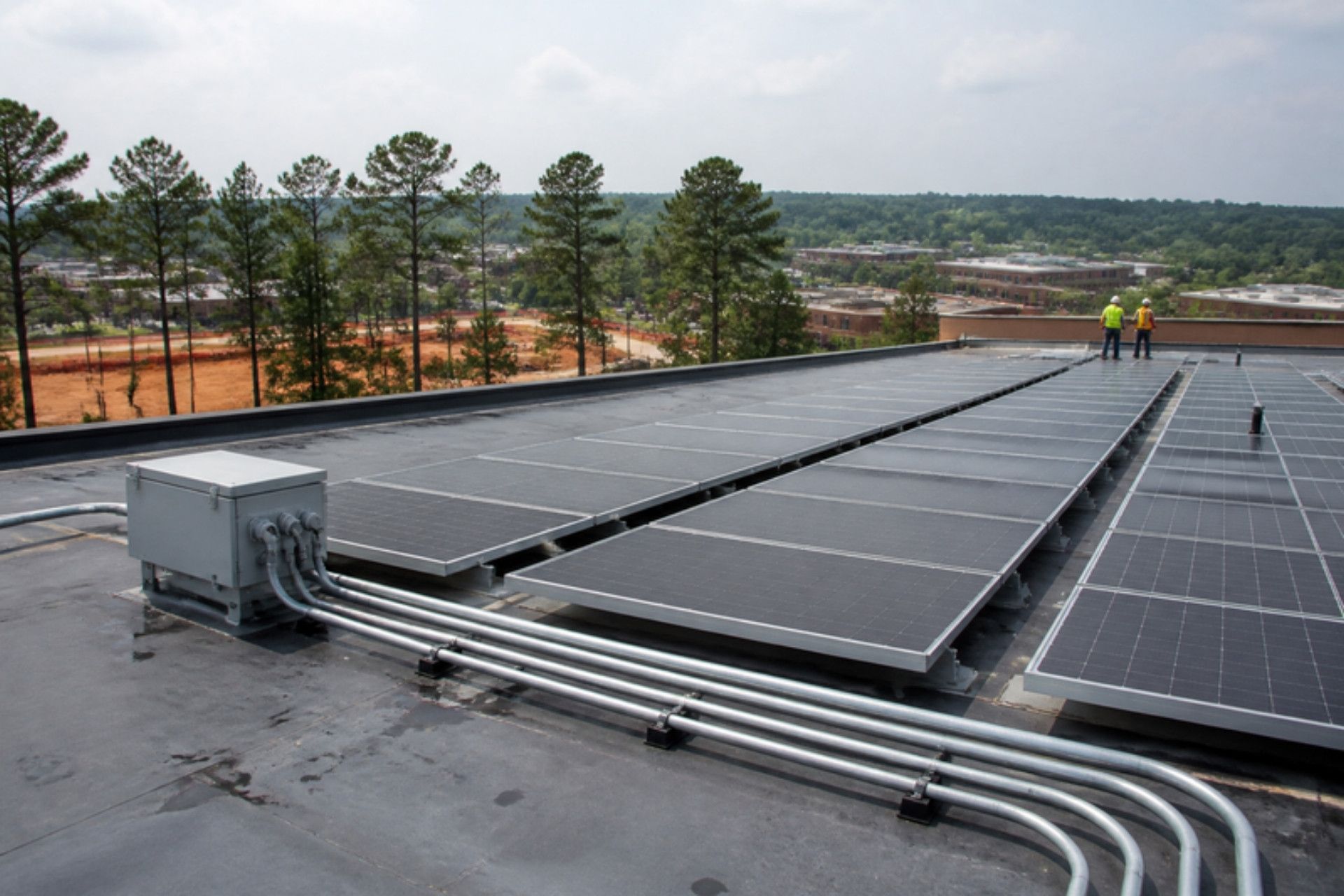
Solar work frequently requires mounting racking systems on residential and commercial roofs, and this activity can trigger roofing exclusions or classification issues under some general liability policies. A leak that appears two winters after installation may produce a claim for interior water damage, mold remediation, and roof replacement, and the contractor's coverage for that claim depends heavily on how the operations were described in the application. Falls from roofs also raise workers compensation considerations, since roof work generally carries a higher hazard profile than interior wiring.
Battery energy storage systems paired with solar arrays add thermal and fire exposure, particularly when installation deviates from manufacturer specifications. Electricians should retain installation manuals, commissioning reports, and inspection approvals, since a fire investigation will examine whether the contractor or the manufacturer bears responsibility.
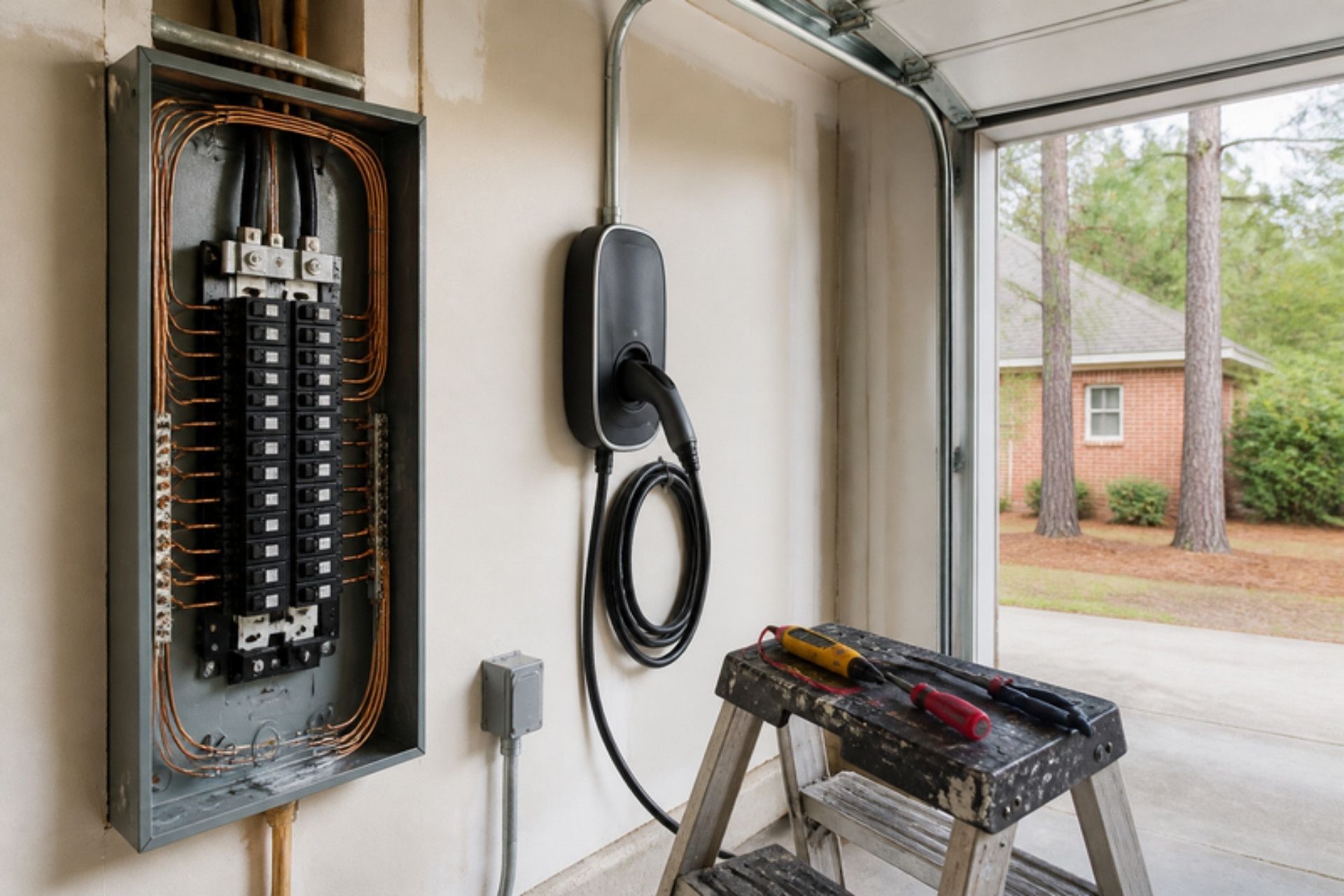
Electric vehicle charging stations present a separate set of concerns. Level 2 chargers in Concord and Huntersville garages often require panel upgrades or load calculations, and an undersized service or improper breaker selection can overheat conductors over time. Commercial charging installations at retail centers and apartment complexes create additional third-party exposure from trip hazards, vehicle damage, and electrical shock. These factors call for the following precautions:
- Disclose solar, battery storage, and EV charger work accurately on every insurance application.
- Review the policy for roofing, height, or renewable energy exclusions.
- Confirm completed operations limits are adequate for long-tail claims.
- Request additional insured status from equipment distributors when available.
Comparing General Liability and Workers Compensation Requirements
General liability protects against claims from customers and the public, while workers compensation protects employees injured on the job. North Carolina law requires most businesses with three or more employees to carry workers compensation, whereas general liability is typically required by contracts, general contractors, and local permitting practices rather than by statute.
Electricians frequently confuse the two coverages, assuming that a general liability policy will respond when a helper falls from a ladder. It will not, because general liability excludes injuries to the contractor's own employees, and that exposure belongs exclusively to workers compensation.
| Feature | General Liability | Workers Compensation |
|---|---|---|
| Who is protected | Customers, property owners, the public | Employees of the contractor |
| Typical claims | Fire damage, property damage, customer injury | Falls, shocks, cuts, repetitive strain |
| North Carolina requirement | Contract and GC driven | Required for most employers with three or more employees |
| Pricing basis | Revenue, payroll, operations | Payroll by classification code |
| Solo operator market range | Roughly $430 to $780 annually | Owner may elect exclusion in many cases |
| Electrical rate reference | Varies by carrier | Class 5190 near $2.00 per $100 of payroll |
Solo electrical operators in North Carolina typically see annual general liability premiums ranging from $430 to $780, although work mix, claims history, and limits influence the final figure. Workers compensation for electrical wiring under Class 5190 generally costs approximately $2.00 per $100 of payroll after carrier multipliers are applied.
The three-employee threshold creates a common trap. Many general contractors in the Charlotte market require subcontractors to carry workers compensation regardless of employee count, and a subcontractor without coverage may be charged premium on the general contractor's audit or denied work entirely. Misclassifying employees as independent contractors also exposes the business to audit premiums and potential penalties under North Carolina law.
Protecting Your Assets with Tools and Equipment Coverage
Inland marine coverage, often called tools and equipment coverage, protects mobile property such as meters, thermal cameras, wire pullers, and hand tools while on job sites, stored in vehicles, or in transit. Commercial property and auto policies usually exclude these items once they leave the business premises, making separate coverage essential.
Tool theft remains one of the most frequent claims electricians file, particularly from vans parked overnight in apartment lots or from unsecured gang boxes on commercial job sites. A fully equipped electrical van may carry a substantial investment in diagnostic equipment, cable tracers, power quality analyzers, threading machines, and specialty hand tools, and replacing that inventory without coverage can halt operations for weeks.
Policies are generally written on either a scheduled or unscheduled basis. Scheduled coverage lists high-value items individually by description and serial number, while unscheduled coverage applies a blanket limit to smaller tools with a per-item cap. Contractors should also determine whether the policy values losses at replacement cost or actual cash value, because depreciation can reduce a claim payment considerably on equipment that is several years old.
Security standards are tightening across the region. Rapid data center construction in Wake, Catawba, and Person Counties has led insurers to require layered security measures such as GPS tracking and AI surveillance as a condition of tool coverage eligibility on certain projects. Electricians pursuing this work should anticipate questions about lockable storage, vehicle alarms, and inventory records during underwriting. Maintaining a current equipment list with photographs and serial numbers simplifies both underwriting and claim settlement.
Why Partner with an Independent Agency Like O'Connor Insurance Associates
An independent agency represents multiple insurance carriers, allowing an electrical contractor to compare coverage forms, exclusions, and pricing in a single review. O'Connor Insurance Associates has served Charlotte since 2000 and has been recognized as an IIABA Best Practices Agency since 2010, offering contractors broader options than a single captive carrier can provide.
Purchasing directly from one carrier limits the contractor to that company's appetite, policy language, and pricing, and many direct carriers decline or restrict electrical risks involving solar, commercial, or industrial operations. An independent agent can approach several markets on behalf of the contractor, compare completed operations wording and exclusions side by side, and identify the program most appropriate to the actual scope of work. The agency does not issue the policy itself, since coverage is underwritten by the selected carrier, but the agent manages the comparison, the application, and the ongoing service relationship.
The Independent Insurance Agents & Brokers of America (IIABA, also known as the Big "I") designates Best Practices Agencies based on operational performance, and O'Connor Insurance Associates has retained that recognition since 2010. For electrical contractors, this translates into an advisory approach that emphasizes asking detailed questions about operations before recommending coverage. When a contractor adds EV charger installations, moves to an Unlimited license, or begins hiring employees, an independent agent can reassess the program and remarket it if the current carrier no longer fits.
The Advantage of Local Expertise in Charlotte
Local knowledge shapes practical advice. Contractors working across Mecklenburg, Cabarrus, and Iredell Counties encounter varied general contractor requirements, municipal inspection practices, and code interpretations, and industry observers note that the deviation from the normal code adoption cycle has caused significant confusion among electricians working across jurisdictions. An agency based in Charlotte understands the contract language common to regional builders and can review certificate requirements before a bid is submitted, preventing coverage problems from surfacing after a contract has been signed.
Common Questions About North Carolina Electrician Insurance
Electrical contractors raise a consistent set of questions about coverage, licensing, and claims. The answers below address the most frequent concerns from solo operators and growing crews in North Carolina, using plain language to clarify what policies typically cover and where gaps commonly appear.
Do I need insurance if I run a one-man electrical shop?
Yes, because general liability protects against fire and property damage claims regardless of business size, and most general contractors require proof of coverage. Workers compensation may not be legally required for a sole owner without employees, but many contracts still demand it.
What does the state board require for an electrical license?
The North Carolina State Board of Examiners of Electrical Contractors requires a qualified individual to pass the examination for the chosen license class and meet experience standards. Contractors should confirm current requirements directly with the board.
How much can a fire claim cost an electrician?
A fire claim can range from minor smoke damage to the total loss of a building, its contents, and tenant business income. Larger commercial losses can exceed standard liability limits, which is why umbrella coverage matters.
Does my insurance cover stolen tools?
General liability does not cover stolen tools, and commercial auto typically excludes them as well. An inland marine or tools and equipment policy is generally needed to cover theft from vans and job sites.
Will my policy cover solar and EV charger work?
Coverage depends on the specific policy language, as some forms exclude roofing or renewable energy operations. Disclosing this work on the application and reviewing exclusions with an agent helps avoid a denied claim.
Is workers compensation required for my helpers?
North Carolina generally requires workers compensation for businesses with three or more employees. Many general contractors require it from subcontractors even below that threshold.
Making the Right Choice for Your Electrical Business
A sound electrical insurance program combines general liability with strong completed operations coverage, workers compensation, inland marine protection for tools, and umbrella limits sized to fire exposure. Reviewing these coverages annually, particularly as licensing class or service offerings change, keeps the program aligned with actual risk.
The most costly mistakes electricians make rarely involve the absence of a policy altogether. They involve exclusions that were never read, completed operations limits that were set too low, solar or roofing work that was never disclosed, and tools that were assumed to be covered under an auto policy. Each of these gaps can be identified before a loss through a careful coverage review that compares multiple carrier options against the contractor's actual operations, license class, and contract obligations.
Electricians across Charlotte, Highland Creek, Huntersville, Cornelius, Concord, and Harrisburg can request a comprehensive review of their current program by calling 704-510-8884. O'Connor Insurance Associates is a licensed North Carolina insurance agency (license #7014004) located at 1973 JN Pease Place, Suite 203, Charlotte, North Carolina 28262.
Coverage descriptions are general. Policy terms, exclusions, limits and underwriting determine coverage.
Last updated:
On this page
O’Connor Insurance Associates is fully licensed to provide personal and commercial insurance solutions for individuals, families and businesses across North Carolina.
We proudly serve families and business owners from our office in Charlotte, North Carolina. As an independent, family-owned agency since 2000, our team works with more than one insurance company to make sure homeowners, drivers, contractors, landscapers, small businesses and other personal and commercial clients receive coverage that fits their real risks.

About the Author
President & Founder
I’m Terry O’Connor, President and Founder of O’Connor Insurance Associates. I grew up in Pennsylvania, earned my bachelor’s degree at Edinboro University and my master’s at Gannon University, and in 1998 I traded snow for sunshine and moved to Charlotte. In January 2000, I started this agency on my own because I wanted to help people protect what matters most to them. More than two decades later, we’ve grown into an independent agency serving families and businesses across North Carolina, and we’ve been recognized as an IIABA Best Practices Agency every year since 2010, a distinction held by fewer than 1% of agencies nationwide.
I’ve seen firsthand how the right protection can change a family’s or a business owner’s life, and that’s why I lead with empathy, education and honest advice. As an independent agent, I work for you, not for one insurance company. I take the time to explain your options in plain language, and when you call our office, you reach a real person who knows your account.
Outside the office, you’ll usually find me outdoors hunting or fishing, or on the mat coaching wrestling as an assistant varsity coach at Mallard Creek High School. I’m also a proud supporter of the arts, usually in the front row cheering on my daughter in local theater productions. I’d be glad to review your coverage with you. Call me at 704-510-8884 or email terry@oianc.com.
Relationships are the real measure
What our North Carolina clients say.
5.0 / 5
185 reviews on Google
Personal insurance
For the life you’re making.
Your home, your car, your time away. Let’s look at the whole picture.
Business insurance
For the business you’re building.
From established local companies to growing teams, we help make the coverage conversation clearer.
Your work deserves a closer look
Different businesses.
Different conversations.
We take time to understand what happens in your business every day.

Landscaping

Manufacturers

Technology Companies

HVAC Insurance

Electricians Insurance

Food Manufacturers
A little clarity goes a long way
Good questions.
Straight answers.
Have something else on your mind?
What does an independent insurance agency do?
An independent agency helps you compare options from more than one insurance company. We start with your needs, explain the differences and help you make an informed decision.
What can O’Connor help me insure?
Our team works with personal and business insurance, life and disability coverage, and Medicare options. Tell us what you need, and we’ll connect you with the right person.
Where does your agency serve clients?
We are based in Charlotte and serve clients across North Carolina. If your business operates in more than one state, call us to discuss your locations and coverage needs.
How do I get an insurance quote?
Start with the contact form or call 704-510-8884. We’ll ask about your situation and any current coverage, then review available options. Submitting a request does not bind coverage.
Can you help with an existing policy or claim?
Yes. Our Client Center page connects you with policy service, billing and claims options. You can also call during office hours for help finding the right next step.
What should I know before switching insurance?
Compare coverage, limits, exclusions and effective dates, not just the price. Speak with your agent before canceling an existing policy so you can coordinate the transition.
From our desk to yours
A little knowledge goes a long way.



Get a Quote
Let’s protect what you’re building.
Tell us a little about yourself. We’ll help you take the next step with a clearer picture of your options.
1973 J.N. Pease Place, Suite 203
Charlotte, NC 28262
Monday–Thursday · 9 AM–5 PM
Friday · 9 AM–3 PM
