

Every manufacturing facility in North Carolina carries a distinct set of exposures, ranging from a seized hydraulic press to a defective component shipped to a customer three states down the supply chain. A well-designed North Carolina manufacturing insurance program combines product liability, equipment breakdown, business income, workers compensation, and cargo coverage so that a single loss does not threaten the operation.
The state's manufacturing economy has grown considerably over the past decade, and the insurance needs of its producers have grown with it. North Carolina was named CNBC's 2025 Top State for Business, the third time in four years the state has held that title, and the total effective business tax rate stood at 3.2% in Q3 2026, the lowest in the United States. These conditions continue to attract new plants, expansions, and suppliers to the Charlotte region and beyond.
Growth introduces complexity, however. A contract manufacturer in Concord, a metal fabricator in Harrisburg, and a food processor near Huntersville each face different combinations of liability, property, and employee risk. The sections that follow examine each major coverage line, the gaps that frequently appear in manufacturing programs, and the questions that facility owners should raise before renewing or purchasing a policy.
The Importance of North Carolina Manufacturing Insurance
North Carolina ranks among the top manufacturing states in the country, with heavy industrial bases in Gastonia, Monroe, and Charlotte. Manufacturers in these areas face concentrated exposures, including machinery losses, product claims, employee injuries, and shipping damage, which makes a comprehensive, coordinated insurance program a practical necessity rather than an optional expense.
Gastonia's long textile heritage has evolved into a diverse base of advanced materials, automotive components, and plastics production. Monroe has developed a significant aerospace and precision machining cluster, while Charlotte supports everything from industrial equipment assembly to food and beverage processing. Each of these sectors brings its own loss history, and underwriters evaluate them accordingly.
The most common mistake observed in manufacturing accounts is the assumption that a standard business owners policy or a basic commercial package will respond to industrial losses. Many of these policies were designed for offices and retail locations, and they frequently exclude or severely limit coverage for mechanical failure, products-completed operations, and goods in transit. A facility can appear fully insured on paper while carrying substantial uninsured exposure.
A properly structured program typically addresses the following areas:
- Property: Buildings, inventory, raw materials, and tenant improvements
- Liability: Premises, products, and completed operations exposures
- Equipment breakdown: Internal mechanical and electrical failures
- Business income: Lost revenue and continuing expenses after a covered loss
- Workers compensation: Statutory benefits for injured employees
- Cargo and inland marine: Goods moving to and from the facility
- Umbrella liability: Additional limits above primary policies
Contractual requirements also drive coverage decisions. Original equipment manufacturers and large distributors routinely require suppliers to carry specified liability limits, name them as additional insureds, and provide waivers of subrogation. Failing to meet these terms can cost a facility a contract before any claim ever occurs.
Protecting Your Assets with Equipment Breakdown Coverage
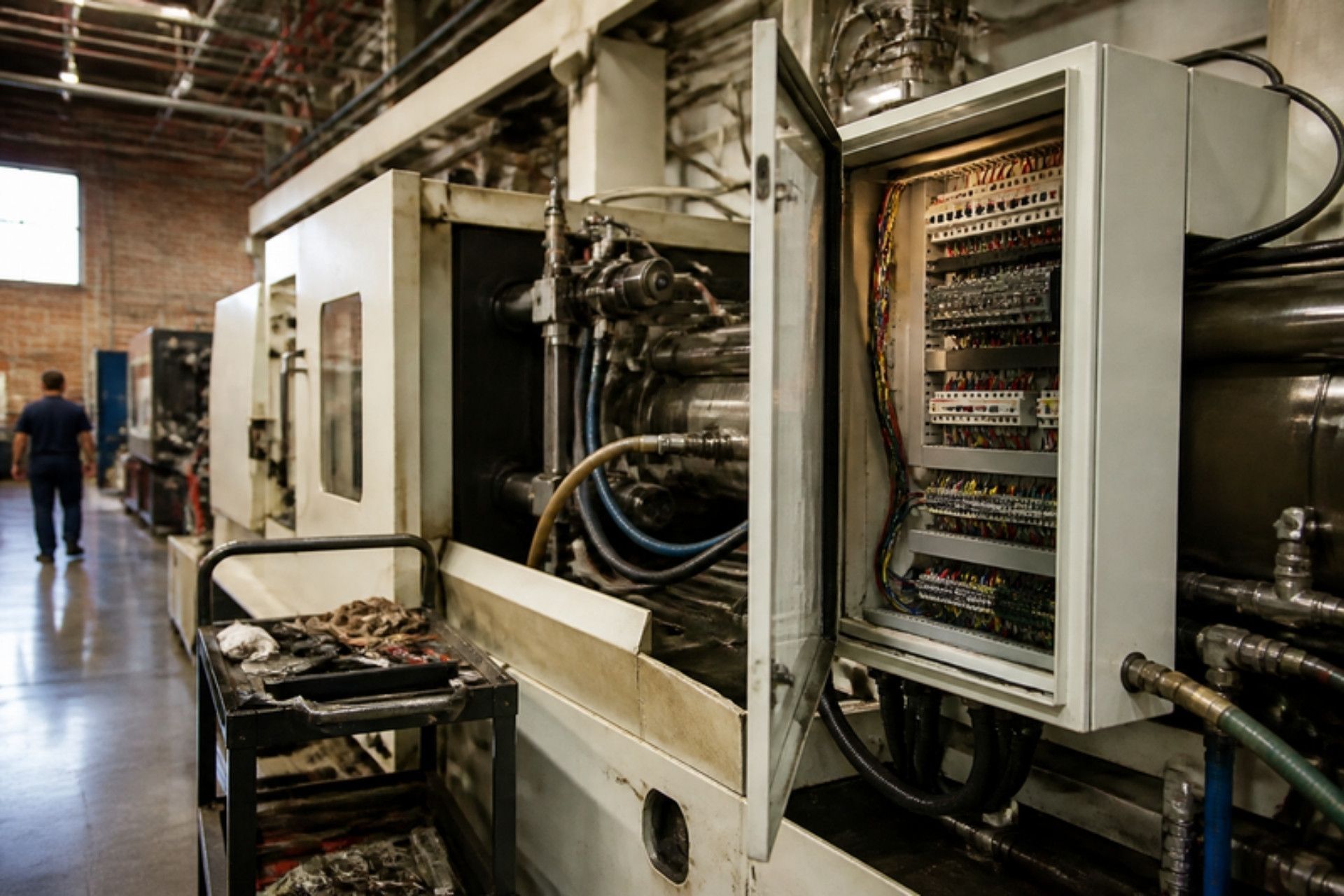
Equipment breakdown coverage protects North Carolina manufacturers when specialized machinery fails because of internal causes such as electrical arcing, motor burnout, boiler explosions, or mechanical breakdown. Standard commercial property policies typically exclude these internal failures, so this coverage fills the gap by paying for repair, replacement, and related financial losses.
The distinction between external and internal causes is the heart of this coverage line. A fire or windstorm that damages a CNC machine is generally a property claim, but a power surge that destroys the machine's control board, or a bearing failure that seizes a spindle, is not. Standard commercial property forms in North Carolina commonly exclude mechanical breakdown and electrical arcing, which leaves many facility owners surprised when a claim is declined.
Equipment breakdown policies may include several valuable extensions, depending on the carrier and the form selected:
- Spoilage coverage for perishable inventory lost when refrigeration or process controls fail
- Expediting expenses for overnight shipping of replacement parts or temporary repairs
- Utility interruption coverage when an off-site transformer or service line fails
- Data and media restoration for programmed controllers and industrial software
- Hazardous substance cleanup following a covered breakdown
Replacement timelines deserve particular attention. Specialized equipment, including injection molding machines, industrial chillers, and custom-built production lines, may require months to source, especially when components come from overseas suppliers. The value of the policy depends heavily on how it coordinates with business income coverage during that waiting period.
Pricing for this coverage has also been shifting. In early 2026, one carrier implemented rate increases of up to 55.2% for equipment breakdown endorsements on homeowners policies in North Carolina. Although that filing applied to personal lines rather than commercial accounts, it reflects broader cost pressures in equipment repair and replacement that manufacturers should anticipate during renewal discussions.
Product Liability and Product Recall Strategies
Defective products expose North Carolina businesses to bodily injury and property damage lawsuits that can surface years after an item leaves the facility. Product liability coverage defends and pays these claims, while separate product recall coverage pays the costs of retrieving, replacing, and disposing of contaminated or defective goods, which standard liability policies typically exclude.
Product claims generally arise from three sources: design defects, manufacturing defects, and inadequate warnings or instructions. A component manufacturer in Monroe supplying parts to an aerospace assembler, for example, may face claims if a single production lot falls outside tolerance, even when the defect originated with a raw material vendor. Contractual indemnity provisions often shift this responsibility onto the supplier.
Timing matters considerably. In North Carolina, personal injury claims resulting from defective products must be filed within three years of the injury becoming apparent, which means exposure can extend well beyond the date of sale. Courts in the state continue to refine how these claims are evaluated, and published North Carolina appellate opinions illustrate how liability questions are resolved in practice.
Product recall coverage is one of the most frequently overlooked protections in manufacturing programs. General liability policies commonly contain a "sistership" exclusion that removes coverage for the cost of withdrawing products from the market. Recall policies may cover notification expenses, shipping and disposal, replacement product costs, and in some forms, lost gross profit and brand rehabilitation. Food, beverage, automotive, and consumer products manufacturers face the most acute recall exposure.
General Liability vs. Product Liability
Many facility owners use these terms interchangeably, but they describe different exposures. The comparison below reflects how the coverage typically applies to a North Carolina manufacturing facility.
| Factor | General Liability (Premises/Operations) | Product Liability (Products-Completed Operations) |
|---|---|---|
| What it covers | Injuries and damage occurring at the facility or during operations | Injuries and damage caused by products after they leave the facility |
| Typical claim | A delivery driver slips on the loading dock | A defective valve causes a customer's equipment failure |
| Where losses occur | On-site or at a job location | Anywhere the product is used |
| When claims appear | Usually soon after the incident | Months or years after sale |
| Recall costs | Not covered | Generally excluded; requires separate recall coverage |
| Underwriting focus | Housekeeping, visitor traffic, safety programs | Quality control, testing, labeling, contracts |
| Aggregate limit | General aggregate | Separate products-completed operations aggregate |
Business Income and Cargo Protection for the Supply Chain
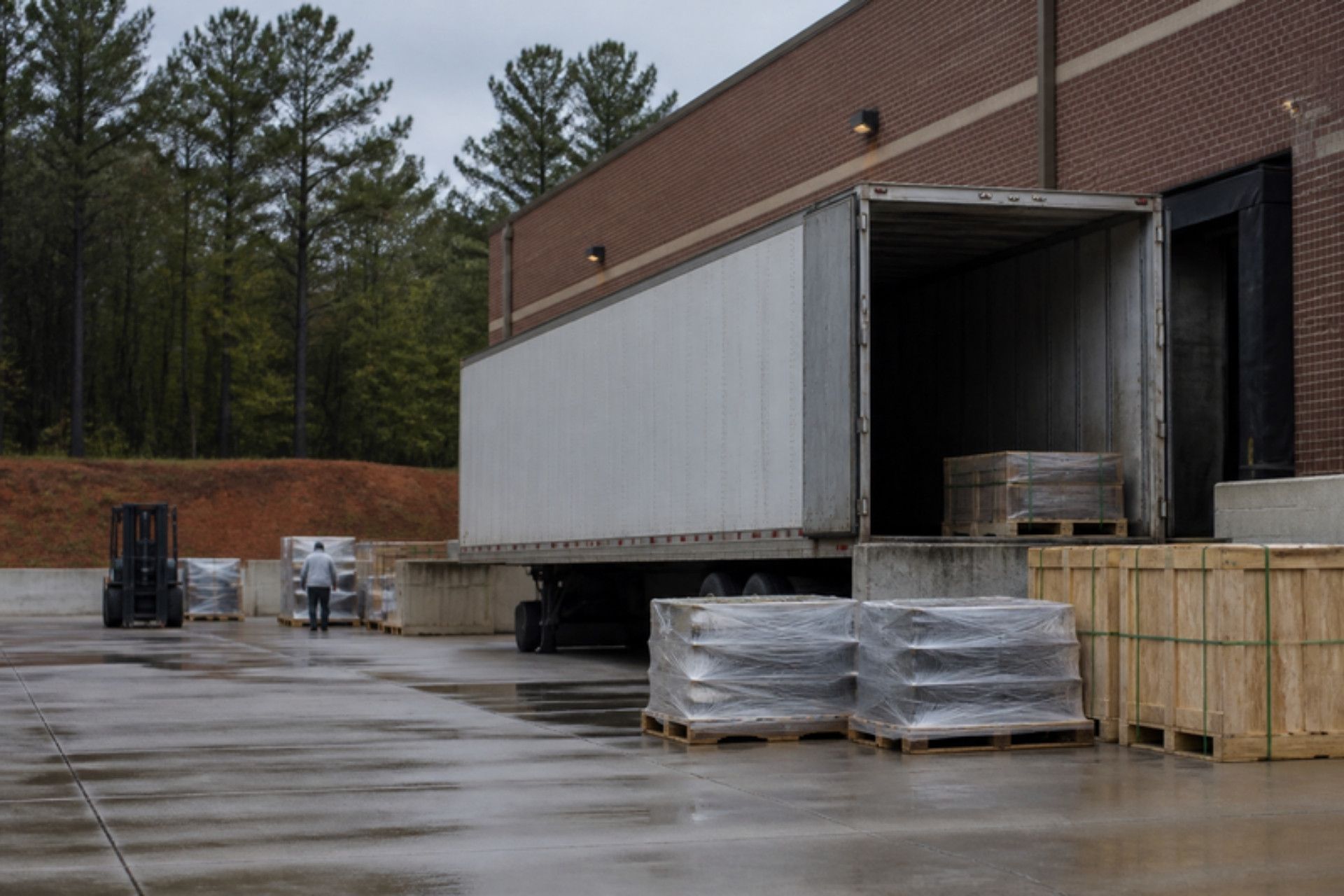
Business income insurance replaces lost revenue and pays continuing expenses such as payroll and loan payments when a covered loss halts production. Cargo insurance protects raw materials and finished goods while in transit across North Carolina by truck, rail, or through state ports, covering theft, collision, and handling damage.
Business income coverage is frequently underinsured. Many manufacturers select a limit based on a rough estimate rather than a completed worksheet, and the result is a coinsurance penalty or exhausted limits long before production resumes. The period of restoration should reflect realistic timelines for rebuilding, re-tooling, re-certifying equipment, and regaining customers who moved to competitors during the shutdown.
Several extensions can strengthen this coverage:
- Extended period of indemnity to cover the ramp-up after reopening
- Contingent business income for losses at a key supplier or customer
- Extra expense for temporary facilities, overtime, or outsourced production
- Civil authority coverage when access to the plant is restricted
Cargo exposure has grown as the state's logistics network expands. North Carolina Ports moved 4.4 million short tons of cargo in FY2026, with particular emphasis on project cargo such as industrial battery packs and windmill blades. High-value, oversized shipments of this kind carry significant loss potential during loading and transport.
Trucking conditions also affect risk. Port officials describe the trucking recovery as "supply-driven," with fewer trucks and drivers competing for flat freight volumes, creating a tighter rate environment for shippers. A common error is relying solely on the motor carrier's liability, which is often limited by weight-based valuation and does not reflect the true replacement cost of manufactured goods.
North Carolina Workers Compensation Requirements
North Carolina law requires most employers with three or more employees to carry workers compensation insurance, providing medical care and wage replacement for employees injured on the job. For manufacturers, where machinery, repetitive motion, and lifting create elevated injury risk, this coverage is both a legal obligation and a core employee protection.
Industrial settings generate a recognizable pattern of claims. Lacerations and amputations from unguarded equipment, back strains from material handling, hearing loss from prolonged noise exposure, and repetitive motion injuries on assembly lines appear regularly in manufacturing loss runs. Forklift incidents and chemical exposure also contribute to severe and costly claims.
Benefit levels are adjusted annually. The maximum weekly compensation rate in North Carolina is set at $1,446.00 for 2026, which affects the cost of lost-time claims for higher-wage skilled workers such as machinists and maintenance technicians. The market remains favorable for many employers, as workers compensation premiums in North Carolina are declining even as insurer profitability and loss ratios improve.
Premium control depends heavily on accurate classification and loss experience. Misclassified employees, such as clerical staff coded at a plant rate, inflate premiums unnecessarily, while an unmanaged experience modification factor can increase costs for three consecutive years. Manufacturers that maintain written safety programs, return-to-work procedures, and prompt claim reporting generally achieve stronger results at renewal.
Temporary staffing deserves careful review as well. Many facilities rely on staffing agencies during peak production, and contracts should clearly establish which party provides coverage. Gaps in these arrangements can leave the manufacturer responsible for an injured worker it assumed was insured elsewhere.
Why Partner with an Independent North Carolina Insurance Agency?
An independent agency such as O'Connor Insurance Associates represents multiple insurance carriers rather than one, which allows manufacturers to compare popular policies, coverage forms, and custom quotes side by side. Going direct to a single carrier limits options to that company's products, appetite, and pricing, regardless of whether they fit the facility.
Manufacturing accounts rarely fit neatly into one carrier's preferred profile. A company may find favorable workers compensation terms with one insurer, more appropriate product liability forms with another, and specialized cargo coverage through a third market. An independent agent can assemble these pieces into a coordinated program while identifying conflicts between policies, such as mismatched valuation methods or overlapping exclusions.
O'Connor Insurance Associates has served the Charlotte area as an independent agency since 2000, with an educational approach that emphasizes asking detailed questions about operations before recommending coverage. Questions about production processes, key suppliers, customer contracts, and shipping methods typically reveal exposures that a generic application overlooks. The agency is not the insurance carrier; coverage is underwritten and issued by the carriers it represents.
The quote process for a manufacturing account generally involves the following steps:
- Gathering current policies, loss runs for the past three to five years, and payroll data
- Reviewing customer and supplier contracts for insurance requirements
- Documenting equipment schedules, property values, and shipping volumes
- Presenting the account to appropriate carriers with a clear operational narrative
- Comparing proposals on coverage terms, not premium alone
Annual reviews also matter. As a facility adds product lines, equipment, or locations, the program should be adjusted before the next loss rather than after it.
Frequently Asked Questions About Manufacturing Insurance
Does my general liability policy cover a product recall?
Usually not. Most general liability policies exclude the cost of recalling products, so manufacturers need separate product recall coverage to pay for retrieval, replacement, and disposal.
Why did my property insurer deny a claim for a broken machine?
Standard commercial property policies typically exclude internal failures like mechanical breakdown and electrical arcing. Equipment breakdown coverage is designed to pay for those losses.
Do I need workers comp if I only have a few employees?
North Carolina generally requires employers with three or more employees to carry workers compensation. Many smaller manufacturers purchase it anyway because a single serious injury can be very costly.
Is the trucking company's insurance enough to protect my shipments?
Often it is not, since carrier liability may be limited and based on weight rather than actual value. Cargo or inland marine coverage protects the full value of goods in transit.
How much business income coverage should a manufacturer carry?
The limit should reflect lost profit plus continuing expenses for the full time needed to rebuild and resume normal production. Completing a business income worksheet with an agent provides a far more reliable figure than an estimate.
How long after selling a product can someone sue my company?
In North Carolina, personal injury claims from defective products must be filed within three years of the injury becoming apparent. That injury may occur long after the original sale.
Making the Right Choice for Your Facility
The protection of a manufacturing operation depends on how well each coverage line works with the others. Product liability and recall coverage address claims that may surface years after shipment, equipment breakdown fills the internal-failure gap in property policies, business income and cargo coverage protect revenue and goods across the supply chain, and workers compensation satisfies legal requirements while caring for the employees who keep production running. Weakness in any one area can undermine the entire program.
Facility owners in Charlotte, Concord, Harrisburg, Huntersville, and surrounding communities benefit from reviewing these exposures before renewal rather than after a loss. A thorough review of contracts, equipment values, and shipping practices often reveals gaps that are inexpensive to close and costly to ignore.
O'Connor Insurance Associates is a licensed North Carolina insurance agency (license #7014004) located at 1973 JN Pease Place, Suite 203, Charlotte, North Carolina 28262. The agency has been recognized as an IIABA Best Practices Agency since 2010 and designs customized programs for manufacturers using multiple carrier options. To request a manufacturing insurance review or a custom quote, contact O'Connor Insurance Associates at 704-510-8884. Insurance serves as the safety net for the disaster no one planned for, and the time to strengthen that net is before production ever stops.
Coverage descriptions are general. Policy terms, exclusions, limits and underwriting determine coverage.
Last updated:
On this page
O’Connor Insurance Associates is fully licensed to provide personal and commercial insurance solutions for individuals, families and businesses across North Carolina.
We proudly serve families and business owners from our office in Charlotte, North Carolina. As an independent, family-owned agency since 2000, our team works with more than one insurance company to make sure homeowners, drivers, contractors, landscapers, small businesses and other personal and commercial clients receive coverage that fits their real risks.

About the Author
President & Founder
I’m Terry O’Connor, President and Founder of O’Connor Insurance Associates. I grew up in Pennsylvania, earned my bachelor’s degree at Edinboro University and my master’s at Gannon University, and in 1998 I traded snow for sunshine and moved to Charlotte. In January 2000, I started this agency on my own because I wanted to help people protect what matters most to them. More than two decades later, we’ve grown into an independent agency serving families and businesses across North Carolina, and we’ve been recognized as an IIABA Best Practices Agency every year since 2010, a distinction held by fewer than 1% of agencies nationwide.
I’ve seen firsthand how the right protection can change a family’s or a business owner’s life, and that’s why I lead with empathy, education and honest advice. As an independent agent, I work for you, not for one insurance company. I take the time to explain your options in plain language, and when you call our office, you reach a real person who knows your account.
Outside the office, you’ll usually find me outdoors hunting or fishing, or on the mat coaching wrestling as an assistant varsity coach at Mallard Creek High School. I’m also a proud supporter of the arts, usually in the front row cheering on my daughter in local theater productions. I’d be glad to review your coverage with you. Call me at 704-510-8884 or email terry@oianc.com.
Relationships are the real measure
What our North Carolina clients say.
5.0 / 5
185 reviews on Google
Personal insurance
For the life you’re making.
Your home, your car, your time away. Let’s look at the whole picture.
Business insurance
For the business you’re building.
From established local companies to growing teams, we help make the coverage conversation clearer.
Your work deserves a closer look
Different businesses.
Different conversations.
We take time to understand what happens in your business every day.

Landscaping

Manufacturers

Technology Companies

HVAC Insurance

Electricians Insurance

Food Manufacturers
A little clarity goes a long way
Good questions.
Straight answers.
Have something else on your mind?
What does an independent insurance agency do?
An independent agency helps you compare options from more than one insurance company. We start with your needs, explain the differences and help you make an informed decision.
What can O’Connor help me insure?
Our team works with personal and business insurance, life and disability coverage, and Medicare options. Tell us what you need, and we’ll connect you with the right person.
Where does your agency serve clients?
We are based in Charlotte and serve clients across North Carolina. If your business operates in more than one state, call us to discuss your locations and coverage needs.
How do I get an insurance quote?
Start with the contact form or call 704-510-8884. We’ll ask about your situation and any current coverage, then review available options. Submitting a request does not bind coverage.
Can you help with an existing policy or claim?
Yes. Our Client Center page connects you with policy service, billing and claims options. You can also call during office hours for help finding the right next step.
What should I know before switching insurance?
Compare coverage, limits, exclusions and effective dates, not just the price. Speak with your agent before canceling an existing policy so you can coordinate the transition.
From our desk to yours
A little knowledge goes a long way.



Get a Quote
Let’s protect what you’re building.
Tell us a little about yourself. We’ll help you take the next step with a clearer picture of your options.
1973 J.N. Pease Place, Suite 203
Charlotte, NC 28262
Monday–Thursday · 9 AM–5 PM
Friday · 9 AM–3 PM
