

Waxhaw, North Carolina home insurance for new construction and acreage properties should start with an accurate replacement cost figure. It should also include adequate limits for detached garages, barns, and pools, plus liability protection that fits a larger lot. Most homes in the Charlotte area carry an all-perils deductible rather than a separate wind and hail deductible.
The town sits in the southwestern corner of Union County, where cleared farmland has steadily given way to planned neighborhoods and custom homes on multi-acre parcels. As of October 2026, the town reported 1,466 residential units in the development pipeline, counting projects that are approved or already under construction. That growth creates a mix of property types that a single standard policy rarely fits without adjustment, from a newly finished house in a subdivision to a ten-acre tract with a horse barn and an in-ground pool.
Understanding Waxhaw North Carolina Home Insurance for Expanding Communities
Rapid growth in Union County raises rebuilding costs, increases demand for contractors, and introduces property features that older policies were not designed to address. New construction needs accurate replacement cost values. Larger properties need higher limits for other structures and liability. Annual reviews help keep coverage aligned with current construction costs and statewide rate changes.
North Carolina homeowners rates are set within a regulated framework, and Waxhaw falls within Rating Territory 340, which also includes Union, Mecklenburg, Iredell, Alexander, Stanly, and Wilkes counties. Homeowners in this territory share a rating structure with much of the greater Charlotte region. Individual premiums still vary based on construction type, roof age, claims history, credit-based insurance scores, and the coverage limits selected.
Rate movement over the past two years is relevant to any Waxhaw household reviewing its policy. A statewide average base rate increase of 7.5% for HO-3 homeowners policies took effect on June 1, 2026, following an initial 7.5% increase in 2025. Both increases resulted from a settlement between the Department of Insurance and the North Carolina Rate Bureau, which had originally requested considerably more. Insurance Commissioner Mike Causey described the agreement in direct terms: "I fought for consumers and knocked [the Rate Bureau] back to 7.5% increases over two years... We consider this settlement a big win for both homeowners and North Carolina."
The practical point for Union County homeowners is that rate changes and rising construction costs often arrive in the same renewal cycle. A policy written three years ago for a new home may now carry a dwelling limit that no longer reflects current labor and material prices. Renewal season is the logical time to compare that limit against a fresh replacement cost estimate.
Insuring New Construction and Custom Homes in Union County
New homes in Waxhaw should be insured for what they would cost to rebuild, which is often different from the purchase price or appraised value. Carriers such as Erie, Travelers, and Cincinnati may offer replacement cost endorsements suited to newer and custom-built homes, though specific features vary by policy and underwriting.
New construction carries advantages during underwriting. A new roof, updated electrical and plumbing systems, and current building code compliance generally reduce the likelihood of certain losses, and many carriers recognize this in their pricing. That favorable starting point can lead some buyers to accept the first quote attached to their closing paperwork without reviewing the details.
Among the carriers commonly placed by independent agencies in North Carolina, Erie is frequently considered for newer homes because some of its policies may include guaranteed replacement cost features, subject to eligibility. Travelers and Cincinnati are also often reviewed for higher-value and custom homes, where options such as extended replacement cost, equipment breakdown, and service line coverage may be available by endorsement. Progressive, National General, Utica, and Foremost can serve other situations depending on property characteristics. The right fit depends on the home, the lot, and the owner's priorities rather than on any single brand name.
The Importance of Replacement Cost for New Builds
Replacement cost is the amount required to rebuild the home with materials of like kind and quality at current prices. For a custom home, that figure includes design elements that a builder-grade estimate may miss: site-built cabinetry, upgraded trim packages, specialty roofing, vaulted ceilings, and detailed stonework or brick veneer.
One of the most common gaps in new construction policies involves using the sales price as the dwelling limit. The sales price includes land value, which does not burn down, yet it may still fall short of rebuilding costs when contractor demand is high. After a major regional storm, labor and materials can become scarce, pushing reconstruction costs above prewar estimates.
Several steps help keep the dwelling limit accurate:
- Provide builder specifications to the agent, including square footage, finish level, and any upgrades added during construction.
- Ask about extended replacement cost, which may add a percentage above the dwelling limit if rebuilding costs exceed expectations.
- Confirm ordinance or law coverage, which helps pay for code upgrades required during reconstruction.
- Review the limit annually, since construction costs in a growing county seldom stay flat.
Builder Risk vs. Standard Homeowners Policies
Homeowners who build on their own land in Union County face a coverage question before the home is even finished. A standard homeowners policy is designed for a completed, occupied residence, and it is generally not suited to protecting a structure that is still under construction.
Builder risk coverage, sometimes called course of construction coverage, protects the structure, materials on site, and sometimes materials in transit while the home is being built. In many custom builds, the contractor carries this coverage, but owner-managed projects may require the owner to secure it. The contract should state clearly who carries the policy and who is named as an insured.
The transition between the two policies deserves attention. Builder risk coverage typically ends when the home is occupied or completed, and the homeowners policy should be bound to begin on that date. A gap of even a few days, during which appliances, furniture, and personal property are moved in, can leave the home exposed to theft, fire, or water damage without coverage.
Coverage for Detached Structures, Barns, and Pools on Larger Lots
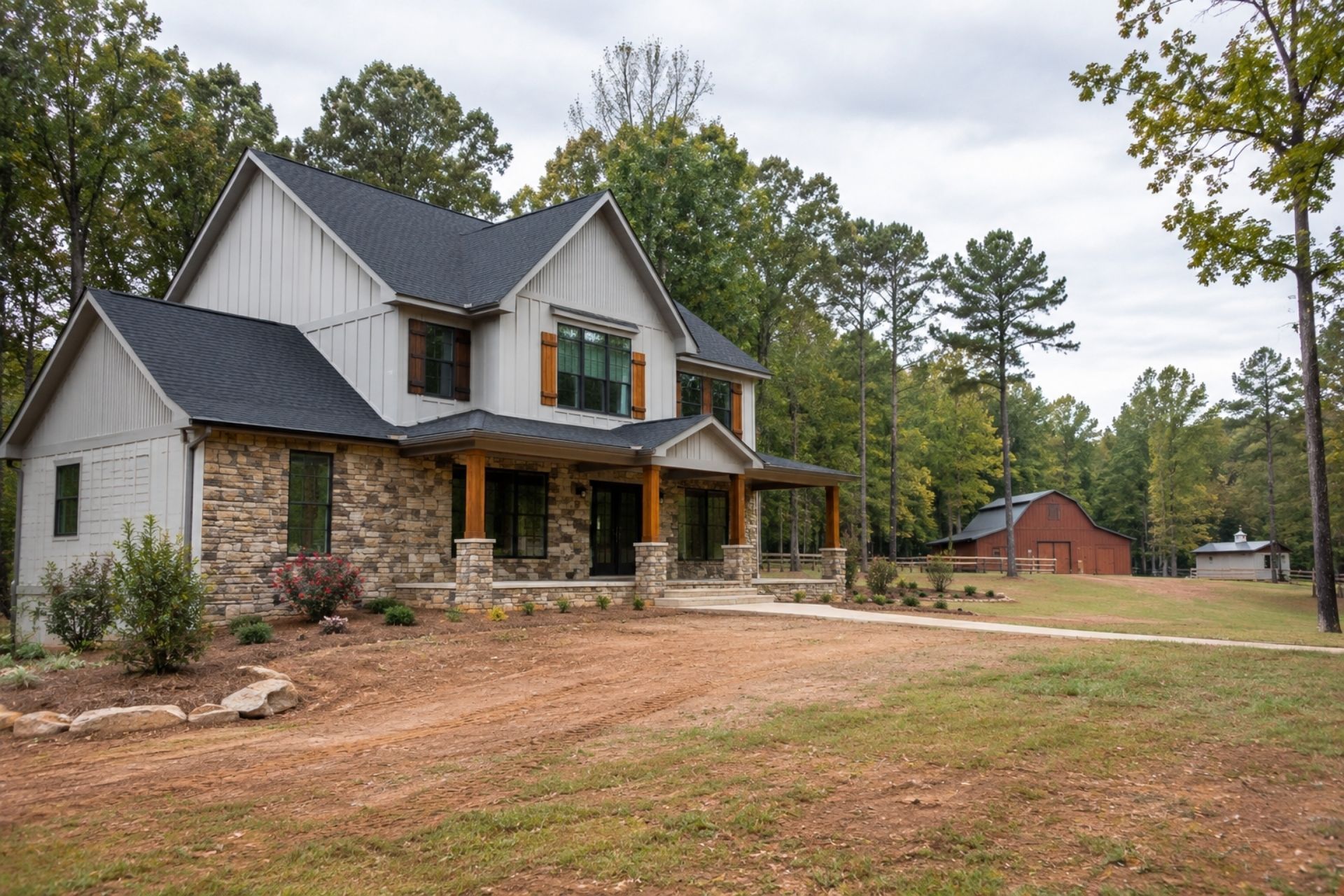
Acreage properties in Waxhaw often include detached garages, workshops, horse barns, fencing, and swimming pools. A standard policy usually limits other structures coverage to a percentage of the dwelling limit, which may fall short on a larger lot. Barns used for business or livestock may need farm-oriented coverage instead.
Union County continues to balance development with agricultural preservation. On March 16, 2026, the Board of Commissioners adopted a new Rural Land Use Plan emphasizing farmland preservation, which suggests that many properties around Waxhaw will remain larger and more rural even as subdivisions expand nearby. These properties often combine a primary residence with structures that serve both personal and agricultural purposes.
Evaluating Other Structures Coverage Limits
Many standard homeowners policies set other structures coverage at 10% of the dwelling limit. For a home insured at $600,000, that provides $60,000 for every detached structure on the property combined, including fencing, a detached garage, a gazebo, a storage building, and a barn.
That figure may sound adequate until the structures are totaled. A three-bay detached garage with a finished upper room, several hundred feet of board fencing, and a pole barn can easily exceed the limit when rebuilt at current prices. Owners of acreage properties should list each structure, estimate its replacement cost separately, and increase the limit by endorsement when the total exceeds the default percentage.
Swimming pools present a related consideration. In-ground pools are generally treated as other structures, and damage from a falling tree or a covered peril may be addressed under that coverage. Pool equipment, screen enclosures, and decking add value that should be included in the overall calculation.
Liability and Property Protection for Private Barns
The use of a barn matters as much as its size. A barn housing two horses for family riding is treated differently from one where the owner boards horses for paying clients, sells hay, or offers lessons. Commercial activity on the property can trigger exclusions under a standard homeowners policy, leaving both the structure and the liability exposure unprotected.
For properties with genuine agricultural activity, a farmowners policy may offer hybrid protection that blends personal homeowners coverage with commercial-style protection for barns, equipment, and livestock. Recent state legislation also affects how certain farm structures are regulated; under the 2026 NC Farm Act, specific agricultural structures such as composting facilities are exempt from county zoning and building code requirements. An exemption from building codes does not mean an exemption from insurance underwriting, so owners should describe these structures accurately when applying.
Liability deserves equal weight. Pools, horses, and open acreage attract visitors, and a single injury claim can exceed standard liability limits. Many acreage owners pair a higher homeowners liability limit with a personal umbrella policy for an added layer of protection.
Wind and Hail Coverage for Growing Subdivisions
Separate wind and hail deductibles are common along the North Carolina coast but are rarely used in the Charlotte and Waxhaw area. Most homes in Union County carry a single all-perils deductible that applies to wind and hail losses, though storm damage remains a real risk for roofs, siding, and fencing.
Coastal homeowners in North Carolina are accustomed to percentage-based deductibles that apply specifically to wind or hurricane damage. Charlotte-area homeowners who move from those regions, or who read general insurance advice online, sometimes assume the same structure applies in Union County. In practice, that type of deductible is uncommon in the Charlotte region, and a standard flat deductible usually applies to a wind or hail claim just as it would to a kitchen fire.
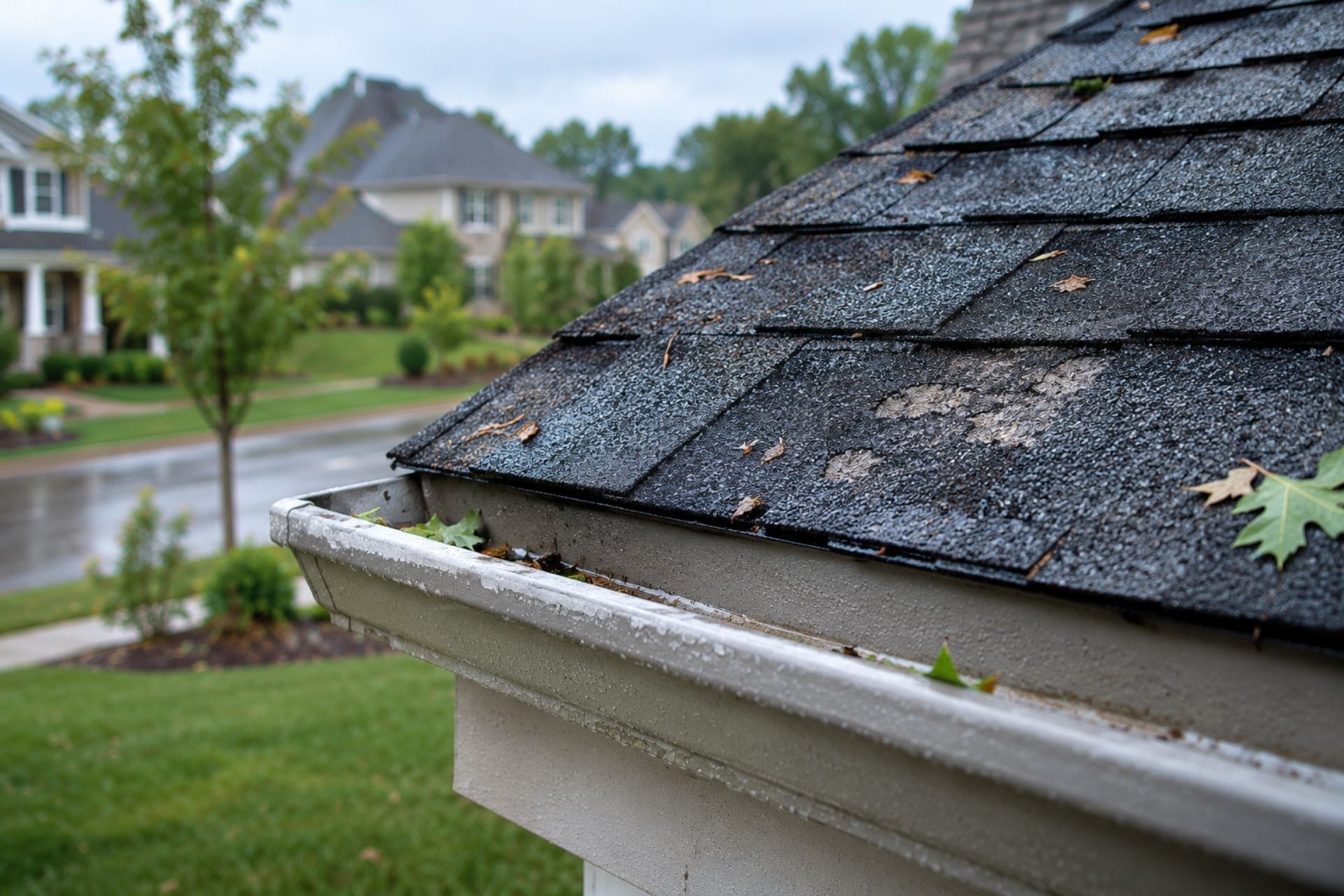
The absence of a special deductible does not mean an absence of risk. Radar-estimated hail measuring up to 1.41 inches was recorded five miles south of Waxhaw on July 12, 2026, and severe thunderstorms later that summer produced damaging winds and quarter-sized hail in the Waxhaw and Matthews corridor. Storms of that size can bruise asphalt shingles, dent gutters, crack vinyl siding, and damage vehicles parked outside.
Newer subdivisions face a particular pattern. Homes built in the same phase often share roof materials, installation dates, and exposure, so a single storm may produce dozens of claims on one street. Several points help homeowners prepare:G
- Document the roof with dated photographs after closing and after major storms.
- Review the roof settlement terms, since some policies may pay actual cash value on older roofs.
- Ask about wind mitigation features; the North Carolina Rate Bureau plans to convert wind mitigation credits to factor-based calculations effective June 1, 2027.
- Choose a deductible that fits household savings rather than solely the premium difference.
Comparing Coverage Options for Waxhaw Homeowners
Standard homeowners policies provide a baseline of protection, while extended options raise limits and broaden how losses are settled. For Union County homes with larger lots, custom finishes, or detached structures, the difference between standard and extended coverage often determines whether a serious loss is fully repaired.
The table below outlines typical differences. Actual terms vary by carrier and policy form, so each item should be confirmed in the specific policy.
| Coverage Area | Standard Coverage | Extended Coverage |
|---|---|---|
| Dwelling | Pays up to the stated limit | May pay a percentage above the limit if rebuild costs rise |
| Other Structures | Often 10% of dwelling limit | Higher limit set by endorsement |
| Barns (personal use) | Included in other structures | Scheduled separately with its own limit |
| Barns (business use) | Often excluded | Farmowners or commercial coverage |
| Personal Property | Percentage of dwelling, sometimes actual cash value | Replacement cost settlement |
| Valuables | Sublimits for jewelry, firearms, collectibles | Scheduled items with broader protection |
| Liability | Often $100,000 to $300,000 | Higher limits plus umbrella option |
| Code Upgrades | Limited or small percentage | Increased ordinance or law limit |
Personal property settlement is one of the most overlooked items in the table. An actual cash value settlement deducts depreciation, so a five-year-old sofa or television may be reimbursed at a fraction of its replacement price. Replacement cost settlement typically costs more but pays closer to what replacement actually requires
Equipment and tools stored in a detached garage or barn deserve separate review as well. Riding mowers, tractors, saddles, and power tools may face sublimits or exclusions depending on their use and the policy form selected.
Common Questions About Waxhaw North Carolina Home Insurance
Union County homeowners frequently raise similar questions about new homes, acreage, and storm coverage. The answers below address the most common concerns in plain terms, though individual policies should always be reviewed for specific language and exclusions.
Does my builder's insurance protect my new house after I move in?
Generally, no. Builder risk coverage typically ends at completion or occupancy, so a homeowners policy should begin on the day the home is occupied.
Is my detached garage covered under my homeowners policy?
Usually it is covered under other structures coverage, which often equals 10% of the dwelling limit. Larger garages or multiple buildings may need a higher limit.
Do I need a farm policy if I keep two horses for my family?
Personal-use horses may be eligible under a homeowners policy with appropriate endorsements, depending on the carrier. Boarding, lessons, or sales usually call for a farmowners policy.
Will I have a separate hail deductible in Waxhaw?
It is unlikely. Separate wind and hail deductibles are mainly a coastal practice in North Carolina and are rarely used in the Charlotte area.
Does a swimming pool increase my insurance costs?
A pool can increase liability exposure, and some carriers may require fencing or other safety features. Many owners raise liability limits or add an umbrella policy.
How often should I review my coverage?
An annual review is reasonable, particularly after renovations, new structures, or statewide rate changes.
Making the Right Choice for Your Union County Property
Selecting coverage for a Waxhaw home involves matching the policy to the property: an accurate dwelling limit for new construction, adequate other structures coverage for barns and garages, and liability limits that reflect pools and acreage. An independent agency can compare multiple carriers to find an appropriate fit.
Union County properties differ widely. A home in a newly platted subdivision may need little more than a properly calculated replacement cost and a reasonable deductible, while a rural parcel with fencing, a barn, and livestock may need a farmowners policy or several endorsements. Treating both properties the same way often produces the coverage gaps that surface only after a claim.
O'Connor Insurance Associates, Inc. is a locally owned, independent agency that has served Charlotte-area families since 2000 and has been recognized as an IIABA Best Practices Agency since 2010. The agency follows an educational approach, asking detailed questions about each property before recommending options from carriers such as Erie, Travelers, Cincinnati, Progressive, National General, Utica, and Foremost. Carrier features and eligibility vary, and the agency places coverage with these companies rather than acting as the insurer.
Waxhaw homeowners can request a coverage review by calling 704-510-8884 or visiting the office at 1973 JN Pease Place, Suite 203, Charlotte, NC 28262. O'Connor Insurance Associates is a licensed North Carolina insurance agency (license #7014004), located in Charlotte since 2000. A thorough review today costs far less than discovering a coverage gap after the next storm.
Last updated:
On this page
O’Connor Insurance Associates is fully licensed to provide personal and commercial insurance solutions for individuals, families and businesses across North Carolina.
We proudly serve families and business owners from our office in Charlotte, North Carolina. As an independent, family-owned agency since 2000, our team works with more than one insurance company to make sure homeowners, drivers, contractors, landscapers, small businesses and other personal and commercial clients receive coverage that fits their real risks.

About the Author
President & Founder
I’m Terry O’Connor, President and Founder of O’Connor Insurance Associates. I grew up in Pennsylvania, earned my bachelor’s degree at Edinboro University and my master’s at Gannon University, and in 1998 I traded snow for sunshine and moved to Charlotte. In January 2000, I started this agency on my own because I wanted to help people protect what matters most to them. More than two decades later, we’ve grown into an independent agency serving families and businesses across North Carolina, and we’ve been recognized as an IIABA Best Practices Agency every year since 2010, a distinction held by fewer than 1% of agencies nationwide.
I’ve seen firsthand how the right protection can change a family’s or a business owner’s life, and that’s why I lead with empathy, education and honest advice. As an independent agent, I work for you, not for one insurance company. I take the time to explain your options in plain language, and when you call our office, you reach a real person who knows your account.
Outside the office, you’ll usually find me outdoors hunting or fishing, or on the mat coaching wrestling as an assistant varsity coach at Mallard Creek High School. I’m also a proud supporter of the arts, usually in the front row cheering on my daughter in local theater productions. I’d be glad to review your coverage with you. Call me at 704-510-8884 or email terry@oianc.com.
Relationships are the real measure
What our North Carolina clients say.
5.0 / 5
185 reviews on Google
Personal insurance
For the life you’re making.
Your home, your car, your time away. Let’s look at the whole picture.
Business insurance
For the business you’re building.
From established local companies to growing teams, we help make the coverage conversation clearer.
Your work deserves a closer look
Different businesses.
Different conversations.
We take time to understand what happens in your business every day.

Landscaping

Manufacturers

Technology Companies

HVAC Insurance

Electricians Insurance

Food Manufacturers
A little clarity goes a long way
Good questions.
Straight answers.
Have something else on your mind?
What does an independent insurance agency do?
An independent agency helps you compare options from more than one insurance company. We start with your needs, explain the differences and help you make an informed decision.
What can O’Connor help me insure?
Our team works with personal and business insurance, life and disability coverage, and Medicare options. Tell us what you need, and we’ll connect you with the right person.
Where does your agency serve clients?
We are based in Charlotte and serve clients across North Carolina. If your business operates in more than one state, call us to discuss your locations and coverage needs.
How do I get an insurance quote?
Start with the contact form or call 704-510-8884. We’ll ask about your situation and any current coverage, then review available options. Submitting a request does not bind coverage.
Can you help with an existing policy or claim?
Yes. Our Client Center page connects you with policy service, billing and claims options. You can also call during office hours for help finding the right next step.
What should I know before switching insurance?
Compare coverage, limits, exclusions and effective dates, not just the price. Speak with your agent before canceling an existing policy so you can coordinate the transition.
From our desk to yours
A little knowledge goes a long way.



Get a Quote
Let’s protect what you’re building.
Tell us a little about yourself. We’ll help you take the next step with a clearer picture of your options.
1973 J.N. Pease Place, Suite 203
Charlotte, NC 28262
Monday–Thursday · 9 AM–5 PM
Friday · 9 AM–3 PM
