

Riders in Huntersville, Concord, and Cornelius often plan their first spring trip toward Boone or Asheville before they ever review the policy covering the motorcycle in the garage. North Carolina motorcycle insurance follows specific statutory requirements, and several optional coverages determine whether a claim is paid in full or only in part. The minimum limits changed recently, and many riders have not yet compared their declarations page against the new figures.
A policy that met legal requirements three years ago may now fall short. Aftermarket exhaust systems, custom paint, and heated grips may also receive only limited protection unless the policy specifically schedules them. Many riders also stop riding between December and March, so a seasonal adjustment can reduce costs without leaving the bike exposed to theft or fire in storage. This guide covers the required limits for North Carolina riders, custom parts and equipment coverage, lay-up periods, and the realities of mountain riding season. Each section explains a practical decision that riders and their families in the greater Charlotte area face when they build or renew a motorcycle policy. The guidance is written for both newer and experienced riders.
Understanding North Carolina Motorcycle Insurance Requirements
North Carolina motorcycle insurance must meet the same minimum liability limits that apply to automobiles. Effective July 1, 2025, those limits are $50,000 for bodily injury per person, $100,000 per accident, and $50,000 for property damage, commonly written as 50/100/50. Any motorcycle registered in North Carolina must carry at least these amounts.
The state raised minimum liability requirements to 50/100/50 on July 1, 2025, replacing the older 30/60/25 structure. The same legislation, Session Law 2023-133, made Uninsured and Underinsured Motorist coverage mandatory for motorcycle policies, so riders now carry protection if an at-fault driver has no insurance or too little of it.
Keeping coverage active also matters to the North Carolina Division of Motor Vehicles. Riders who receive an insurance termination notice need torespond by the deadline on the notice before civil penalties apply. A rider who cancels a policy without first surrendering the plate can still face penalties and registration problems, which is one of the most common administrative mistakes agents see. Riders who want state guidance can review theNorth Carolina Department of Insurance motorcycle insurance resources.
Comparing North Carolina Minimum Limits vs. Enhanced Coverage
The 50/100/50 minimum is a legal floor and does not reflect the full cost of a serious motorcycle collision. Medical bills from a single crash can exceed $50,000, and a rider found at fault for injuring a passenger or another motorist may be personally responsible for any amount above the policy limit.
| Coverage Element | State Minimum | Enhanced Option |
|---|---|---|
| Bodily Injury Liability | $50,000 / $100,000 | $100,000 / $300,000 or higher |
| Property Damage Liability | $50,000 | $100,000 or higher |
| UM / UIM | Required | Higher limits matching liability |
| Collision and Comprehensive | Not required | Repairs or replacement of the motorcycle |
| Medical Payments | Not required | Covers rider medical costs regardless of fault |
| Roadside Assistance | Not required | Towing and trip interruption support |
| Custom Parts and Equipment | Not required | Scheduled coverage for modifications |
Cost differences are often smaller than riders expect. As of 2026, a minimum-liability motorcycle policy in North Carolina averages about $85 per year, while full coverage averages about $377 per year. In June 2025, a settlement with the North Carolina Rate Bureau produced a 16.3% average decrease in motorcycle liability rates, which helped offset the cost of the higher statutory limits.
Protecting Your Ride with Custom Parts and Equipment Coverage
Standard motorcycle policies often provide only a modest default amount for aftermarket additions, and some provide none unless the equipment is listed. Riders who have added exhaust systems, custom seats, lighting, saddlebags, or specialty paint need specific Custom Parts and Equipment (CPE) coverage so a total loss pays for the modifications as well as the stock motorcycle.
A typical claim shows the gap. A rider in Harrisburg invests several thousand dollars in a touring package, aftermarket wheels, and an upgraded audio system. After a theft, the adjuster values the motorcycle at its stock market value, and the policy's default CPE allowance covers only part of the modifications. The rider absorbs the difference.
Riders can avoid this gap by taking a few steps:
- Keep receipts for every part and the labor to install it.
- Photograph modifications from several angles and store the images away from the garage.
- Review the CPE limit each time a new part is added, not only at renewal.
- Ask whether OEM parts or comparable aftermarket parts are used in repairs, since policy wording varies by carrier.
Custom paint deserves particular attention, because adjusters may value professional artwork as ordinary refinishing unless the policy documents it.
Managing Costs with Lay-Up Periods and Seasonal Adjustments
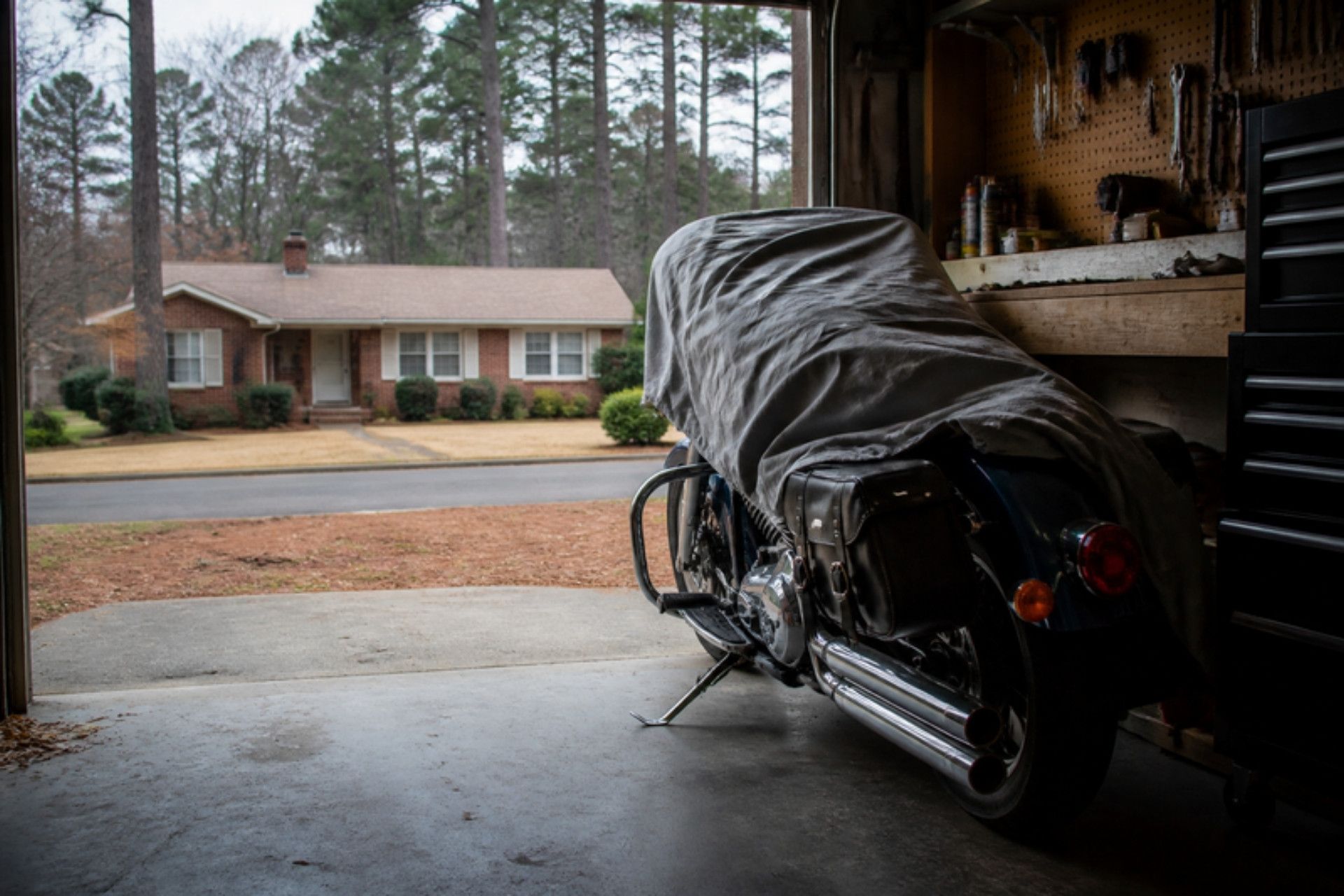
A lay-up period or seasonal rating lets North Carolina riders ask their carrier about reduced pricing or changes to optional physical damage coverage, such as collision, while a motorcycle is stored during the winter. Comprehensive coverage stays active, so the bike remains protected against theft, fire, vandalism, and storage-related damage until the rider returns to the road. North Carolina requires continuous financial responsibility while the motorcycle remains registered, so storage alone does not permit suspending required liability coverage. Before ending that coverage, a rider must follow NCDMV requirements for surrendering the registration and plate or confirm another legally approved arrangement, and confirm coverage is active before returning to the road.
Some carriers build seasonal rating into motorcycle premiums automatically, while others offer a formal lay-up endorsement that the rider must request. Availability and terms vary by carrier, so riders should confirm how a specific policy handles winter storage before canceling any coverage.
One thing to keep in mind is that canceling a policy outright is a different action from a lay-up. Cancellation without surrendering the license plate can trigger an NCDMV termination notice and civil penalties, and it removes comprehensive protection for a bike that may be worth thousands of dollars. Garage fires and break-ins do not follow a riding calendar.
North Carolina also has many mild winter days, especially in the Piedmont. Because required liability coverage stays in place while the bike is registered, a rider who expects to take the motorcycle out on a 60-degree January afternoon should confirm that any reduced physical damage coverage can be restored quickly. Riding with collision suspended means paying out of pocket for damage to the bike.
Riding the Blue Ridge Parkway and Tail of the Dragon
The Blue Ridge Parkway and the Tail of the Dragon on US-129 attract riders from across the region, but tight curves, elevation changes, gravel, wildlife, fog, and heavy weekend traffic increase crash risk. North Carolina enforces a universal helmet law, and every rider and passenger must wear an approved helmet on all public roads.
The Tail of the Dragon packs a large number of curves into a short stretch near Deals Gap, and the Parkway includes long descents where brakes can fade and sight lines disappear around rock walls. Riders from Charlotte often reach these roads after a two- to three-hour highway trip, and fatigue becomes a real factor on the return ride.
These routes also show why higher limits and Medical Payments coverage matter. A single-vehicle crash with no other driver to file against leaves the rider dependent on the rider's own policy. Riders who carry passengers should confirm that the policy extends liability and medical coverage to the passenger. Peak riding season, especially during fall color in October, brings the heaviest traffic and the highest number of riders on the road.
High Net Worth Solutions with Cincinnati and Hagerty
Vintage machines, limited-production touring bikes, and collector motorcycles are common sights at Parkway overlooks, and standard policies may not value them appropriately. Cincinnati and Hagerty are specialized carriers that may offer agreed value coverage and other features suited to high-value or collector motorcycles, subject to each carrier's underwriting guidelines and policy terms. An independent agent can help determine whether these options fit a particular motorcycle and collection.

Common Questions About North Carolina Motorcycle Insurance
Do I need insurance for a moped in North Carolina?
Yes. North Carolina requires mopeds to be registered and insured with liability coverage, so moped owners should confirm current requirements with an agent before riding.
Does my car insurance cover my motorcycle?
No. An auto policy generally does not extend to a motorcycle, which needs its own policy meeting the 50/100/50 minimum along with UM and UIM coverage.
How do I insure my custom paint job?
Add Custom Parts and Equipment coverage and document the paint with photos, invoices, and the artist's details. Set the CPE limit high enough to cover the full cost of replacing the work.
What happens if I ride without a helmet?
Riding without a helmet violates the North Carolina universal helmet law and can result in a citation. A head injury from a crash can also produce medical costs that exceed many policy limits.
Can I lower my premium in winter without canceling?
Many carriers offer a lay-up option or seasonal rating that keeps comprehensive coverage active while the bike is stored. Terms vary by carrier.
Making the Right Choice for Your Coverage
Choosing an independent agency over buying directly from one carrier gives riders access to multiple carriers, side-by-side comparisons, and guidance on coverage gaps that a single company's website may not flag. Since 2000, O'Connor Insurance Associates has helped Charlotte-area riders compare options and build policies around how they actually ride.
A direct carrier can only quote its own products. An independent agent can compare how several carriers handle CPE limits, lay-up options, passenger coverage, and agreed value for collector bikes, then explain the differences in plain terms. That matters for a rider who commutes on I-77 during the week and spends fall weekends on the Parkway, because a policy built for one use may leave gaps in the other.
The agency has been recognized as an IIABA Best Practices Agency since 2010, and its approach centers on asking questions and educating clients so they can make informed decisions rather than buying a one-size-fits-all policy. The agency does not issue policies itself; it places coverage with carriers and helps clients understand their choices.
Riders who want a review of current limits, modifications, or seasonal coverage can contact O'Connor Insurance Associates at 704-510-8884. O'Connor Insurance Associates is a licensed North Carolina insurance agency (license #7014004) located at 1973 JN Pease Place, Suite 203, Charlotte, North Carolina 28262. A coverage review before the next Blue Ridge Parkway trip can confirm that the policy matches the bike, the equipment, and the miles ahead.
Coverage descriptions are general. Policy terms, exclusions, limits and underwriting determine coverage.
Last updated:
On this page
O’Connor Insurance Associates is fully licensed to provide personal and commercial insurance solutions for individuals, families and businesses across North Carolina.
We proudly serve families and business owners from our office in Charlotte, North Carolina. As an independent, family-owned agency since 2000, our team works with more than one insurance company to make sure homeowners, drivers, contractors, landscapers, small businesses and other personal and commercial clients receive coverage that fits their real risks.

About the Author
President & Founder
I’m Terry O’Connor, President and Founder of O’Connor Insurance Associates. I grew up in Pennsylvania, earned my bachelor’s degree at Edinboro University and my master’s at Gannon University, and in 1998 I traded snow for sunshine and moved to Charlotte. In January 2000, I started this agency on my own because I wanted to help people protect what matters most to them. More than two decades later, we’ve grown into an independent agency serving families and businesses across North Carolina, and we’ve been recognized as an IIABA Best Practices Agency every year since 2010, a distinction held by fewer than 1% of agencies nationwide.
I’ve seen firsthand how the right protection can change a family’s or a business owner’s life, and that’s why I lead with empathy, education and honest advice. As an independent agent, I work for you, not for one insurance company. I take the time to explain your options in plain language, and when you call our office, you reach a real person who knows your account.
Outside the office, you’ll usually find me outdoors hunting or fishing, or on the mat coaching wrestling as an assistant varsity coach at Mallard Creek High School. I’m also a proud supporter of the arts, usually in the front row cheering on my daughter in local theater productions. I’d be glad to review your coverage with you. Call me at 704-510-8884 or email terry@oianc.com.
Relationships are the real measure
What our North Carolina clients say.
5.0 / 5
185 reviews on Google
Personal insurance
For the life you’re making.
Your home, your car, your time away. Let’s look at the whole picture.
Business insurance
For the business you’re building.
From established local companies to growing teams, we help make the coverage conversation clearer.
Your work deserves a closer look
Different businesses.
Different conversations.
We take time to understand what happens in your business every day.

Landscaping

Manufacturers

Technology Companies

HVAC Insurance

Electricians Insurance

Food Manufacturers
A little clarity goes a long way
Good questions.
Straight answers.
Have something else on your mind?
What does an independent insurance agency do?
An independent agency helps you compare options from more than one insurance company. We start with your needs, explain the differences and help you make an informed decision.
What can O’Connor help me insure?
Our team works with personal and business insurance, life and disability coverage, and Medicare options. Tell us what you need, and we’ll connect you with the right person.
Where does your agency serve clients?
We are based in Charlotte and serve clients across North Carolina. If your business operates in more than one state, call us to discuss your locations and coverage needs.
How do I get an insurance quote?
Start with the contact form or call 704-510-8884. We’ll ask about your situation and any current coverage, then review available options. Submitting a request does not bind coverage.
Can you help with an existing policy or claim?
Yes. Our Client Center page connects you with policy service, billing and claims options. You can also call during office hours for help finding the right next step.
What should I know before switching insurance?
Compare coverage, limits, exclusions and effective dates, not just the price. Speak with your agent before canceling an existing policy so you can coordinate the transition.
From our desk to yours
A little knowledge goes a long way.



Get a Quote
Let’s protect what you’re building.
Tell us a little about yourself. We’ll help you take the next step with a clearer picture of your options.
1973 J.N. Pease Place, Suite 203
Charlotte, NC 28262
Monday–Thursday · 9 AM–5 PM
Friday · 9 AM–3 PM
