

Companies throughout North Carolina build a commercial insurance program by layering general liability, property, workers compensation, commercial auto, cyber, and umbrella coverage around their actual exposures. An independent agency compares several carriers, documents the risks, and assembles a coordinated program that closes the gaps a single standalone policy often leaves open.
A landscaping contractor in Huntersville, a dental practice in Concord, and a light manufacturer in Harrisburg each face very different claims, yet all three depend on commercial insurance to keep one bad day from becoming a permanent setback. Insurance serves as the safety net for the disaster that was never part of the plan, and that net only holds when each policy is selected and coordinated with care. The sections below explain how North Carolina business insurance is typically assembled, which coverages carry statutory requirements, and why so many owners retain an independent agent to manage the process.
Building a North Carolina Business Insurance Program That Protects Your Assets
A sound commercial program begins with an inventory of exposures, including premises, employees, vehicles, data, and contracts, followed by coverage matched to each one. O'Connor Insurance Associates, an independent agency in Charlotte since 2000 and an IIABA Best Practices Agency since 2010, designs these programs by comparing multiple carriers instead of offering a single fixed package.
The process usually starts with questions rather than quotes. An agent asks how revenue is generated, who visits the premises, whether employees drive for work, what customer data is stored, and what insurance requirements appear in leases or client contracts. Those answers determine which lines are mandatory, which are strongly advisable, and which limits are realistic for the size of the operation.
Market conditions also shape the program. North Carolina's property and casualty market produced roughly $28.3 billion in direct written premium in 2025, and overall premium growth slowed to 4.3%, a sign that pricing is moving toward stabilization. The same review found that the state's market entered 2026 with improved financial strength and adequate underwriting profitability, which generally gives carriers more appetite to compete for well-documented accounts.
A typical program for a Charlotte-area company comprises several coordinated pieces:
- General liability for bodily injury and property damage claims brought by third parties
- Commercial property for buildings, equipment, inventory, and business income
- Workers compensation for employee injuries, required for most employers in North Carolina
- Commercial auto for owned, hired, and non-owned vehicles
- Cyber liability for data breaches, ransomware, and funds transfer fraud
- Umbrella or excess liability for catastrophic claims that exceed primary limits
Many small businesses package general liability and property into a business owners policy (BOP), which can be efficient for offices and retail operations. Contractors, manufacturers, and companies with heavier exposures often need standalone policies with broader endorsements.
The Foundation of Commercial Coverage: General Liability and Property
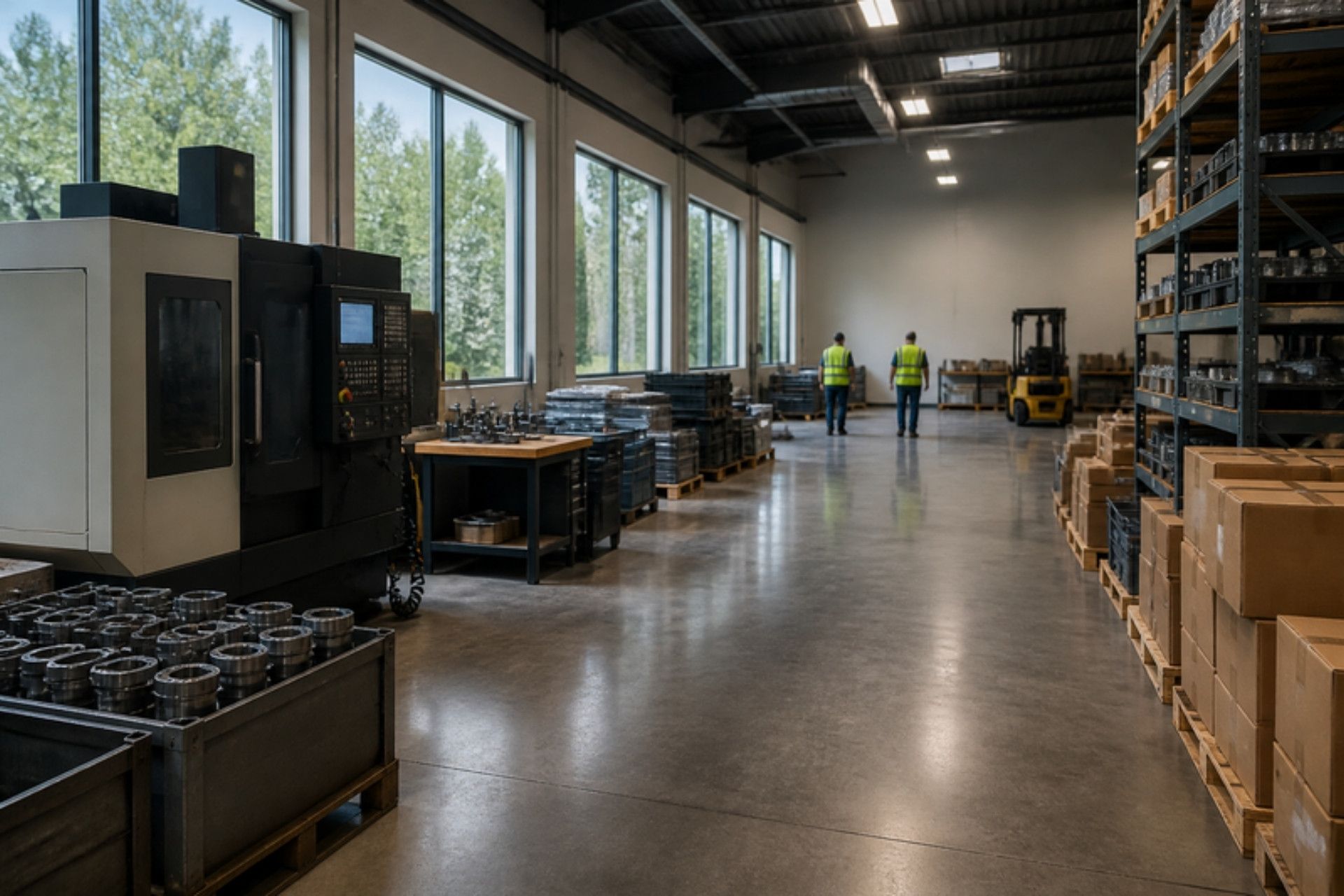
General liability and commercial property form the base of nearly every commercial program in North Carolina. General liability defends the business against third-party claims of injury or property damage, while property coverage repairs or replaces the buildings, equipment, and inventory the company depends on to operate and earn revenue.
General liability responds when a customer slips on a wet floor in a Cornelius retail shop, when a contractor's ladder falls and damages a homeowner's vehicle, or when a product causes harm after it leaves the premises. The policy pays for legal defense as well as settlements or judgments, and defense costs alone can be substantial even when the business has done nothing wrong. Many commercial leases and general contractor agreements require specific limits, additional insured endorsements, and waivers of subrogation, so reviewing contract language before binding coverage prevents unpleasant surprises at renewal or during a job bid.
Property coverage carries its own nuances. One common mistake involves insuring a building at its purchase price or market value rather than its replacement cost, which can trigger a coinsurance penalty after a loss. Another involves overlooking business income coverage, which replaces lost revenue and pays continuing expenses while a damaged location is repaired. For a restaurant closed for months after a kitchen fire, business income coverage may matter more than the equipment payout itself.
Owners in the Charlotte region should also review whether flood is excluded, whether equipment breakdown is included, and whether tools and equipment that leave the premises require an inland marine policy.
Comparing General Liability and Professional Liability
Owners frequently assume general liability covers every lawsuit. It does not cover claims arising from professional advice, design errors, or services that fail to deliver the promised result. Those claims belong under professional liability, also called errors and omissions (E&O).
| Feature | General Liability | Professional Liability (E&O) |
|---|---|---|
| Covers | Bodily injury, property damage, advertising injury | Mistakes, negligence, failure to perform services |
| Typical claim | Client trips over a cord in the office | Client loses money due to an accounting error |
| Who needs it | Nearly every business with public contact | Consultants, IT firms, architects, agents, health providers |
| Policy form | Usually occurrence-based | Usually claims-made |
| Contract requirement | Common in leases and job contracts | Common in professional service agreements |
| Key gap if missing | Physical injury or damage claims | Financial loss claims from advice or services |
The claims-made distinction deserves attention. Under a claims-made policy, coverage generally depends on the policy being active when the claim is reported, so switching carriers without maintaining the retroactive date can leave prior work uninsured.
North Carolina Workers Compensation and Commercial Auto Requirements
North Carolina generally requires employers with three or more employees to carry workers compensation, and businesses operating vehicles must meet state auto liability minimums. Those minimums increased to 50/100/50 for policies effective on or after July 1, 2025, replacing the earlier 30/60/25 requirement for private passenger vehicles.
Workers compensation pays medical bills and a portion of lost wages for employees injured on the job, and it generally protects the employer from separate negligence lawsuits by those employees. The three-employee threshold can mislead some owners, because part-time workers count, corporate officers are treated under specific rules, and certain industries face stricter standards. Construction subcontracting deserves particular caution, since a general contractor can be held responsible for injuries to an uninsured subcontractor's workers. Collecting certificates of insurance from every subcontractor before work begins is a practical safeguard that prevents an unexpected premium charge at audit.
Payroll audits represent another frequent source of confusion. Workers compensation premiums are estimated at the start of the policy period and then adjusted after an audit of actual payroll and job classifications. Misclassified employees or unreported subcontractor payments can produce a large additional premium bill months after the policy year ends.
Commercial auto carries its own requirements. The new North Carolina minimums of $50,000 per person, $100,000 per accident for bodily injury, and $50,000 for property damage apply from July 1, 2025, yet those figures are rarely adequate for a business. A single accident involving a work truck and multiple injured parties can easily exceed state minimums, which is why many companies carry a $1,000,000 combined single limit or higher.
Two overlooked exposures are hired and non-owned auto liability. When an employee runs errands in a personal vehicle or the company rents a van for a trade show, the business can be named in a lawsuit after an accident. Hired and non-owned auto coverage responds to that risk and is often inexpensive relative to the protection it provides.
Addressing Modern Risks with Cyber Insurance and Umbrella Policies
Cyber insurance protects against data breaches, ransomware, and fraudulent wire transfers that traditional policies typically exclude. An umbrella policy sits above general liability, commercial auto, and employers liability, adding extra limits when a severe claim exhausts the primary policy and preventing a single verdict from reaching company assets.
Cyber exposure is no longer limited to large corporations or technology firms. A Concord medical office storing patient records, a Huntersville contractor accepting online payments, and a Charlotte accounting firm emailing tax documents all hold information that criminals target. A typical cyber policy may include first-party coverage for forensic investigation, data restoration, notification costs, business interruption, and ransom negotiation, along with third-party coverage for lawsuits and regulatory proceedings.
Social engineering fraud warrants a specific review. When an employee receives a convincing email appearing to come from a vendor and wires payment to a fraudulent account, many policies limit or exclude that loss unless a social engineering endorsement is added. Carriers also increasingly require controls such as multifactor authentication and offline backups before offering coverage, so applications should be completed accurately.
An umbrella policy functions as an extra layer over the primary North Carolina business insurance lines. If a delivery driver causes a serious multi-vehicle accident and the judgment reaches $2,500,000 against a $1,000,000 auto policy, a $2,000,000 umbrella can respond to the remaining amount, subject to its terms. Without it, the excess could fall on the business itself.
Umbrella coverage also follows the underlying policies in most cases, which means gaps in primary coverage often carry through. Matching underlying limits to the umbrella carrier's requirements is essential, since a shortfall can leave a gap between where primary coverage ends and umbrella coverage begins.
Why Use an Independent Agent Instead of Going Direct?
An independent agent represents the business rather than a single insurance company, comparing coverage and pricing from multiple carriers. In North Carolina, independent agencies place 87.7% of commercial-lines premium, and agents such as Michelle O'Connor, named the 2025 IIANC Agent of the Year, provide advocacy throughout underwriting and claims.
A captive agent or direct writer offers products from one company. When that company declines a risk, raises rates sharply, or restricts a needed endorsement, the business must start over elsewhere. An independent agent can move the account to another carrier while preserving continuity, which is especially valuable during periods of rate changes.
The data reflects how heavily North Carolina companies rely on this model. Independent agencies placed 87.7% of all commercial-lines written premium in North Carolina based on 2025 data, compared with a channel share of 62% of property and casualty insurance nationally. Industry observers describe the independent channel as significantly outperforming the national average for commercial placement in the state.
Recognition from the Independent Insurance Agents of North Carolina (IIANC) reflects professional standards in that environment. Michelle O'Connor of O'Connor Insurance Associates was named the 2025 IIANC Agent of the Year, an honor that underscores the agency's educational approach of explaining coverage options so owners understand what they are buying and why.
Advocacy continues after binding. When a claim is disputed, an audit appears inaccurate, or a renewal arrives with unexpected exclusions, the independent agent works on behalf of the policyholder rather than the insurer.
Navigating Carrier Options and Getting a Quote
Many owners begin by searching for a specific carrier, often because a colleague recommended it, a lender or landlord referenced it, or the brand appeared in advertising. Those searches are reasonable, but a carrier's suitability depends on industry, location, claims history, and the specific coverages required. A carrier that serves restaurants well may have limited appetite for roofing contractors.
Working through an independent agent allows a business to reach that carrier and several alternatives in a single process. The agent presents the account professionally, highlights safety programs and loss history favorably, and identifies differences in policy forms that a premium comparison alone would miss. Carrier features, endorsements, and eligibility vary and may change, so every quote should be reviewed against actual policy language. The agency places coverage with insurers but is not itself the insurance carrier.
Gathering a few documents in advance shortens the quoting process:
- Current policy declarations pages and renewal notices
- Loss runs from the past three to five years
- Payroll figures by job classification and annual revenue
- Vehicle schedules and driver lists
- Copies of leases or contracts with insurance requirements
Common Questions About North Carolina Business Insurance
Do I need business insurance if I work from home?
Usually, yes. Homeowners policies often exclude business equipment, business liability, and customer injuries connected to business activity.
Is workers comp required if I only have two employees?
North Carolina generally requires coverage at three or more employees, though some industries face different rules. Many smaller employers still buy it to protect against injury costs.
What changed with North Carolina auto minimums?
For policies effective on or after July 1, 2025, minimum liability limits rose to 50/100/50. Most businesses carry much higher limits than the state minimum.
What is a certificate of insurance?
It is a one-page summary proving that coverage exists. Clients, landlords, and general contractors commonly request one before work begins.
Does general liability cover a data breach?
Typically not. Data breaches and cyberattacks generally require a separate cyber insurance policy.
How often should my business insurance be reviewed?
At least once a year at renewal, and any time the business adds employees, vehicles, locations, or new services.
The Bottom Line for Your North Carolina Company
A dependable commercial program results from coordinated decisions, not isolated purchases. General liability and property protect the foundation, workers compensation and commercial auto satisfy state requirements, and cyber and umbrella coverage address the large, modern losses that primary policies may not absorb. Each line should be reviewed against contracts, payroll, vehicles, and data exposure so that no gap emerges between them.
With independent agencies placing the substantial majority of commercial premium in North Carolina, the advantage of comparing multiple carriers through a single advocate is well established. O'Connor Insurance Associates, Inc., an IIABA Best Practices Agency since 2010, has served Charlotte, Highland Creek, Cornelius, Huntersville, Concord, and Harrisburg since 2000 from 1973 JN Pease Place, Suite 203, Charlotte, North Carolina 28262. Business owners seeking a customized review of their North Carolina business insurance program may contact the agency at 704-510-8884 to begin the conversation.
Coverage descriptions are general. Policy terms, exclusions, limits and underwriting determine coverage.
Last updated:
On this page
O’Connor Insurance Associates is fully licensed to provide personal and commercial insurance solutions for individuals, families and businesses across North Carolina.
We proudly serve families and business owners from our office in Charlotte, North Carolina. As an independent, family-owned agency since 2000, our team works with more than one insurance company to make sure homeowners, drivers, contractors, landscapers, small businesses and other personal and commercial clients receive coverage that fits their real risks.

About the Author
President & Founder
I’m Terry O’Connor, President and Founder of O’Connor Insurance Associates. I grew up in Pennsylvania, earned my bachelor’s degree at Edinboro University and my master’s at Gannon University, and in 1998 I traded snow for sunshine and moved to Charlotte. In January 2000, I started this agency on my own because I wanted to help people protect what matters most to them. More than two decades later, we’ve grown into an independent agency serving families and businesses across North Carolina, and we’ve been recognized as an IIABA Best Practices Agency every year since 2010, a distinction held by fewer than 1% of agencies nationwide.
I’ve seen firsthand how the right protection can change a family’s or a business owner’s life, and that’s why I lead with empathy, education and honest advice. As an independent agent, I work for you, not for one insurance company. I take the time to explain your options in plain language, and when you call our office, you reach a real person who knows your account.
Outside the office, you’ll usually find me outdoors hunting or fishing, or on the mat coaching wrestling as an assistant varsity coach at Mallard Creek High School. I’m also a proud supporter of the arts, usually in the front row cheering on my daughter in local theater productions. I’d be glad to review your coverage with you. Call me at 704-510-8884 or email terry@oianc.com.
Relationships are the real measure
What our North Carolina clients say.
5.0 / 5
185 reviews on Google
Personal insurance
For the life you’re making.
Your home, your car, your time away. Let’s look at the whole picture.
Business insurance
For the business you’re building.
From established local companies to growing teams, we help make the coverage conversation clearer.
Your work deserves a closer look
Different businesses.
Different conversations.
We take time to understand what happens in your business every day.

Landscaping

Manufacturers

Technology Companies

HVAC Insurance

Electricians Insurance

Food Manufacturers
A little clarity goes a long way
Good questions.
Straight answers.
Have something else on your mind?
What does an independent insurance agency do?
An independent agency helps you compare options from more than one insurance company. We start with your needs, explain the differences and help you make an informed decision.
What can O’Connor help me insure?
Our team works with personal and business insurance, life and disability coverage, and Medicare options. Tell us what you need, and we’ll connect you with the right person.
Where does your agency serve clients?
We are based in Charlotte and serve clients across North Carolina. If your business operates in more than one state, call us to discuss your locations and coverage needs.
How do I get an insurance quote?
Start with the contact form or call 704-510-8884. We’ll ask about your situation and any current coverage, then review available options. Submitting a request does not bind coverage.
Can you help with an existing policy or claim?
Yes. Our Client Center page connects you with policy service, billing and claims options. You can also call during office hours for help finding the right next step.
What should I know before switching insurance?
Compare coverage, limits, exclusions and effective dates, not just the price. Speak with your agent before canceling an existing policy so you can coordinate the transition.
From our desk to yours
A little knowledge goes a long way.



Get a Quote
Let’s protect what you’re building.
Tell us a little about yourself. We’ll help you take the next step with a clearer picture of your options.
1973 J.N. Pease Place, Suite 203
Charlotte, NC 28262
Monday–Thursday · 9 AM–5 PM
Friday · 9 AM–3 PM
