

A heating and air contractor in Charlotte can do nearly everything correctly on a job and still face a costly claim months later: a cracked heat exchanger, a loose flue connection, or a scorched wire behind a new air handler. North Carolina HVAC insurance exists because these risks are part of the trade itself, not the result of carelessness alone.
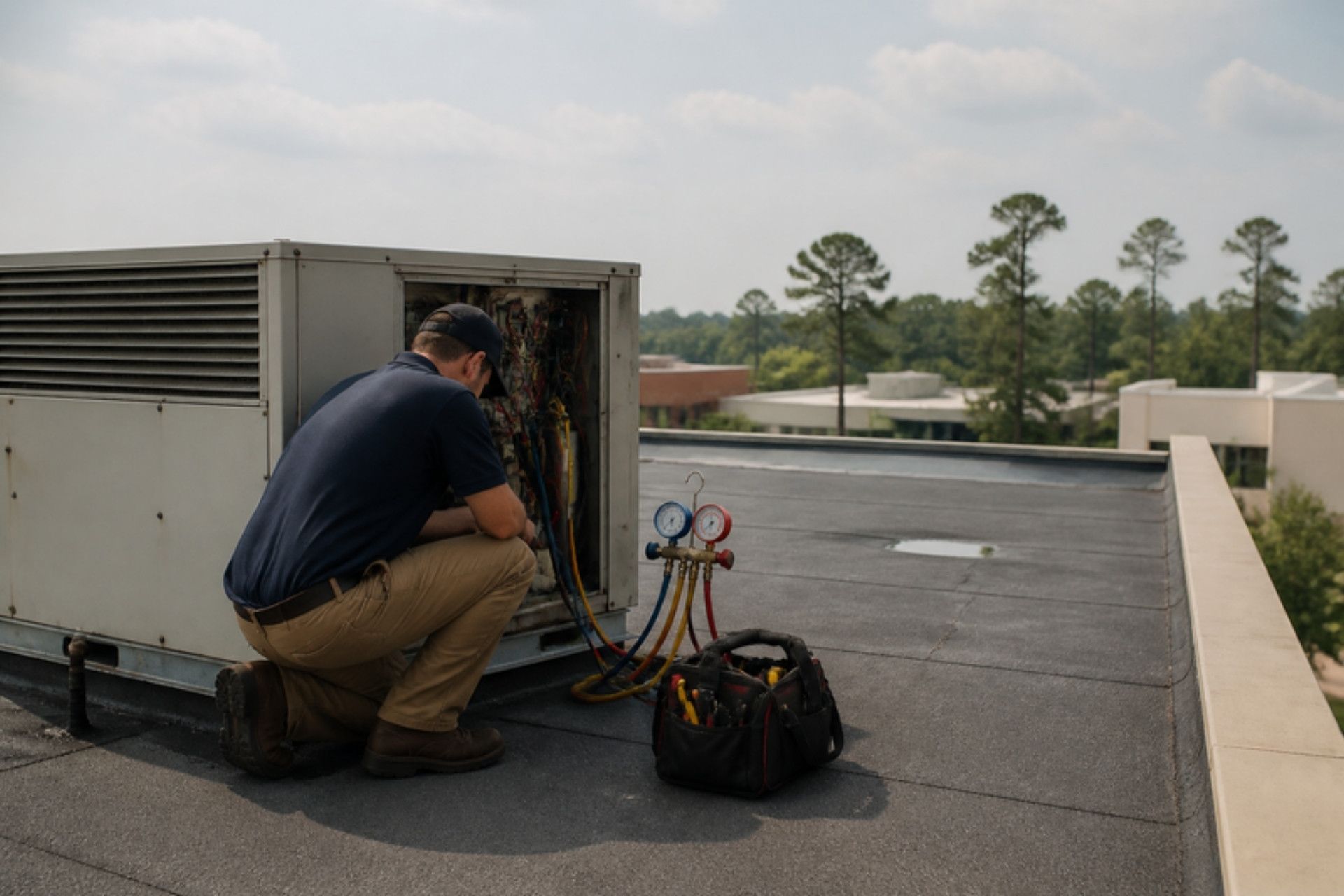
Contractors who work across Mecklenburg, Cabarrus, and Iredell counties need protection on several fronts at once. A residential changeout in Highland Creek, a light commercial rooftop replacement in Concord, and a duct retrofit in Cornelius each create different exposures. The technicians, the trucks, and the equipment staged in a driveway all carry their own risks.
The coverage conversation also runs parallel to a licensing conversation. The state board that issues heating licenses sets the professional standard, while local permit offices, general contractors, and commercial property owners set the insurance and bonding expectations that determine whether a contractor can bid the work at all. Both sides deserve equal attention from any owner who intends to grow a heating and air business in the Charlotte region over the coming years.
Understanding North Carolina HVAC Insurance Requirements
Insurance is a practical necessity for North Carolina HVAC contractors. Workers compensation is mandatory once a business employs three or more people, commercial auto is required for business vehicles, and general liability is routinely demanded by permit offices, builders, and property owners. Without these policies, a single claim can threaten the entire business.
O'Connor Insurance Associates, an independent agency based in Charlotte, North Carolina since 2000, works with heating and air contractors who need to assemble these policies into a coordinated program. The challenge for most contractors is that each policy addresses a separate exposure, and gaps tend to appear where one policy ends and the next begins. A technician injured while carrying a condenser, a homeowner alleging carbon monoxide exposure, and a stolen compressor from a jobsite trailer all fall under different coverage forms.
A typical HVAC insurance program in North Carolina comprises the following core policies:
- General liability: Covers bodily injury and property damage claims from third parties, including completed operations.
- Workers compensation: Pays medical bills and lost wages for employees injured on the job.
- Commercial auto: Protects service vans, pickup trucks, and box trucks used for business.
- Installation floater (inland marine): Covers equipment and materials in transit, in storage, or awaiting installation.
- Tools and equipment coverage: Protects gauges, recovery machines, vacuum pumps, and other portable tools.
- Umbrella liability: Adds limits above the general liability, auto, and employer's liability policies.
Contractors bidding on commercial work often discover that contract language dictates much of their program. Additional insured endorsements, waivers of subrogation, and primary and noncontributory wording are common requirements that should be reviewed before a contract is signed, not after a certificate request arrives.
General Liability for Carbon Monoxide and Fire Claims
General liability insurance responds when an HVAC contractor's work causes bodily injury or property damage to others. For heating and air contractors, carbon monoxide exposure and fires traced to installation errors represent two of the most severe claim types, and completed operations coverage is what keeps those claims covered after the job closes.
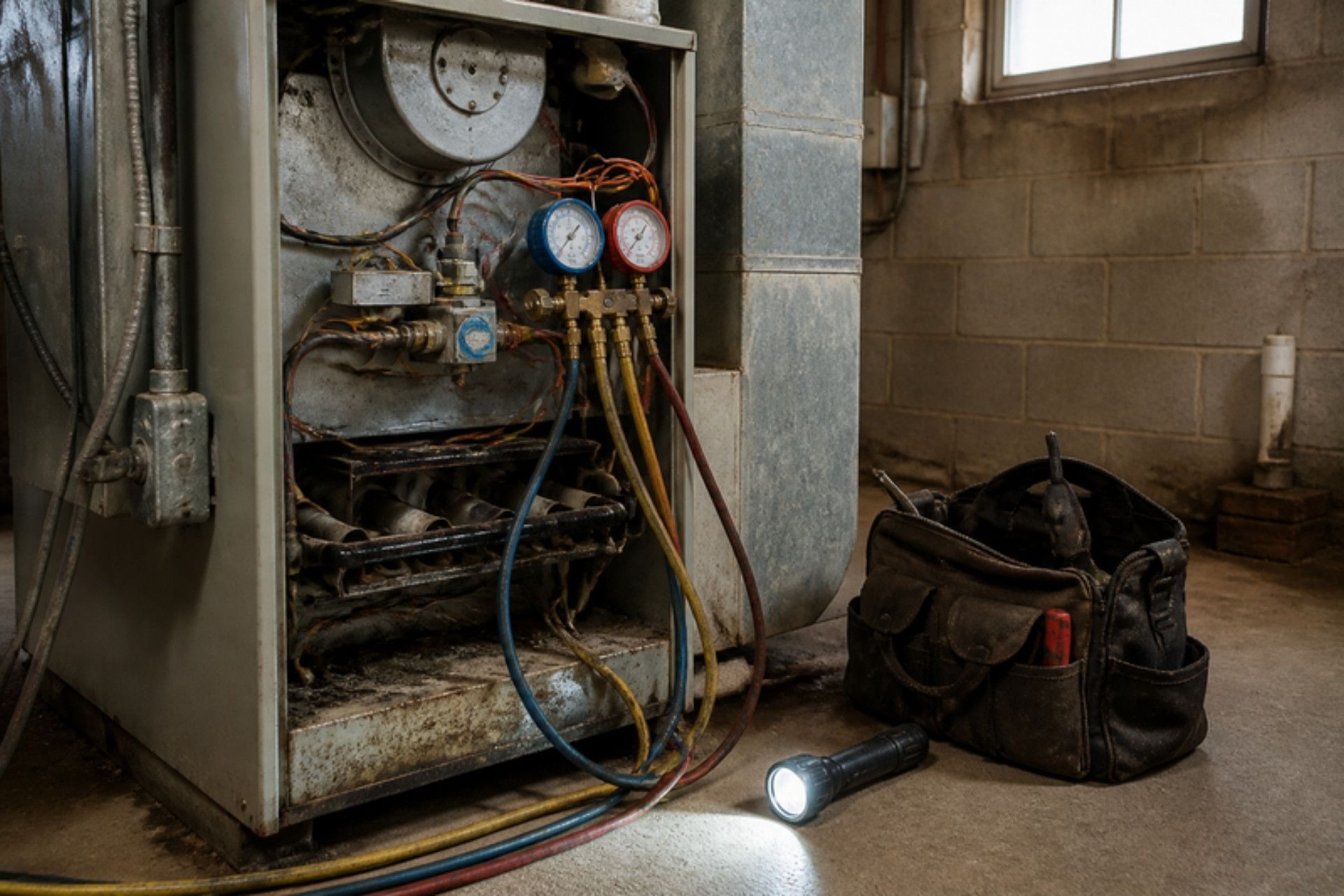
Carbon monoxide claims often surface well after an installation is complete. A furnace vented improperly, a heat exchanger that was not inspected during a service call, or a flue pipe that separates over time can expose a household to dangerous gas levels. Medical claims from these incidents can be substantial, and the injured parties frequently name the most recent contractor who touched the system, regardless of whether that contractor actually caused the problem.
Fire claims follow a similar pattern. Loose electrical connections at a condenser disconnect, improperly brazed gas line joints, or combustible materials left too close to a heat source can result in structural damage to a home in Huntersville or a tenant space in a Harrisburg strip center. The general liability policy is designed to cover both the property damage and the legal defense costs associated with the allegation.
Several policy details deserve close review:
- Completed operations limits: This aggregate limit governs claims arising after work is finished and should match contractual requirements.
- Pollution exclusions: Many general liability forms exclude pollution, and some carriers interpret refrigerant or carbon monoxide releases under that exclusion. Endorsements or a separate contractor's pollution policy may be needed.
- Mold exclusions: Condensate line failures that lead to mold growth are a common gap.
- Subcontractor requirements: Some carriers require certificates from every subcontractor, and failure to collect them can affect coverage or audits.
A frequent mistake among smaller contractors is purchasing a general liability policy based on price without reading the exclusions. A policy that excludes carbon monoxide or pollution events may leave a heating contractor without protection for the exact claim most likely to occur.
Comparing General Liability and Professional Liability
General liability addresses physical harm caused by the contractor's work, while professional liability addresses financial loss caused by errors in design, specification, or advice. Contractors who size systems, perform load calculations, or design duct layouts may face claims that general liability does not cover.
Consider a contractor who recommends an undersized system for a new home in Cornelius. Nothing catches fire and no one is injured, but the homeowner pays to replace the equipment and sues for the cost. That loss is financial, not physical, which places it outside most general liability forms.
| FEATURE | GENERAL LIABILITY | PROFESSIONAL LIABILITY |
|---|---|---|
| Primary trigger | Bodily injury or property damage | Financial loss from errors or advice |
| Example claim | Fire from faulty wiring | Incorrect load calculation |
| Carbon monoxide injury | Typically covered, subject to exclusions | Not the primary policy |
| Design-build work | Limited protection | Core protection |
| Typically required by | Builders, permit offices, owners | Engineers, design-build contracts |
Contractors who perform primarily replacement work may find general liability sufficient, while firms handling design-build commercial projects should evaluate professional liability as a separate policy.
Protecting Assets with Installation Floaters
An installation floater is an inland marine policy that covers HVAC equipment and materials while in transit, stored off-site, or sitting at a jobsite awaiting installation. Because general liability does not cover the contractor's own property and commercial property policies often stop at the shop door, installation floaters fill a critical gap.
The financial exposure is easy to underestimate. A residential heat pump system, a commercial rooftop unit, or a pallet of copper line sets can represent a significant portion of a job's value before a single connection is made. Equipment theft from new construction sites remains a persistent problem across the growing subdivisions of Concord, Harrisburg, and northern Mecklenburg County, and copper is a frequent target.
Installation floaters generally respond to losses in three phases of a project:
- Transit: Equipment damaged in a vehicle accident or dropped during loading.
- Temporary storage: Units held at a secondary location before delivery to the jobsite.
- Jobsite exposure: Theft, vandalism, fire, or weather damage before the owner formally accepts the work.
Coverage typically continues until the installation is complete and accepted, or until the contractor's insurable interest ends. That acceptance point matters. A rooftop unit set by crane but not yet commissioned may still be the contractor's responsibility under the contract, and a loss at that stage would fall to the floater.
Contractors should review several features when selecting a floater. Per-location limits should reflect the largest single job, not the average job. The policy should clarify whether it covers property in the contractor's care for owner-supplied equipment. Theft provisions sometimes require evidence of forced entry or impose security conditions on unattended trailers, and those conditions should be matched to actual jobsite practices.
Tools present a related but separate exposure. Gauges, recovery machines, and vacuum pumps are commonly covered under a contractor's equipment floater rather than an installation floater, and contractors who assume one policy covers both frequently discover the gap only after a van break-in.
North Carolina Workers Compensation and Service Van Coverage
North Carolina requires workers compensation for businesses with three or more employees, including part-time workers. Service vans and other business vehicles require commercial auto coverage, and the state's minimum auto liability limits increased to 50/100/50 for policies effective on or after July 1, 2025.
The state's threshold means that workers compensation is mandatory for any business employing three or more employees, and part-time workers count toward that number. Heating and air contractors should treat this as a minimum rather than a target, since a two-person crew that adds a seasonal helper during a July heat wave can cross the threshold without realizing it. Contractors who use uninsured subcontractors may also find those workers treated as employees for coverage and premium purposes.
HVAC work carries meaningful injury exposure. Attic work in summer heat, ladder and roof falls, back strains from lifting equipment, refrigerant burns, and electrical shock are recurring claim types. Workers compensation pays medical expenses and a portion of lost wages, and the employer's liability portion of the policy responds if an employee or family member sues the business directly.
Premium audits deserve attention as well. Workers compensation premiums are generally based on payroll and job classification, and misclassifying clerical staff alongside field technicians, or failing to document subcontractor certificates, can produce an unexpected bill at audit time.
Service vans present the other major exposure. The North Carolina minimum auto liability limits of 50/100/50 represent $50,000 per person for bodily injury, $100,000 per accident for bodily injury, and $50,000 for property damage. For a contractor whose van causes a multi-vehicle collision on I-85 or NC-73, those minimums can be exhausted quickly, which is why many commercial contracts require higher limits.
Commercial Auto vs Personal Auto Policies
Personal auto policies frequently exclude or limit coverage for vehicles used primarily for business, especially vans carrying tools, refrigerant cylinders, and equipment. Contractors who keep a work van on a personal policy risk a denied claim when an accident occurs during a service call.
| FEATURE | PERSONAL AUTO | COMMERCIAL AUTO |
|---|---|---|
| Business use | Often restricted or excluded | Designed for business use |
| Employee drivers | Limited | Scheduled or covered drivers |
| Liability limits | State minimums commonly selected | Higher limits typically available |
| Upfitted equipment | Often limited | Can be endorsed for racks and shelving |
| Hired and non-owned auto | Not included | Available by endorsement |
Hired and non-owned auto coverage is a frequent gap. When a technician uses a personal truck to pick up parts at a supply house, the business can be named in a resulting claim, and that endorsement protects the company.
North Carolina State Board of Examiners Licensing Requirements
The North Carolina State Board of Examiners of Plumbing, Heating and Fire Sprinkler Contractors licenses heating contractors through examination, documented experience, and annual renewal. Insurance and bond proof is typically demanded by local permit offices, general contractors, and project owners, so licensing and coverage must be managed together.
The board regulates the industry under N.C. Gen. Stat. Chapter 87, Article 2 and 21 NCAC Chapter 50, which sets the framework for license classifications, examinations, and disciplinary standards. Heating work in North Carolina is divided into three primary Heating Groups: Group 1 for water-based systems, Group 2 for forced-air systems over 15 tons, and Group 3 for forced-air systems of 15 tons or less. Most residential contractors in the Charlotte area hold a Group 3 license, while commercial firms frequently pursue Group 2.
Applicants must document 4,000 hours, or two years, of hands-on experience, although up to 2,000 hours may be satisfied through approved technical training. The non-refundable examination application fee is $150, and the annual license renewal fee is also $150. Contractors should confirm current fees and procedures directly with the board before applying, since administrative details are subject to change.
Insurance proof enters the process at several points. Municipal and county permit offices across Mecklenburg and Cabarrus counties commonly request certificates of insurance before issuing mechanical permits, and builders will not schedule a subcontractor without current certificates on file. Workers compensation certificates are especially scrutinized because of the state's mandatory coverage threshold.
Licensing and insurance records should be maintained together. A lapsed policy can stall permits, and a lapsed license can create coverage questions if a claim arises from work performed while unlicensed.
Surety Bonds for HVAC Contractors
Surety bonds guarantee that a contractor will meet obligations to a project owner, municipality, or other party. Unlike insurance, a bond requires the contractor to reimburse the surety for any claim paid, so bonding capacity depends heavily on financial strength and credit history.
Heating and air contractors typically encounter three bond types:
- License and permit bonds: Required by certain jurisdictions as a condition of pulling permits.
- Bid bonds: Guarantee that a contractor will honor a submitted bid on public or commercial work.
- Performance and payment bonds: Guarantee completion of the project and payment of suppliers and subcontractors.
Contractors pursuing public projects in the Charlotte region should establish a bonding relationship early, since surety underwriting often requires financial statements and work-in-progress schedules that take time to prepare.
Common Questions About North Carolina HVAC Insurance
Most first-time HVAC business owners ask the same core questions about which policies are required, which are optional, and how the policies interact. The answers below address those beginner concerns in plain terms, with the understanding that each contractor's coverage needs depend on crew size, services offered, and contract requirements.
Do I need workers comp if I am a one-person HVAC business?
North Carolina requires workers compensation once a business employs three or more people, including part-time workers. A sole owner may not be required to carry it, but many builders will still ask for coverage or a certificate of exemption.
Does general liability cover my own tools if they get stolen?
No. General liability covers harm to other people and their property, so tools need a contractor's equipment floater or similar inland marine coverage.
Will my policy cover a carbon monoxide claim from a furnace I installed last year?
Completed operations coverage within general liability is designed for claims that arise after the job is finished. Coverage depends on the policy wording, so pollution exclusions should be reviewed carefully.
Can I keep my work van on my personal auto policy?
It is risky, because personal policies often limit or exclude business use. A commercial auto policy is designed for service vans, employee drivers, and upfitted equipment.
What is the difference between an installation floater and builders risk?
An installation floater covers the contractor's equipment and materials until installation is complete, while builders risk typically covers the overall structure under construction and is often purchased by the owner or general contractor.
Why do builders ask to be named as additional insureds?
Builders want protection under the contractor's general liability policy if they are sued over the contractor's work. An additional insured endorsement extends that protection to them.
Making the Right Choice for Your Business
The right HVAC insurance program in North Carolina coordinates general liability, workers compensation, commercial auto, and installation floaters around the contractor's actual work. Reviewing exclusions, contract requirements, and licensing obligations together helps prevent the gaps that cause denied claims and stalled permits.
Heating and air contractors in Charlotte face a combination of exposures that few other trades share: carbon monoxide and fire claims that surface long after a job closes, high-value equipment staged on open jobsites, technicians working in attics and on rooftops, and fleets of service vans on some of the busiest roads in the state. Each exposure requires a specific policy, and the strength of the program depends on how well those policies fit together.
As an independent agency, O'Connor Insurance Associates compares options from multiple carriers and designs customized programs rather than a single packaged policy. The agency's approach centers on asking questions about crew size, Heating Group classification, residential and commercial mix, and contract obligations before recommending coverage. Carrier features, endorsements, and pricing vary, and each contractor's program should be built on a careful review of the specific policy forms offered.
O'Connor Insurance Associates is a licensed North Carolina insurance agency (license #7014004). Contractors seeking a review of current coverage, a quote for a new HVAC business, or help preparing certificates for an upcoming project may contact the agency directly:
- Address: 1973 JN Pease Place, Suite 203, Charlotte, North Carolina 28262
- Phone: 704-510-8884
A well-structured insurance program serves as the safety net for the disaster no contractor plans for, and the time to confirm that net is in place is before the next installation begins.
Coverage descriptions are general. Policy terms, exclusions, limits and underwriting determine coverage.
Last updated:
On this page
O’Connor Insurance Associates is fully licensed to provide personal and commercial insurance solutions for individuals, families and businesses across North Carolina.
We proudly serve families and business owners from our office in Charlotte, North Carolina. As an independent, family-owned agency since 2000, our team works with more than one insurance company to make sure homeowners, drivers, contractors, landscapers, small businesses and other personal and commercial clients receive coverage that fits their real risks.

About the Author
President & Founder
I’m Terry O’Connor, President and Founder of O’Connor Insurance Associates. I grew up in Pennsylvania, earned my bachelor’s degree at Edinboro University and my master’s at Gannon University, and in 1998 I traded snow for sunshine and moved to Charlotte. In January 2000, I started this agency on my own because I wanted to help people protect what matters most to them. More than two decades later, we’ve grown into an independent agency serving families and businesses across North Carolina, and we’ve been recognized as an IIABA Best Practices Agency every year since 2010, a distinction held by fewer than 1% of agencies nationwide.
I’ve seen firsthand how the right protection can change a family’s or a business owner’s life, and that’s why I lead with empathy, education and honest advice. As an independent agent, I work for you, not for one insurance company. I take the time to explain your options in plain language, and when you call our office, you reach a real person who knows your account.
Outside the office, you’ll usually find me outdoors hunting or fishing, or on the mat coaching wrestling as an assistant varsity coach at Mallard Creek High School. I’m also a proud supporter of the arts, usually in the front row cheering on my daughter in local theater productions. I’d be glad to review your coverage with you. Call me at 704-510-8884 or email terry@oianc.com.
Relationships are the real measure
What our North Carolina clients say.
5.0 / 5
185 reviews on Google
Personal insurance
For the life you’re making.
Your home, your car, your time away. Let’s look at the whole picture.
Business insurance
For the business you’re building.
From established local companies to growing teams, we help make the coverage conversation clearer.
Your work deserves a closer look
Different businesses.
Different conversations.
We take time to understand what happens in your business every day.

Landscaping

Manufacturers

Technology Companies

HVAC Insurance

Electricians Insurance

Food Manufacturers
A little clarity goes a long way
Good questions.
Straight answers.
Have something else on your mind?
What does an independent insurance agency do?
An independent agency helps you compare options from more than one insurance company. We start with your needs, explain the differences and help you make an informed decision.
What can O’Connor help me insure?
Our team works with personal and business insurance, life and disability coverage, and Medicare options. Tell us what you need, and we’ll connect you with the right person.
Where does your agency serve clients?
We are based in Charlotte and serve clients across North Carolina. If your business operates in more than one state, call us to discuss your locations and coverage needs.
How do I get an insurance quote?
Start with the contact form or call 704-510-8884. We’ll ask about your situation and any current coverage, then review available options. Submitting a request does not bind coverage.
Can you help with an existing policy or claim?
Yes. Our Client Center page connects you with policy service, billing and claims options. You can also call during office hours for help finding the right next step.
What should I know before switching insurance?
Compare coverage, limits, exclusions and effective dates, not just the price. Speak with your agent before canceling an existing policy so you can coordinate the transition.
From our desk to yours
A little knowledge goes a long way.



Get a Quote
Let’s protect what you’re building.
Tell us a little about yourself. We’ll help you take the next step with a clearer picture of your options.
1973 J.N. Pease Place, Suite 203
Charlotte, NC 28262
Monday–Thursday · 9 AM–5 PM
Friday · 9 AM–3 PM
